
TL;DR:
- The best coffee at home depends on controlling freshness, grind consistency, water quality, and brew ratio. Investing in a burr grinder and measuring by weight can significantly improve your coffee quality. Choosing a brewing method matching your taste and starting with fresh beans ensures a satisfying daily ritual.
The best coffee at home is defined by controlling four variables: bean freshness, grind consistency, water quality, and brew ratio. Most home brewers focus on equipment first and wonder why their results disappoint. The real answer is technique and ingredients. This guide covers every variable that matters, from choosing the right beans to dialing in your pour, so you can brew a cup that beats most coffee shops without spending a fortune.
What makes the best coffee at home?
Great home coffee starts with understanding what actually moves the needle. The biggest gains come from fresh beans, a consistent grind, and measuring by weight. Equipment matters, but it ranks third, not first.
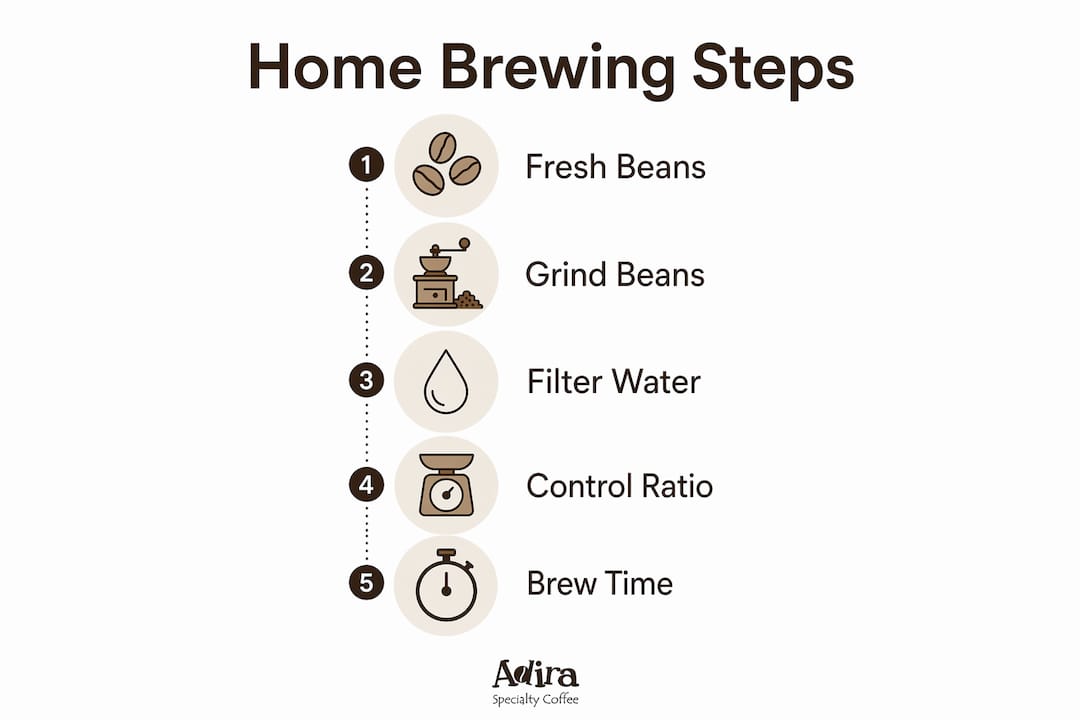
Bean freshness is the most overlooked variable. Coffee beans peak within 21 days of their roast date. After that, the complex aromatics and bright flavors fade, leaving a flat, dull cup. Most supermarket bags carry no roast date at all, which tells you everything you need to know about their freshness.
Grind consistency is the second major factor. A burr grinder produces uniform particle sizes, which means even extraction. Blade grinders chop beans unevenly, creating a mix of fine powder and large chunks that brew at different rates. The result is a cup that tastes both bitter and sour at the same time.
Water quality shapes flavor more than most brewers expect. The Specialty Coffee Association recommends water with a total dissolved solids level between 75 and 250 ppm, free of chlorine. Tap water in most American cities contains chlorine that deadens coffee flavor. Filtered water is the simplest fix.
Brew ratio gives you repeatability. The standard starting ratio for most manual methods is 1:15 to 1:17 coffee to water by weight, which works out to roughly 60 grams of coffee per liter of water. That ratio is your baseline. You adjust from there based on taste.
Pro Tip: Buy whole beans and grind right before brewing. Pre-ground coffee loses most of its volatile aromatics within 30 minutes of grinding. Whole beans stay fresh far longer when stored correctly.
Measuring by weight is the single easiest upgrade you can make. Grinding by volume with scoops is inaccurate because bean density varies by roast level and origin. A digital scale removes that variable entirely and lets you reproduce a great cup every time. For more on the factors behind flavor, Adiracoffee’s guide to key flavor variables breaks down each one in detail.
Which brewing method is right for you?
No single brewing method is best for every palate. The right choice depends on the flavor profile you want and how much time you want to spend. Here is how the most popular home coffee brewing methods compare:
- Pour-over (Hario V60, Chemex): Produces a clean, bright cup with pronounced aromatics. Brew time is 3–4 minutes. Requires a gooseneck kettle and some practice with pouring technique. Best for drinkers who want clarity and origin character.
- French press: Full-bodied and rich, with natural oils left in the cup. Brew time is 4 minutes. Forgiving on grind size. Best for drinkers who prefer a heavier, more textured mouthfeel.
- AeroPress: Forgiving and beginner-friendly, tolerant of timing and temperature variations. Brew time is 1–2 minutes. Produces a concentrated, smooth cup. Excellent first brewer for anyone new to manual methods.
- Drip machine: Convenient and consistent when the machine is well-calibrated. Brew time is 5–8 minutes. Quality varies widely by machine. Best for households that want speed and volume without manual effort.
- Moka pot: Produces a strong, espresso-adjacent brew on a stovetop. Brew time is 5 minutes. Inexpensive and durable. Best for drinkers who want intensity without an espresso machine.
- Cold brew: Steeped in cold water for 12–24 hours. Produces a smooth, low-acid concentrate. Best for warm months or drinkers sensitive to acidity.
The key insight from coffee experts is to match your brewer to your taste, not to chase a ranking. A French press drinker who switches to pour-over chasing “better coffee” may simply end up with coffee they enjoy less. For a deeper look at each method, Adiracoffee’s brewing methods guide covers technique for each one.
What equipment do you actually need?
The right gear makes a real difference, but the order in which you buy it matters more than the total you spend. Invest in a quality burr grinder first. It delivers the single biggest improvement in cup quality of any piece of equipment. Everything else is secondary.
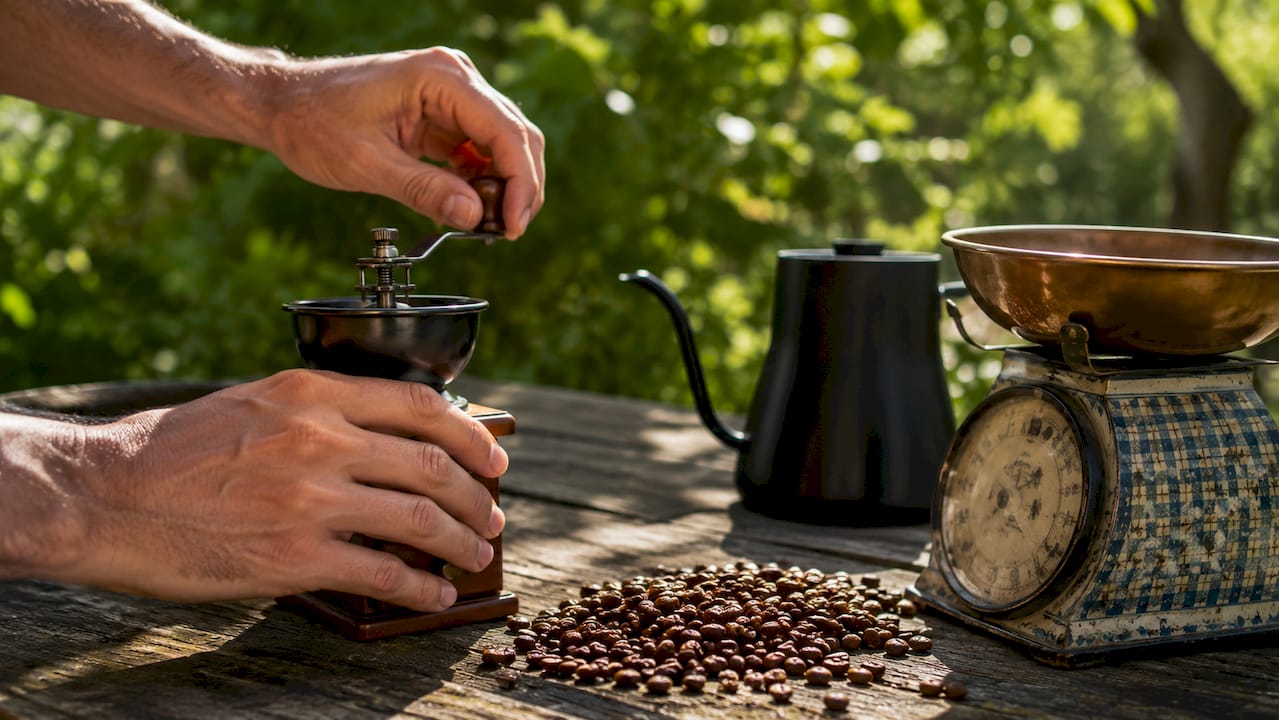
Here is a practical equipment priority list with approximate costs:
| Equipment | Why it matters | Approx. cost |
|---|---|---|
| Burr grinder (manual) | Consistent grind size for even extraction | ~$100 |
| Digital scale | Repeatable ratios by weight | $40–$60 |
| Brewer (dripper or AeroPress) | Core brewing vessel | $15–$35 |
| Gooseneck kettle | Controlled pour for pour-over methods | $25–$50 |
A functional beginner kit runs about $200 total. That covers a manual burr grinder, a digital scale, a simple dripper, and a basic gooseneck kettle. You do not need a $500 espresso machine to brew exceptional coffee at home.
Electric burr grinders offer speed and convenience, but a quality manual grinder at $100 outperforms most electric grinders at the same price point. Temperature control kettles are worth the upgrade for pour-over, since water temperature between 195°F and 205°F extracts coffee correctly. Below 195°F, coffee under-extracts and tastes sour.
Pro Tip: Buy the best grinder your budget allows before spending anything on a brewer. A cheap dripper with a great grinder beats an expensive brewer with a blade grinder every single time.
How to brew coffee at home step by step
A repeatable process is what separates a consistently great cup from a lucky one. Follow these steps for any manual method:
- Weigh your beans. Start with 15–17 grams of coffee for a 250ml cup. Use a digital scale, not a scoop.
- Grind fresh. Grind immediately before brewing. Medium grind for pour-over and drip, coarse for French press, fine to medium for AeroPress.
- Heat your water. Target 200°F (just off the boil, rested 30 seconds). Use filtered water.
- Rinse your filter. For paper filters, rinse with hot water first. This removes paper taste and preheats your brewer.
- Bloom your coffee. Pour twice the weight of coffee in water (30g water for 15g coffee) and wait 30 seconds. This releases CO2 and improves extraction.
- Pour in stages. Add the remaining water slowly in circular pours. Total brew time for pour-over should be 3–4 minutes.
- Taste and adjust. If the cup tastes bitter, grind coarser or reduce brew time. If it tastes sour or weak, grind finer or increase brew time.
Common mistakes to avoid:
- Skipping the bloom step, which leads to uneven extraction
- Using water that is too hot (above 205°F), which over-extracts and creates bitterness
- Not cleaning your equipment after each use, since old coffee oils turn rancid and ruin future cups
- Storing beans in the freezer without an airtight container, which introduces moisture and odors
Keeping a simple brewing log accelerates improvement. Note your grind setting, dose, water temperature, and brew time alongside a quick flavor note. After a few sessions, patterns become clear. For guidance on keeping beans at their best between brews, Adiracoffee’s article on storing coffee beans covers every storage method in detail.
Key Takeaways
The best coffee at home requires fresh beans within 21 days of roast, a burr grinder, filtered water, and a consistent 1:15 to 1:17 brew ratio measured by weight.
| Point | Details |
|---|---|
| Freshness is non-negotiable | Use beans within 21 days of roast date for full flavor complexity. |
| Grind consistency drives quality | A burr grinder produces even extraction; blade grinders do not. |
| Measure by weight, not volume | A digital scale is the easiest upgrade for repeatable, great-tasting cups. |
| Match your method to your taste | Pour-over suits clarity seekers; French press suits those who prefer body. |
| Build your kit in the right order | Buy grinder first, then scale, brewer, and kettle for maximum return. |
What I’ve learned from years of brewing at home
The biggest mistake I see home brewers make is buying gear before understanding variables. A $400 espresso machine sitting next to stale supermarket beans and a blade grinder will never produce a great cup. Fresh beans and a $100 burr grinder will.
When Stefan and Ekaterina founded Adiracoffee, the frustration was exactly this: supermarket coffee bags with no roast date, no origin story, and no flavor worth finishing. That experience shaped everything about how Adiracoffee sources and roasts. Single-origin beans from Colombia, Ethiopia, Costa Rica, Mexico, and Sumatra, roasted in small batches in California and shipped within days of roasting. The freshness is built into the model.
My honest advice is to resist the urge to perfect everything at once. Start with fresh beans, a burr grinder, and a scale. Get comfortable with one brewing method before adding another. The AeroPress is genuinely the best starting point for most people because it is forgiving and fast, and it teaches you how grind and ratio affect flavor without punishing small mistakes.
Precision matters, but enjoyment matters more. If you spend your morning brew session stressing over a 0.2-gram variance, you have lost the point. Coffee is a daily ritual. The goal is a cup you look forward to, not a lab result. Trust your palate, take notes, and adjust gradually. The improvement compounds faster than you expect.
— Stefan
Fresh beans that make the difference
Technique only takes you as far as your beans allow. Adiracoffee roasts every order in small batches in California and ships within days of roasting, so the beans arriving at your door are genuinely fresh.
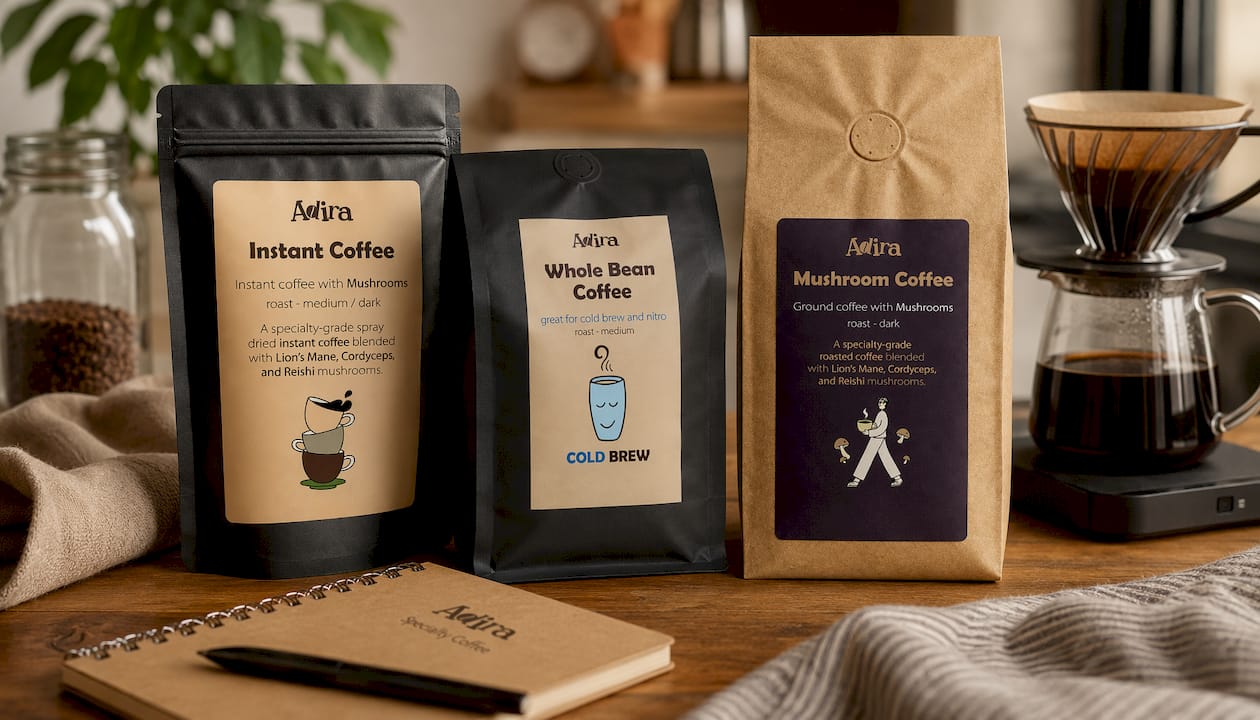
For mornings when you want speed without sacrificing quality, Adiracoffee’s instant mushroom coffee delivers a smooth, functional cup in under a minute. For warm-weather brewing, the cold brew option produces a low-acid, ready-to-drink concentrate that pairs perfectly with the cold brew method covered above. And for drinkers who want maximum body and depth, the dark roast mushroom coffee brings full-bodied richness to any brewing method. Subscriptions include 10% savings and free US shipping over $35.
FAQ
What is the best brew ratio for home coffee?
The standard brew ratio for most manual methods is 1:15 to 1:17 coffee to water by weight, starting at 60 grams of coffee per liter of water. Adjust from that baseline based on your taste preference.
How long do coffee beans stay fresh?
Coffee beans are best used within 21 days of their roast date. After that, flavor complexity fades, though the beans are not unsafe to drink.
Do I need a burr grinder for good home coffee?
A burr grinder is the single most impactful equipment upgrade for home brewing. It produces consistent particle sizes that extract evenly, which a blade grinder cannot replicate.
What water should I use for brewing coffee at home?
Use filtered water free of chlorine, with a mineral content in the range the Specialty Coffee Association recommends: 75–250 ppm total dissolved solids. Most standard water filters remove chlorine effectively.
Which brewing method is best for beginners?
The AeroPress is the most beginner-friendly brewer because it tolerates variations in timing and water temperature. It produces a smooth, concentrated cup and teaches grind and ratio fundamentals without demanding perfect technique.