
TL;DR:
- Colombian coffee benefits from high altitude, volcanic soil, and two harvests per year for consistent quality.
- It offers a balanced flavor profile with bright acidity, caramel sweetness, and floral undertones.
- Strict quality standards and careful harvesting ensure reliability and premium flavor in every cup.
Not all coffee is created equal, and once you taste a cup made from freshly roasted Colombian beans, that truth becomes impossible to ignore. Colombia has earned its place on the world’s coffee map through a rare combination of geography, climate, and decades of rigorous quality standards, not just through clever marketing. While many origins offer interesting cups, Colombian coffee delivers something harder to find: consistent excellence across regions, harvest seasons, and brewing styles. If you are serious about what goes into your cup, understanding what drives Colombian coffee’s reputation gives you a real edge when choosing your next bag.
Table of Contents
- How Colombia’s climate and geography shape coffee excellence
- Flavor notes and profiles: Why Colombian coffee stands apart
- Rigorous quality standards: From farm to export
- Best uses and brewing methods for Colombian coffee
- Why most coffee lovers overlook what actually makes Colombian coffee special
- Experience the best of Colombian coffee for yourself
- Frequently asked questions
Key Takeaways
| Point | Details |
|---|---|
| Prime growing environment | Colombia’s mountains and climate allow for consistent high-quality Arabica beans season after season. |
| Signature flavor balance | Colombian coffee offers sweet, bright, and complex flavors that appeal to both casual drinkers and connoisseurs. |
| Strict quality standards | Industry regulations and washing techniques guarantee clean, consistent, and defect-free coffee in every cup. |
| Versatile brewing potential | Colombian coffee works beautifully in espresso, pour-over, and cold brew, maximizing enjoyment at home or in cafés. |
How Colombia’s climate and geography shape coffee excellence
Colombia sits almost perfectly on the equator, and the Andes mountain range runs straight through its heart. That combination creates growing conditions that coffee farmers elsewhere can only dream about. Beans are cultivated between 1,200 and 2,200 meters above sea level, where cool temperatures slow the cherry’s development and allow natural sugars to build up inside the bean over time. Volcanic soils, rich in minerals and excellent in drainage, add another layer of complexity to what ends up in your cup.
One of the most underrated advantages Colombia holds is its two distinct harvest seasons per year, driven by the varying microclimates across its mountain regions. This means you can access fresh crop coffee from Colombia more consistently than from almost any other origin. Other growing countries often deliver one harvest window, making freshness harder to guarantee for much of the year.
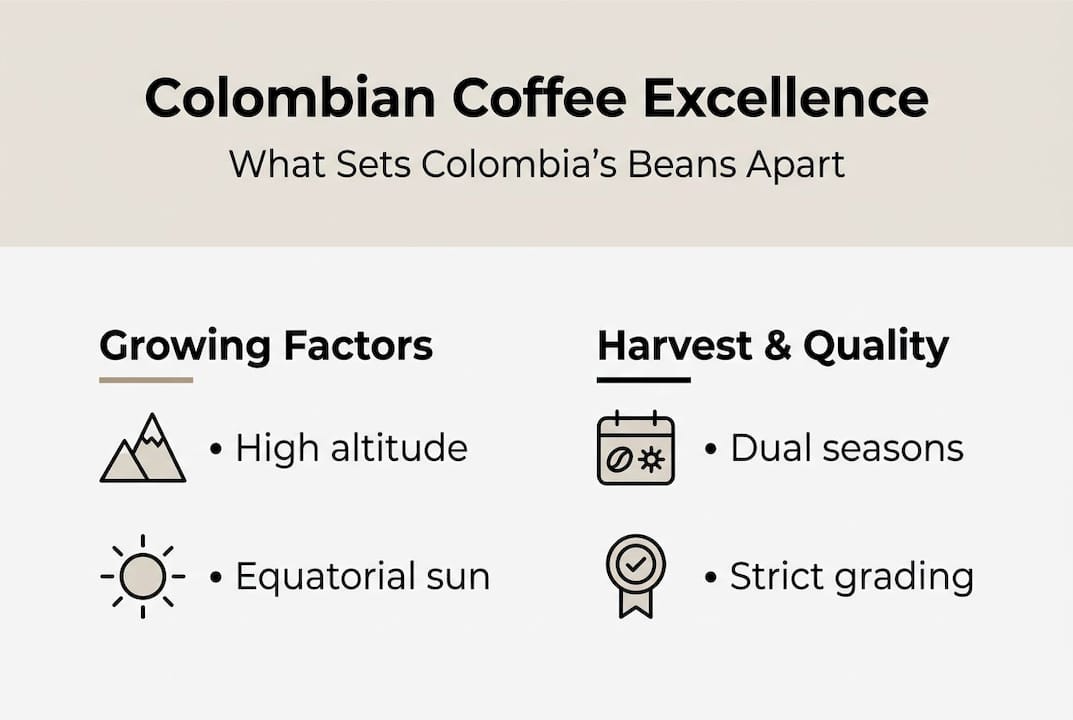
Microclimates across departments like Huila, Nariño, and Antioquia each produce beans with their own personality, even though they all share that recognizable Colombian character. Understanding how coffee farms influence quality helps explain why two Colombian coffees from different regions can taste noticeably different yet both taste exceptional.
Key geographic advantages that define Colombian coffee quality:
- Elevation: 1,200 to 2,200 meters slows bean maturation and builds complexity
- Volcanic soil: Mineral-rich and well-draining, feeding healthy, flavorful cherries
- Two harvests annually: Steady supply of fresh crop throughout the year
- Diverse microclimates: Regional flavor variation within a consistent quality baseline
- Equatorial stability: Predictable rainfall patterns reduce crop inconsistency
Pro Tip: When shopping for Colombian beans, look for the growing region on the label. Beans from Nariño, grown at some of the highest altitudes in the country, tend to show brighter acidity and more floral lift compared to the richer, chocolatey notes from lower-elevation farms in Antioquia.
The scale of Colombia’s output reflects how well these conditions work. Colombia produces roughly 13 to 14 million 60-kilogram bags annually, ranking third globally, with around 12.5 million bags exported each year. Every single one of those exported bags is washed Arabica, which speaks to the country’s unwavering commitment to a specific quality standard.
Flavor notes and profiles: Why Colombian coffee stands apart
Colombia’s geography does not just produce good coffee. It produces a very specific style of coffee that has broad appeal without sacrificing depth. The classic Colombian cup lands in the medium body range, with bright citrusy acidity, a sweet caramel backbone, and gentle fruit and floral undertones. It is complex enough to hold a coffee lover’s attention without being so wild or unpredictable that it alienates newer drinkers.
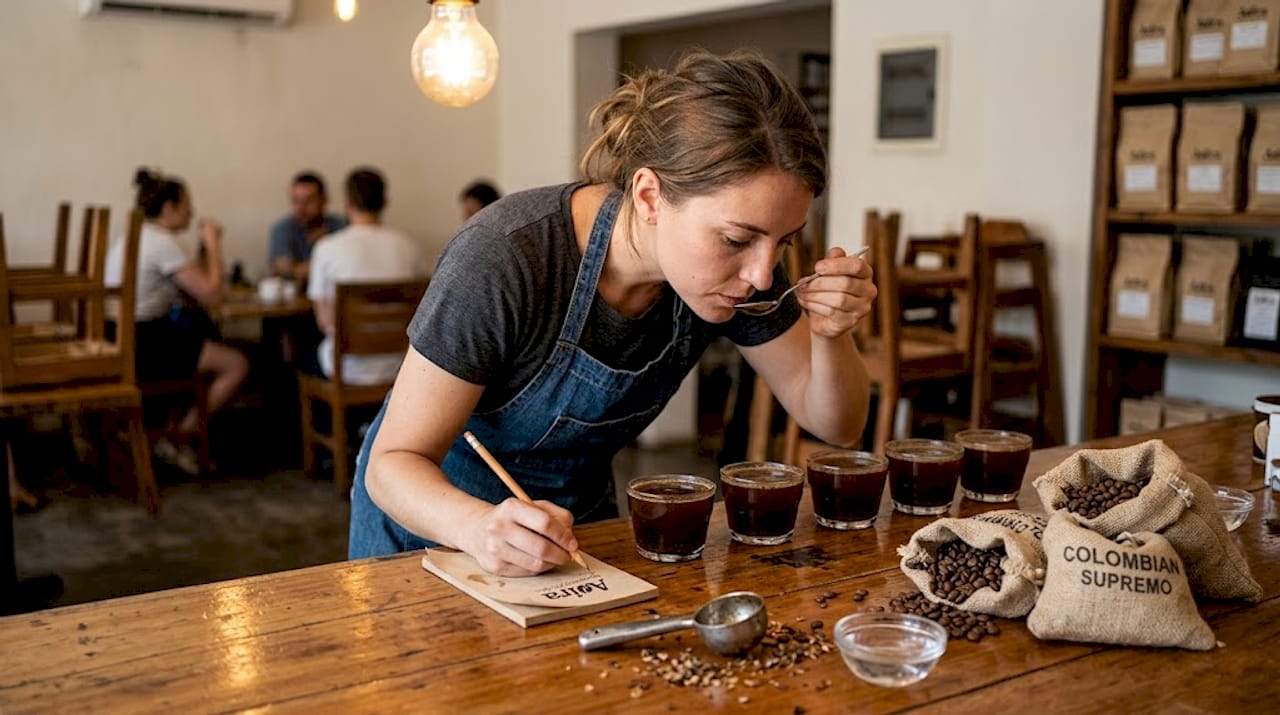
Understanding the difference between Colombian grades adds another dimension. Supremo beans are larger and often associated with a slightly fuller body, while Excelso beans are smaller and can show more nuanced floral and citrus notes. Neither is inherently better. They simply cater to different preferences and brewing styles. Exploring coffee bean types and flavors in detail can help you zero in on what suits your palate best.
| Origin | Body | Acidity | Key Notes | Process |
|---|---|---|---|---|
| Colombia | Medium | Bright, citrusy | Caramel, fruit, floral | Washed |
| Brazil | Heavy | Low, soft | Nutty, chocolate, earthy | Natural |
| Ethiopia | Light to medium | High, complex | Floral, berry, wild fruit | Natural or washed |
As the comparison between Brazilian and Colombian coffee shows, Colombia’s higher altitude and washed processing create notably brighter acidity versus Brazil’s nutty, low-acid profile. Ethiopian coffees, especially Ethiopian natural coffee, can be stunning in their floral complexity, but that complexity comes with variability. Colombian coffee is the more reliable choice if you want consistency alongside nuance.
“Colombian coffee is the rare origin where balance and quality repeat themselves reliably, cup after cup, season after season.”
For those ready to experience this directly, our single-origin Colombian beans represent some of the best examples of this profile available fresh-roasted.
Rigorous quality standards: From farm to export
Flavor is only part of the story. Colombia’s coffee industry is backed by one of the most structured quality systems in the world. The National Coffee Federation (FNC) sets and enforces strict export standards, ensuring that only beans meeting defined criteria leave the country under the Colombian flag. This is not a marketing claim. It is a regulated process.
The FNC enforces strict quality controls through the Excelso grade export standard, which applies to the vast majority of Colombian coffee shipped internationally. Every bag must meet physical and sensory benchmarks before it earns that designation.
Here is how Colombian coffee moves from the farm to your doorstep:
- Selective harvesting: Only ripe cherries are hand-picked, often requiring multiple passes through the same plant
- Wet processing (washing): Cherries are pulped and fermented to remove mucilage, creating clarity and clean flavors
- Sun drying: Washed beans are dried carefully to reduce moisture to the correct level
- Grading: Beans are sorted by size, weight, and defect count to meet Excelso or Supremo standards
- Cupping and approval: Licensed tasters evaluate samples before export clearance is granted
| Grade | Bean size | Common use | Flavor profile |
|---|---|---|---|
| Supremo | 17 screen and above | Specialty roasters | Fuller body, smooth |
| Excelso | 14 to 16 screen | Export standard | Bright, balanced |
Pro Tip: When buying Colombian coffee, look for the word “Excelso” or an FNC verification mark on the packaging. It is your shortcut to knowing the beans have passed rigorous inspection before leaving the country. For a deeper look at what these markers actually mean, the quality coffee grading insights from our blog break it down clearly.
Best uses and brewing methods for Colombian coffee
Knowing how Colombian coffee is grown and processed, let’s get into how to actually enjoy it at its best. The good news is that Colombian beans are genuinely versatile, performing well across nearly every brewing method you can think of.
For clarity and brightness, pour-over and drip methods shine. The clean, washed processing of Colombian beans means there is very little murkiness in the cup, and the natural citrus and caramel notes come through crisp and well-defined. Cold brew made with Colombian beans tends to produce a smooth, sweet concentrate that does not need milk or sugar to be enjoyable.
As Colombian coffee’s balanced profile lends itself to multiple brew methods, espresso is where many coffee lovers are surprised by what Colombian beans can do. The bright acidity cuts through milk beautifully in a latte or flat white, while pulling it as a straight shot reveals layers of sweetness and subtle complexity that heavier origins can bury.
Best brewing methods for Colombian coffee:
- Pour-over: Highlights citrus acidity and floral notes with excellent clarity
- Drip: Consistent and approachable, great for everyday drinking
- Cold brew: Brings out caramel sweetness with low bitterness
- Espresso: Showcases sweetness and balance, performs beautifully in milk drinks
- French press: Adds body while keeping the fruit notes present
For food pairings, Colombian coffee is a natural match for fruit-based desserts, dark chocolate, and buttery breakfast pastries. The citrus notes complement berry flavors, while the caramel sweetness mirrors chocolate without competing with it.
Pro Tip: For filter methods like pour-over or drip, use a slightly coarser grind to let the clarity of the Colombian bean come through without over-extraction. If you are pulling espresso, a finer grind will intensify the sweetness and acidity in a way that feels bold but not harsh. For more brewing specifics, check out the best Colombian brewing tips and our Colombian espresso guide to dial in your technique.
Why most coffee lovers overlook what actually makes Colombian coffee special
Here is the honest truth: most people who love Colombian coffee love it for the wrong reasons. They reach for it because the name is familiar, or because they had a good cup once and it stuck. But the real case for Colombian coffee is not about flavor alone. It is about repeatability.
Ethiopia can produce transcendent cups. Kenya can blow your mind with complexity. But both of those origins come with variability, both from harvest to harvest and producer to producer. Colombia’s two annual harvests, combined with the FNC’s strict oversight, mean you can find fresh, high-quality Colombian coffee almost any time of year, from multiple farms, without gambling on unpredictability.
We also think aficionados underestimate the diversity within Colombia itself. Exploring Colombian origins across Huila, Nariño, Cauca, and Antioquia feels like traveling through different flavor landscapes, all anchored by that signature balance and cleanliness. That is an advantage worth paying attention to.
Experience the best of Colombian coffee for yourself
Reading about Colombian coffee only goes so far. The real proof is in the cup, and there is no substitute for tasting beans that were roasted days ago, not months.
At Adira Coffee, we source our Colombian beans directly from small farms across the country’s premier growing regions, roasting in small batches so every order ships at peak freshness. Whether you are new to single-origin coffee or adding another great Colombia to your rotation, our shop Colombian coffee beans page is the best place to start. If you want to compare Colombian coffee against other origins we carry, browse our full coffee selection and find the cup that fits your palate best.
Frequently asked questions
What makes Colombian coffee’s flavor unique?
Colombian coffee offers bright acidity and flavor notes like caramel and citrus, a direct result of high-altitude cultivation and washed processing that strips away anything muddy or unclear.
How does Colombia ensure coffee quality for export?
The FNC enforces strict quality through the Excelso export standard, meaning only top-grade beans that pass physical and sensory inspection are allowed to leave the country.
Is Colombian coffee better for espresso or filter brewing?
Colombian coffee’s balanced profile excels in both espresso and filter brews, making it one of the most versatile origins you can keep in your kitchen.
Why is Colombian coffee often more expensive?
Strict quality controls, prime growing conditions at high altitude, and labor-intensive selective hand-picking all drive up production costs, which are reflected in the final price of premium Colombian beans.
Recommended
- Colombia – Adira Coffee US
- How Coffee Farms Define Flavor: Practices That Impact Quality – Adira Coffee US
- Costa Rica Coffee: Balance, Clarity, and Why We Chose It at Adira – Adira Coffee US
- How to choose coffee beans for the perfect brew in 2026 – Adira Coffee US
- What makes Caribbean drinks unique? Culture, flavor, craft – TOJ EXPRESS