
TL;DR:
- Peaberry coffee is a naturally occurring single seed that develops inside the cherry rather than two, making it more scarce and often more expensive. It roasts more evenly and produces a brighter, cleaner flavor profile, but quality still depends on the farm and roasting skill. Proper brewing and specific roasting adjustments can enhance its unique qualities, but shape alone does not guarantee better coffee.
Peaberry coffee is defined as a naturally occurring mutation where a single seed develops inside the coffee cherry instead of the usual two flat seeds. That one seed grows rounder and denser than a standard bean, producing a physically distinct coffee with different roasting behavior and flavor potential. Roasters like Big Island Coffee Roasters and Volcanica Coffee have built dedicated peaberry lines around this rarity. Only about 5% of any harvest yields peaberry beans, which makes them genuinely scarce and consistently more expensive than regular coffee from the same crop.
What is peaberry coffee and how does it form?
A standard coffee cherry contains two seeds pressed flat against each other. That flat side is the defining feature of every regular coffee bean you have ever seen. Peaberry forms when one of those two seeds fails to develop, leaving the surviving seed with no flat side to press against. It grows freely into a small, oval, almost spherical shape.
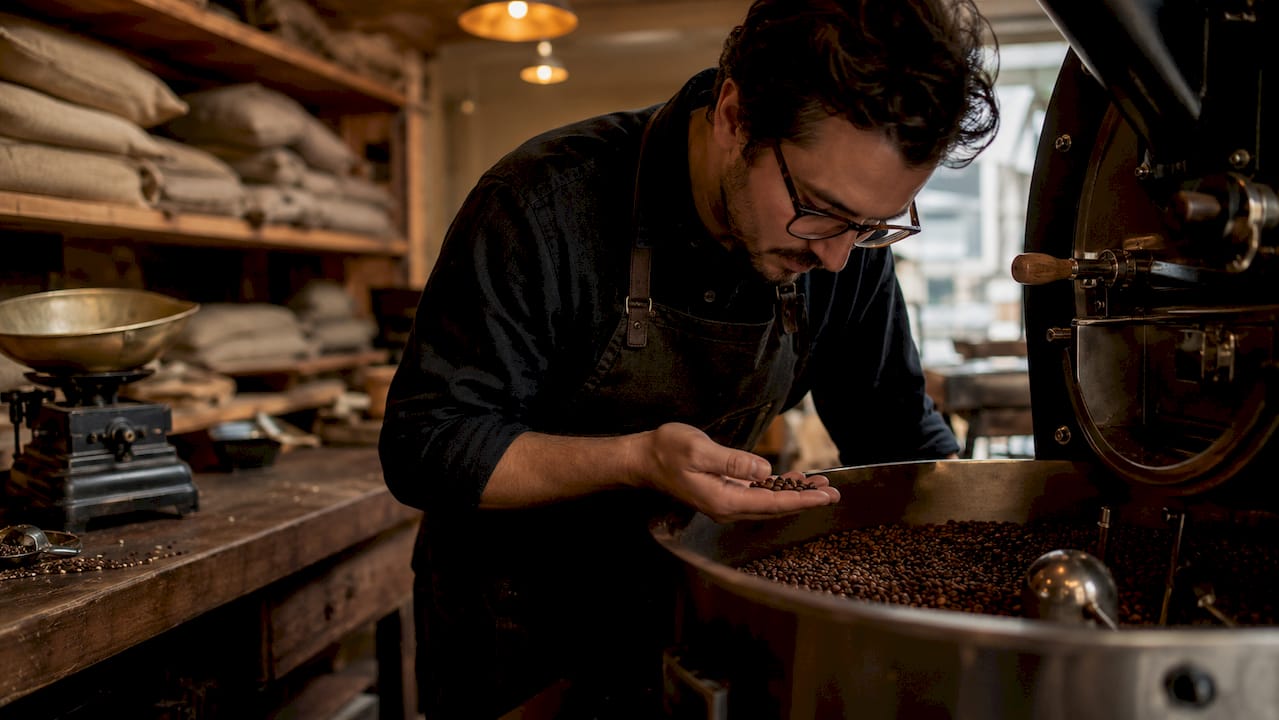
This mutation is not engineered or selected for. It occurs spontaneously across every coffee species and every growing region, from Colombian highlands to Ethiopian forests to the volcanic slopes of Hawaii. You cannot plant a peaberry tree or breed for higher peaberry yields. The mutation simply happens, and farmers find it scattered throughout their harvest.
Here is how a peaberry bean moves from tree to bag:
- Cherry development. The coffee plant flowers and sets fruit. Most cherries develop two seeds inside. Roughly 1 in 20 cherries develops only one.
- Harvest. Cherries are picked by hand or machine along with the rest of the crop. Peaberry cherries look identical to regular cherries from the outside.
- Processing. The fruit is removed through washed, natural, or honey processing. The beans are dried and hulled.
- Sorting. Workers or machines separate peaberry beans from flat beans. Manual sorting adds labor and cost, which is why peaberry lots carry a price premium.
- Grading and bagging. Sorted peaberry beans are graded separately and sold as a distinct lot to roasters who specialize in them.
That sorting step is where most of the added cost comes from. Peaberry beans represent 5–10% of a harvest and require dedicated handling at every stage after picking.
How does peaberry compare to regular coffee beans?
The physical difference between a peaberry and a regular bean is obvious the moment you hold them side by side. Regular beans are flat on one side and curved on the other. Peaberry beans are fully rounded, smaller, and noticeably heavier for their size.
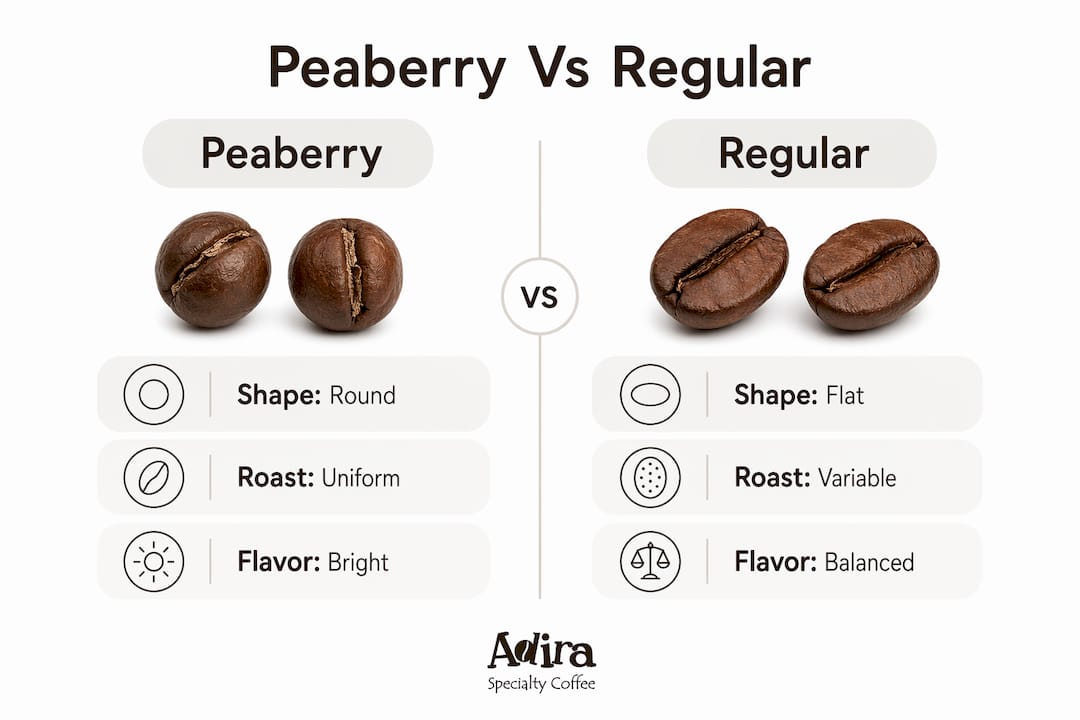
That shape difference matters most inside the roaster drum. Round peaberry beans roll more freely, which allows heat to circulate more evenly across the entire surface. Regular flat beans can stack against each other, creating uneven heat exposure. The result is that peaberry beans often roast with greater consistency across a single batch.
| Feature | Peaberry beans | Regular beans |
|---|---|---|
| Shape | Round, oval, compact | Flat on one side, curved on the other |
| Density | Higher for their size | Standard density |
| Roasting behavior | More even heat circulation | Can roast unevenly if not managed |
| Flavor profile | Brighter acidity, smoother body | Varies widely by origin and roast |
| Price | Higher due to rarity and sorting | Standard market price |
Flavor differences are real but not dramatic. Tanzanian and Kona peaberry coffees are the most cited examples of the brighter acidity and smoother body that peaberry fans describe. The concentrated development of a single seed may produce a cleaner, more focused cup. Understanding how coffee origin shapes flavor matters here too, since terroir plays as large a role as bean shape in the final taste.
Pro Tip: Roast peaberry beans as a separate lot from your regular beans. Their uniform density means they respond differently to heat curves, and mixing them with flat beans in the same roast will compromise both.
Roasters who treat peaberry as a distinct product category, rather than just another batch, consistently get better results. Roasting professionals note that the bean’s geometry alters heat transfer, often requiring specific profile adjustments to avoid under or over development.
Are peaberry coffees actually better?
The honest answer is: not automatically. Peaberry is not a quality grade. It is a physical characteristic. A poorly grown, badly processed, or carelessly roasted peaberry bean will taste worse than a well-handled regular bean from a great farm.
“Peaberry should be viewed as a roasting tool rather than a magic quality booster. Roaster skill and sorting quality weigh more heavily than bean shape in the final cup.” — FnB Tech, Peaberry Bean vs Regular Coffee
That quote captures the consensus among serious roasters. Claims that peaberry roasts better due to shape alone lack scientific substantiation. What peaberry does offer is a consistent physical format that a skilled roaster can work with predictably. The uniformity of round beans makes it easier to dial in a repeatable roast profile. That consistency can translate to a cleaner cup, but only when the roaster takes advantage of it.
Where peaberry genuinely shines is in clarity. Because the bean develops alone, without the pressure of a neighboring seed, some roasters and tasters describe the flavor as more defined and less muddled. Peaberry’s natural sweetness and gentle complexity make it particularly appealing to drinkers who prefer their coffee without added sugar. That is a real, if subtle, benefit.
The price premium is real too. Expect to pay noticeably more per bag for peaberry compared to regular coffee from the same origin. Whether that premium is worth it depends entirely on the roaster’s skill and the quality of the underlying beans.
How to brew peaberry coffee for the best cup
Brewing peaberry coffee well starts with understanding that its density affects more than just roasting. Peaberry beans fracture differently during grinding compared to flat beans, which shifts the extraction curve. Grind too coarse and you under-extract. Grind too fine and you risk bitterness. Start one step finer than your usual setting and adjust from there.
These brewing methods work especially well with peaberry beans:
- Pour over (Hario V60, Chemex). The slow, controlled extraction highlights peaberry’s brighter acidity and clean finish. Use water at 200°F and a medium-fine grind.
- AeroPress. The short brew time and pressure suit peaberry’s density well. Experiment with an inverted method for fuller body.
- Drip machine with a flat-bottom basket. Consistent water distribution complements peaberry’s even roast. Avoid cone baskets, which can channel unevenly with denser beans.
- Cold brew. The long steep time pulls out peaberry’s sweetness without amplifying acidity. Use a coarser grind and a 16:1 water-to-coffee ratio.
Pro Tip: Brew your first peaberry cup as a simple pour over before experimenting with other methods. It gives you the clearest read on the bean’s flavor notes before variables like pressure or milk complicate the picture.
Peaberry coffee often shows fruity, sweet, and bright characteristics. Look for notes like citrus, stone fruit, or floral tones depending on the origin. Ethiopian peaberry tends toward berry and jasmine. Tanzanian peaberry often shows black tea and citrus. Knowing what to expect helps you tune your brewing toward those flavors rather than away from them. For timing and freshness guidance, the peak flavor window for specialty coffee applies to peaberry just as it does to any single-origin bean. For a broader look at methods, the best brewing methods for home baristas covers the full range of options worth trying.
Key Takeaways
Peaberry coffee is a naturally occurring single-seed bean that rewards skilled roasting and careful brewing with a cleaner, brighter cup than most regular coffees from the same origin.
| Point | Details |
|---|---|
| Natural mutation, not engineered | Peaberry forms when only one seed develops in a cherry, occurring in roughly 5–10% of any harvest. |
| Shape affects roasting | Round beans circulate heat more evenly, but skilled roasting technique still determines final cup quality. |
| Flavor is brighter and cleaner | Peaberry typically shows higher acidity, smoother body, and more defined sweetness than regular beans. |
| Grind adjustment is required | Denser peaberry beans fracture differently, so start one step finer than your usual grind setting. |
| Price reflects rarity, not guaranteed quality | Manual sorting and low yield drive the premium; the underlying bean and roaster skill matter most. |
My honest read on peaberry after years of sourcing
I have tasted a lot of peaberry coffee, and I have tasted a lot of disappointment sold at a peaberry price. The marketing around peaberry leans hard on the rarity angle, and that rarity is real. But rarity does not equal quality. I have had regular washed Colombians that outperformed peaberry lots from the same region simply because the roaster knew their craft.
What I find genuinely interesting about peaberry is what it reveals about roasting skill. When a roaster handles a peaberry lot well, the consistency of those round beans gives them a clean canvas to work with. The cup that comes out of a well-roasted peaberry is often unusually clear. You taste the origin without interference. That clarity is worth something.
My advice for anyone curious about peaberry: try it once from a roaster you already trust. Do not buy it because the bag says “rare” or “premium.” Buy it because you want to understand what your favorite origin tastes like when the bean develops differently. Approach it as an experiment, not an upgrade. You might be surprised. You might prefer your regular single-origin. Either way, you will learn something about what you actually like in a cup, and that knowledge is worth more than any bean shape.
— Stefan
Try something worth your curiosity at Adiracoffee
If peaberry coffee has you thinking about what a truly well-sourced, carefully roasted bean can taste like, Adiracoffee is a good place to start exploring.

Every bag at Adiracoffee is roasted in small batches in California and shipped within days of roasting. The Ethiopia Natural showcases the bright, fruity complexity that peaberry fans love, drawn from small farms and processed to highlight every aromatic note. For something richer and more grounding, the Sumatra delivers the full-bodied, earthy depth that single-origin sourcing makes possible. Free US shipping on orders over $35, with a subscription option that saves you 10%.
FAQ
What is peaberry coffee in simple terms?
Peaberry coffee is a coffee bean that develops as a single round seed inside the cherry instead of the usual two flat seeds. It occurs naturally in roughly 5% of any coffee harvest.
Does peaberry coffee taste better than regular coffee?
Not automatically. Peaberry can produce a brighter, cleaner cup, but roasting skill and bean origin matter more than shape alone. A well-roasted regular bean often outperforms a poorly roasted peaberry.
Why is peaberry coffee more expensive?
The price premium comes from rarity and labor. Peaberry beans make up only 5–10% of a harvest and must be sorted manually from regular beans, which adds significant cost.
How should I grind peaberry coffee beans?
Start one grind step finer than your usual setting. Peaberry beans are denser and fracture differently during grinding, which shifts the extraction curve compared to flat beans.
Where can I find good peaberry coffee?
Look for peaberry lots from specialty roasters who source single-origin beans and roast in small batches. Tanzanian and Kona peaberry are two of the most widely recognized and available regional examples.