
TL;DR:
- Arabica coffee comes from the Coffea arabica plant, native to Ethiopian highlands, with a flavor profile featuring fruity, floral, and caramel notes. It is more vulnerable to pests and climate change, requiring demanding cultivation practices that increase its cost and rarity. While often associated with quality, actual flavor and quality depend on processing, origin, and farm conditions beyond species labels.
Arabica coffee is the bean in your cup more often than you realize. It accounts for 60 to 70% of global coffee production, and it sits behind every “smooth,” “fruity,” or “complex” descriptor on specialty coffee bags worldwide. Most people treat “Arabica” as shorthand for quality coffee, and while that instinct is understandable, it misses the real picture. What makes Arabica genuinely interesting is not the label. It is the plant’s biology, where it grows, how it is processed, and what all of that means for your morning cup.
Table of Contents
- Key Takeaways
- What is Arabica coffee, really?
- Arabica coffee flavor profile and characteristics
- Arabica vs. Robusta: what actually differs
- Cultivation challenges that shape Arabica’s cost and availability
- What this means for how you buy and brew Arabica
- My take on Arabica’s place in specialty coffee
- Taste the difference with Adiracoffee
- FAQ
Key Takeaways
| Point | Details |
|---|---|
| Arabica’s botanical identity | Arabica comes from Coffea arabica, a plant native to Ethiopian highlands that thrives at high altitudes. |
| Distinct flavor profile | Arabica delivers fruity, floral, and caramel notes with a brighter acidity and smoother finish than Robusta. |
| Arabica vs. Robusta trade-off | Robusta has more caffeine and bold bitterness; Arabica offers flavor complexity at a higher production cost. |
| Cultivation is demanding | Arabica needs specific climate conditions, ripens unevenly, and requires hand-picking, which raises costs. |
| Label alone is not enough | “100% Arabica” is a useful signal but cupping score and origin transparency are better quality indicators. |
What is Arabica coffee, really?
Arabica coffee comes from Coffea arabica, one of more than 120 species in the Coffea genus. It originated in the highland forests of Ethiopia, where it grew wild under the shade of larger trees at elevations between 1,500 and 2,000 meters. From Ethiopia, the plant traveled to Yemen, where it was first cultivated and brewed as a beverage. From there, trade routes carried it across the Arabian Peninsula and eventually to the Americas, Indonesia, and beyond.
Today, ideal growing conditions for Arabica sit between 15°C and 24°C, at altitudes of 600 to 2,000 meters above sea level. That cool, stable climate slows the maturation of the coffee cherry. And slower maturation is actually a good thing. It gives the bean more time to develop sugars and aromatic compounds, which translates directly into flavor complexity in the cup.
Arabica plants are self-pollinating, which sets them apart from most flowering plants. That trait sounds like a biological advantage, but it creates a significant vulnerability. Self-pollination means low genetic diversity. The plants are essentially clones of one another, making the entire species susceptible to the same pests and diseases all at once. Coffee leaf rust, a fungal disease, has devastated Arabica crops across Central America precisely because there is little genetic variation to resist it.
Key facts about Arabica’s botanical background:
- Native origin: Ethiopian highlands, spreading to Yemen and global tropics
- Altitude range: Best between 600 and 2,000 meters above sea level
- Temperature tolerance: Optimal at 15°C to 24°C, stress begins above 30°C
- Pollination: Self-pollinating, leading to low genetic diversity
- Vulnerability: Highly susceptible to coffee leaf rust and climate stress
Arabica coffee flavor profile and characteristics
This is where Arabica earns its reputation. The arabica coffee flavor profile is genuinely distinct, and understanding why helps you make smarter choices at the shelf or the café counter.
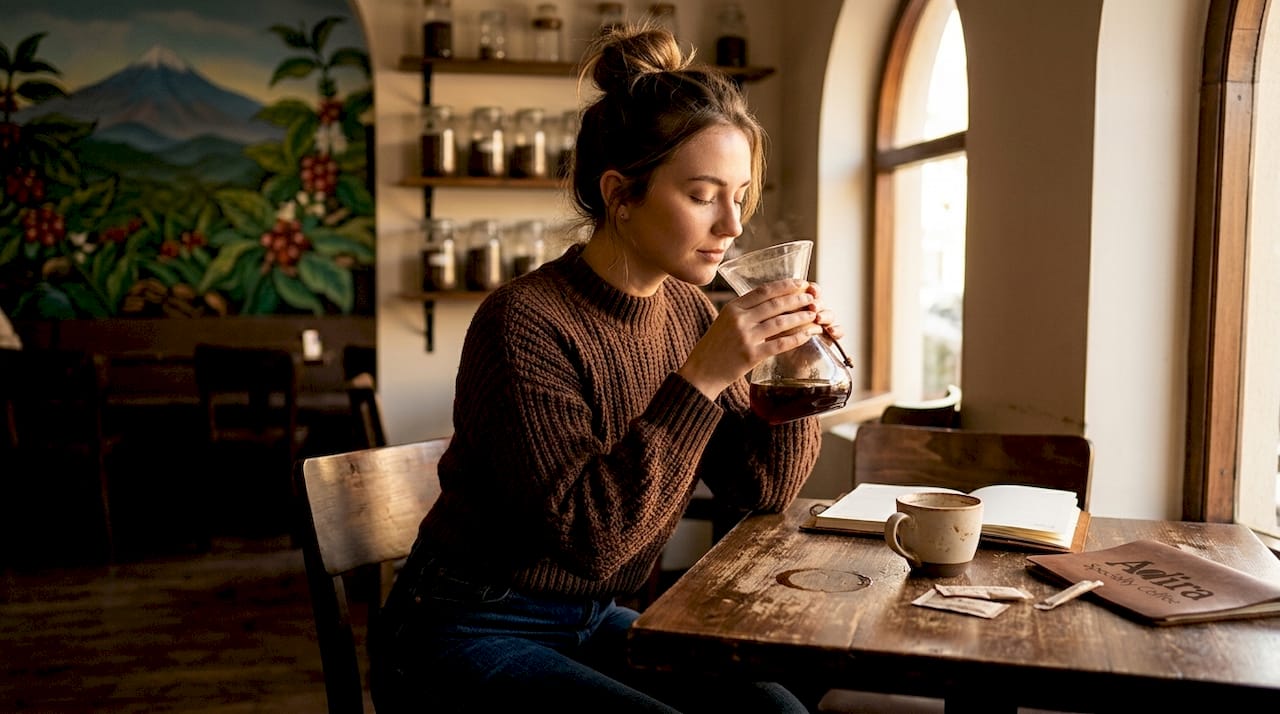
Arabica beans contain higher sugar and lipid content compared to other species. Those compounds are directly responsible for the sweetness and creamy mouthfeel that Arabica drinkers recognize. When roasted correctly, that sugar caramelizes in ways that produce notes ranging from milk chocolate and caramel to ripe stone fruit and bright citrus. A well-sourced Ethiopian Arabica, for example, can taste like blueberries and jasmine. A Colombian Arabica might lean toward red apple and brown sugar.
Arabica coffee characteristics also include a noticeably brighter acidity than Robusta. That acidity is not harshness. It is more like the pleasant tang of a good apple, adding lift and clarity to the flavor. The finish is typically clean, meaning flavors do not linger as a heavy, bitter aftertaste.
On the caffeine side, Arabica sits at roughly 1.0% to 1.5% caffeine by dry weight. That is lower than Robusta, which ranges closer to 2.0% to 2.7%. If you are sensitive to caffeine but still want a flavorful cup, Arabica’s lower caffeine concentration is worth noting. Exploring different coffee flavor profiles across various Arabica origins is one of the best ways to appreciate just how much range this species offers.
Pro Tip: Light and medium roasts tend to preserve Arabica’s natural fruit and floral notes better than dark roasts, which can mute origin character in favor of roast-driven chocolate and smokiness.
Here is a quick breakdown of Arabica coffee characteristics:
- Flavor notes: Fruity, floral, caramel, chocolate, and sometimes nutty
- Acidity: Bright and pleasant, contributing to a lively cup
- Body: Medium to light, with a smooth mouthfeel
- Caffeine content: Lower, around 1.0% to 1.5%
- Aromatic complexity: High, making it favored for pour-over and drip brewing
Arabica vs. Robusta: what actually differs
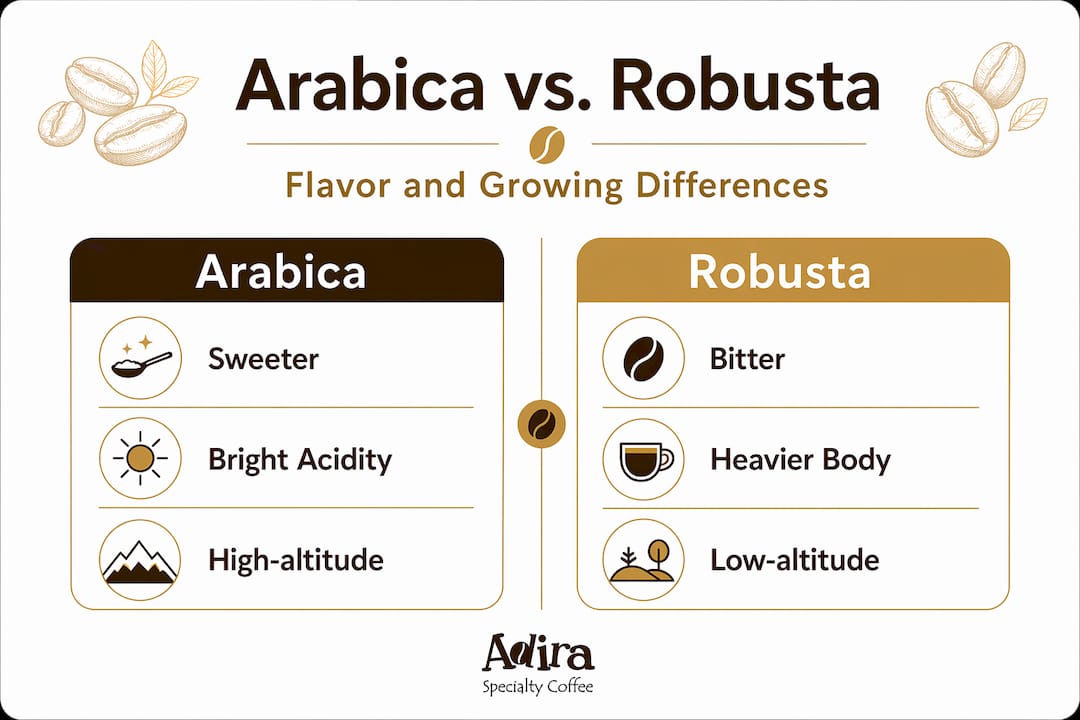
The difference between Arabica and Robusta is one of the most misunderstood topics in coffee. People often frame it as a quality contest, but the reality is more nuanced. The Arabica vs. Robusta comparison is better understood as a trade-off between flavor complexity and resilience.
Coffea canephora, the scientific name for Robusta, grows at lower altitudes and handles heat and disease far better than Arabica. It produces higher yields, tolerates machine harvesting, and costs less to produce. In the cup, Robusta delivers a heavier body, a stronger bitter edge, and almost twice the caffeine. It is the backbone of most Italian espresso blends, where its crema production and caffeine punch are genuinely valued.
| Feature | Arabica | Robusta |
|---|---|---|
| Scientific name | Coffea arabica | Coffea canephora |
| Flavor profile | Fruity, floral, sweet, complex | Bold, bitter, earthy, chocolatey |
| Caffeine content | 1.0% to 1.5% | 2.0% to 2.7% |
| Acidity | Higher, brighter | Lower, flatter |
| Growing altitude | 600 to 2,000 meters | Sea level to 800 meters |
| Disease resistance | Low | High |
| Harvest method | Hand-picked | Machine-harvestable |
| Price | Higher | Lower |
Here is something most coffee content gets wrong: fine Robusta can be specialty-grade. When grown and processed with care, Robusta produces complex, chocolatey flavors and a bold character that fills a genuine niche. The idea that Robusta equals inferior coffee is a generalization, not a fact. It is the difference between cheap white wine and a well-made Chardonnay. Both are wine. Quality depends on how they were grown and made.
Pro Tip: If you enjoy espresso with strong crema and high caffeine, a well-sourced blend with fine Robusta might actually serve you better than 100% Arabica.
Cultivation challenges that shape Arabica’s cost and availability
Understanding how Arabica coffee is grown explains a lot about its price tag and its future supply. Arabica is, frankly, a demanding crop. It needs a specific temperature range, adequate rainfall, good drainage, and protection from frost. Push those conditions even slightly and quality drops.
Arabica cherries do not ripen uniformly. On a single branch, you can have unripe green cherries, perfectly ripe red ones, and overripe black ones all at the same time. That means mechanical harvesting is not practical for premium Arabica. Pickers must go through the same trees multiple times per season, selecting only the ripe cherries by hand. That labor intensity is a primary reason Arabica costs more at origin, and at the café.
Climate change is tightening those constraints further. Temperatures above 30°C reduce both yield and bean quality, and warming trends are shrinking the ideal growing zones in many traditional Arabica regions. Researchers are now investigating lesser-known species like Coffea stenophylla and Coffea excelsa as more climate resilient alternatives that could supplement or partially replace Arabica in certain regions.
Key cultivation challenges at a glance:
- Temperature sensitivity: Quality degrades above 30°C, limiting viable growing zones
- Uneven ripening: Requires selective hand-picking, raising labor costs significantly
- Disease vulnerability: Low genetic diversity makes crops susceptible to leaf rust
- Altitude dependency: Premium flavor tied to high-altitude conditions that are geographically limited
- Climate change pressure: Warming temperatures are reducing suitable farmland globally
What this means for how you buy and brew Arabica
Knowing what Arabica coffee is only matters if it changes how you actually interact with coffee. Here are the practical takeaways:
-
“100% Arabica” is a starting point, not a finish line. Low-scoring Arabica beans can taste worse than carefully processed fine Robusta. The label tells you the species. It does not tell you about growing conditions, processing method, or roast quality. Look for additional signals like cupping score, harvest year, and farm or region transparency.
-
Prioritize origin information. Single-origin Arabica coffees from specific farms or micro-regions give you far more insight into what you are drinking. Knowing that your coffee is from the Yirgacheffe region of Ethiopia or the Tarrazu valley in Costa Rica tells you something real about expected flavors. Generic “100% Arabica” blends typically cannot offer that.
-
Match your brewing method to Arabica’s strengths. Pour-over and drip brewing highlight Arabica’s clarity and aromatic complexity better than methods that generate pressure or heavy extraction. If you want those fruit and floral notes to shine, try a pour-over with a medium roast rather than dark-roasting it into submission.
-
Pay attention to roast date, not just roast level. Arabica’s flavor compounds degrade over time after roasting. Coffee that was roasted six months ago will not taste like coffee roasted two weeks ago, regardless of the species. Freshness matters as much as origin. You can read more about how roast profiles work and how they affect your final cup.
-
Expect and accept the price premium. Consumers in the U.S. pay 30 to 50% more for traceable, high-scoring Arabica. That premium reflects real costs: altitude farming, hand-picking, smaller yields, and stricter quality control. When you buy it from a transparent source, you are paying for something specific and verifiable.
My take on Arabica’s place in specialty coffee
I have worked with Arabica producers across Colombia, Ethiopia, Costa Rica, and Guatemala long enough to say something that most coffee content avoids: the “Arabica is best” narrative does a disservice to coffee drinkers and farmers alike.
What I have seen firsthand is that a mediocre Arabica from a poorly managed farm, stored badly and roasted months ago, will disappoint you every single time. Meanwhile, a thoughtfully processed fine Robusta from a committed farmer can genuinely surprise you. The species is not the story. The people and conditions behind it are.
That said, Arabica’s ceiling is genuinely high. When you taste a naturally processed Ethiopian Arabica done right, the fruit-forward complexity is unlike anything else in the coffee world. It is not just “better coffee.” It is a different sensory experience. The challenge is that reaching that ceiling requires getting every step right, from seed selection to your grind size at home.
Climate change is the part of this conversation I think about most. The shrinking of ideal Arabica growing zones is not a future problem. It is already affecting the farms I work with. Prices will rise. Some origins will disappear. I think the most honest thing you can do as a coffee drinker is learn to recognize quality beyond species labels, and stay open to what other species can offer as the market evolves.
— Stefan
Taste the difference with Adiracoffee
If this article has you curious about what Arabica actually tastes like at its best, the most direct answer is to try it from a source that treats traceability as non-negotiable.
At Adiracoffee, every Arabica coffee we roast comes from farms we know by name. Our Colombia single-origin delivers the caramel and red fruit notes that make South American Arabica so approachable. If you want to experience the floral, blueberry character that defines Ethiopian Arabica, our Ethiopia Natural is where the variety shows its highest potential. Not sure where to start? Take our coffee preference quiz and get matched to the Arabica origin that fits your actual taste profile. Small-batch roasted and shipped fresh, so the flavor you read about here is the flavor you drink.
FAQ
What is Arabica coffee made from?
Arabica coffee comes from the Coffea arabica plant, a species native to the Ethiopian highlands. The beans are the seeds found inside the plant’s fruit, commonly called coffee cherries.
How does Arabica coffee taste compared to Robusta?
Arabica typically tastes sweeter, more complex, and brighter in acidity, with notes of fruit, florals, and caramel. Robusta is bolder, more bitter, and earthier, with roughly twice the caffeine.
Why is Arabica coffee more expensive?
Arabica requires high-altitude growing conditions, hand-picking due to uneven cherry ripening, and lower yields than Robusta. Those production factors drive up cost at every level of the supply chain.
Is Arabica coffee better for you?
Arabica contains slightly less caffeine than Robusta, which may suit those with caffeine sensitivity. Both share similar antioxidant benefits, and neither is definitively “healthier,” though lower caffeine content in Arabica is a practical advantage for some drinkers.
Does “100% Arabica” on the label guarantee quality?
No. The “100% Arabica” label confirms the species but says nothing about the bean’s cupping score, freshness, or growing conditions. Origin transparency and a recent roast date are more reliable quality signals than species labeling alone.
Recommended
- Explore the Best Coffee Flavor Profiles for Every Taste – Adira Coffee US
- Explore the main types of coffee beans for every taste – Adira Coffee US
- What is coffee varietal? A guide for enthusiasts – Adira Coffee US
- The role of origin in coffee flavor: what every aficionado should know – Adira Coffee US