
TL;DR:
- Robusta coffee, derived from Coffea canephora, is often overlooked but offers bold, earthy flavors and higher caffeine content. It thrives in lower elevations and resists diseases, making it vital to global supply and versatile in espresso blends and instant coffee. Well-processed robusta can rival arabica in quality, demonstrating that it deserves judgment based on its strengths rather than outdated stereotypes.
Robusta coffee gets a bad reputation, and most of it is undeserved. Ask any specialty coffee fan and they’ll likely dismiss it as bitter filler — the cheap stuff blended in to cut costs. But what is robusta coffee, really? It’s a species with a bold identity, a fascinating agronomic story, and a flavor profile that, when handled right, delivers things arabica simply can’t. This guide covers everything: where it grows, what it tastes like, how it’s used in your favorite espresso blends, and why it’s worth taking seriously.
Key Takeaways
| Point | Details |
|---|---|
| A distinct coffee species | Robusta comes from Coffea canephora, not Coffea arabica, giving it fundamentally different chemistry and flavor. |
| Bold, high-caffeine profile | Robusta contains up to twice the caffeine of arabica, producing a stronger, more bitter cup with earthy, nutty notes. |
| Critical to global supply | Robusta makes up roughly 40% of world coffee production, with Vietnam and Brazil as leading producers. |
| Espresso blend workhorse | Robusta adds crema stability and body to espresso blends in ways that pure arabica cannot replicate. |
| Quality is improving fast | Specialty-grade robusta now exists, thanks to better processing methods that have reshaped how the bean is perceived. |
What is robusta coffee, exactly?
Robusta coffee comes from the plant species Coffea canephora, making it botanically distinct from arabica (Coffea arabica). Within that species, two main botanical varieties matter to growers and roasters: Conilon and Robusta. Conilon is widely grown in Brazil and tends to have a slightly different flavor and drought tolerance profile compared to the Robusta variety dominant in Africa and Southeast Asia. These aren’t interchangeable terms. Origin and cultivar shape the cup in meaningful ways.
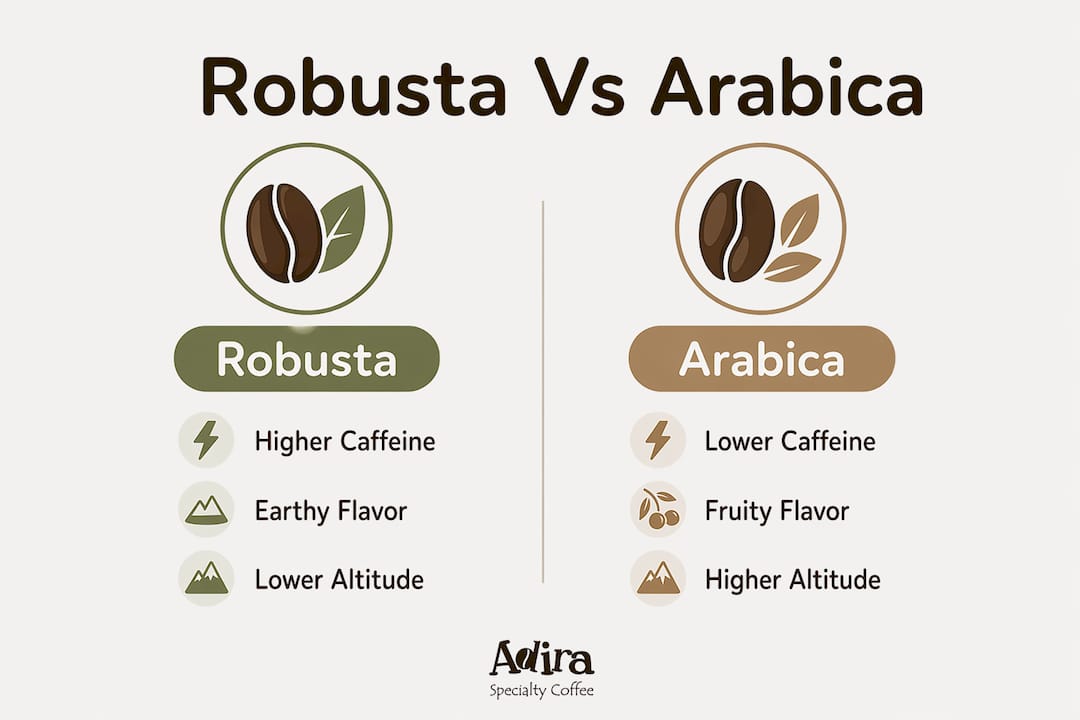
So how is robusta coffee grown? Unlike arabica, which thrives at high elevations with cool temperatures and specific rainfall patterns, robusta is far more adaptable. It grows well at approximately 200 to 800 meters elevation, tolerates heat and humidity, and resists major threats like coffee leaf rust and the coffee borer beetle. For farmers in tropical lowland regions, that resilience is a practical lifeline, especially as climate variability makes high-altitude arabica cultivation increasingly risky.
Here’s what sets robusta’s growing conditions apart from arabica’s:
- Elevation: Robusta thrives at 200–800 meters; arabica requires 600–2,000 meters
- Climate tolerance: Robusta handles higher temperatures and more variable rainfall
- Disease resistance: Robusta naturally resists coffee leaf rust, a fungal disease that devastates arabica crops
- Pollination: Robusta is largely cross-pollinating, which increases genetic diversity
- Yield: Robusta plants generally produce more cherries per tree than arabica
Pro Tip: If you’re exploring coffee growing regions, Vietnam and the Ugandan lowlands are excellent examples of where robusta thrives in conditions that would stress an arabica plant.
The robusta taste profile, explained
Here’s where the conversation gets interesting. Robusta’s reputation for bitterness is real, but the reasons behind it are more specific than most people realize.
Coffea canephora contains about twice the caffeine of arabica, measuring between 1.6% and 2.5% caffeine by dry weight, compared to arabica’s maximum of around 1.3%. Caffeine is bitter by nature. It also acts as a natural pesticide in the plant, which explains why robusta doesn’t need as many chemical interventions in the field. That high caffeine load directly shapes what you taste in the cup.
Beyond caffeine, robusta contains 60% less sugars and fats than arabica. Less sugar means less sweetness and fewer of the fruity or floral notes arabica is celebrated for. Less fat means a thinner perceived mouthfeel in some preparations. The result is a flavor that leans toward:
- Bitterness: More pronounced than arabica, often described as sharp or intense
- Earthiness: Think forest floor, tobacco, or dark soil
- Nuttiness: Roasted peanut or hazelnut tones, especially in medium roasts
- Dark chocolate: A bitter cocoa note rather than milk chocolate sweetness
- Woody or rubbery undertones: Particularly in lower-quality beans or poor extractions
That said, not all robusta tastes identical. Genetic diversity across cultivars means a well-processed Ugandan robusta can taste meaningfully different from a Vietnamese one. The range of coffee flavor profiles within the species is wider than the stereotype suggests.
Roasting and extraction play a huge role too. Overly dark roasts or aggressive extraction push bitterness into uncomfortable territory. A medium roast with controlled extraction time can reveal the earthy, nutty complexity that makes robusta genuinely enjoyable. Understanding the key factors affecting flavor is what separates a great robusta cup from a harsh one.
Pro Tip: If your robusta tastes overwhelmingly bitter, try a slightly shorter extraction time and a coarser grind. Bitterness in robusta often signals over-extraction more than poor bean quality.
Robusta’s role in production and brewing
Robusta accounts for roughly 40% of total global coffee production, with Vietnam and Brazil leading output. That’s not a niche ingredient. That’s nearly half of every cup of coffee consumed worldwide in some form.
The major producing countries and their robusta contributions tell a clear story:
| Country | Role in robusta production |
|---|---|
| Vietnam | World’s largest robusta producer; dominates instant coffee supply |
| Brazil | Produces Conilon variety; significant in both blends and domestic consumption |
| Indonesia | Robusta from Sumatra adds earthy, full-body notes to blends |
| Uganda | Growing specialty-grade robusta with improved processing methods |
| India | Produces robusta alongside arabica; used heavily in espresso blends |
Where robusta really earns its place is in espresso. Its higher caffeine and lower lipid content create a thick, stable crema that arabica alone struggles to produce. Roasters use this strategically: robusta stabilizes the foam layer and maintains crema longevity even as a blend ages in the bag. For espresso-based drinks where crema signals freshness and quality, that matters enormously.
Instant coffee is another domain where robusta dominates. Its flavor withstands the high-heat processing required to make soluble coffee powder far better than arabica does. Vietnamese iced coffee, served sweetened with condensed milk over ice, is probably the most beloved traditional application. The boldness of the robusta base cuts through the sweetness in a way no light arabica would.
You can find robusta’s influence across coffee regions worldwide, woven into blends and single-origin offerings from Sumatra to Uganda.
How to choose and brew robusta coffee well
The biggest mistake curious coffee drinkers make with robusta is writing it off after one bad cup. The quality spectrum within robusta is wide, and where you land on that spectrum depends on three things: processing method, roast level, and brewing approach.
- Look for processed robusta, not commodity-grade. Robusta was historically used as filler in cheap blends, but natural and washed processing methods have elevated its quality significantly. Specialty-grade robusta now earns recognition at international competitions. Seek out beans with documented origins rather than generic blends.
- Choose medium roasts for complexity. A medium roast preserves more of robusta’s nutty and earthy notes. Very dark roasts tend to flatten everything into uniform bitterness, erasing the interesting character underneath.
- Try it in espresso or moka pot first. Robusta performs best under pressure. The crema it produces in an espresso machine or moka pot is richer and more stable than arabica’s. These formats showcase its strengths rather than exposing weaknesses.
- Blend it intentionally. A blend of 20% to 30% robusta with arabica gives you boosted crema, added body, and a caffeine lift without overwhelming the cup. Many Italian-style espresso roasters have used this ratio for generations.
- Adjust your expectations on sweetness. Robusta won’t deliver the bright fruit or floral notes arabica is known for. Go in expecting depth, boldness, and a longer-lasting finish instead.
Pro Tip: Vietnamese iced coffee is a great entry point for robusta skeptics. The sweetened condensed milk balances the bitterness beautifully, and the coffee’s body shines through the ice.
Robusta vs. Arabica coffee: a clear comparison
Understanding robusta means understanding how it compares to arabica, the species that dominates specialty coffee menus worldwide. Check the full arabica breakdown for deeper detail, but here’s the essential contrast:
| Category | Robusta (Coffea canephora) | Arabica (Coffea arabica) |
|---|---|---|
| Growing altitude | 200–800 meters | 600–2,000 meters |
| Caffeine content | 1.6–2.5% | 0.8–1.3% |
| Sugar and fat content | Significantly lower | Higher |
| Flavor profile | Bitter, earthy, nutty, dark chocolate | Fruity, floral, sweet, complex acidity |
| Disease resistance | High | Low to moderate |
| Global production share | ~40% | ~60% |
| Common uses | Espresso blends, instant coffee | Specialty pour-overs, filter coffee, milk drinks |
The contrast isn’t about one being better. It’s about what each does well. Arabica shines in nuanced, single-origin brewing. Robusta contributes power, body, and crema stability in ways that make blended and pressure-brewed coffees distinctly satisfying.
My take on robusta’s unfair reputation
I’ve tasted a lot of robusta over the years, and the one thing that frustrates me most is how the conversation about it almost never moves past “it’s the bitter, cheap one.”
That narrative stuck because, for decades, most of the robusta reaching consumers was low-grade commodity coffee. It was harvested without care, dried poorly, and roasted dark to mask defects. Of course it tasted harsh. But blaming the species for that is like blaming a grape variety for bad winemaking.
What I’ve found is that well-processed robusta from Uganda or Indonesia can hold its own in a serious tasting. The earthy, nutty depth it brings is genuinely interesting. It’s not trying to be arabica and shouldn’t be judged by arabica’s standards. When I taste robusta in a well-built espresso blend, I’m looking for what it adds: the thick crema, the extended finish, the extra caffeine kick that carries the drink. It contributes things arabica literally cannot.
My honest advice: try robusta in a Vietnamese iced coffee or a traditional Italian espresso blend before you form an opinion. Those are the formats where it was designed to perform. You might be surprised by how much you’ve been missing.
— Stefan
Find your perfect cup at Adiracoffee
At Adiracoffee, we believe every coffee species deserves to be judged on what it does best, not on outdated assumptions. Whether you’re curious about robusta’s bold character or want to explore how it performs in signature blends, our small-batch roasting process means you’re always getting fresh beans with full flavor intact. Start by browsing our single-origin selections to see the range of origins and profiles we carry, from Sumatra’s earthy depth to Colombia’s bright sweetness. Not sure where you land on the spectrum? Take the coffee quiz to find blends matched to your taste preferences. Every bag ships within days of roasting, and subscriptions include 10% savings with free US shipping over $35.
FAQ
What is robusta coffee and how does it differ from arabica?
Robusta coffee comes from Coffea canephora and contains up to twice the caffeine of arabica (Coffea arabica), along with less sugar and fat. This produces a bolder, more bitter flavor compared to arabica’s sweeter, more nuanced profile.
Is robusta coffee stronger than arabica?
Yes. Robusta contains between 1.6% and 2.5% caffeine by dry weight, compared to arabica’s maximum of roughly 1.3%, making it noticeably stronger as a stimulant.
What does robusta coffee taste like?
Robusta typically delivers bold bitterness, earthy and woody notes, nuttiness, and dark chocolate tones. The flavor intensity depends heavily on processing method, roast level, and brewing technique.
Why is robusta used in espresso blends?
Robusta’s higher caffeine and lower lipid content create a thick, stable crema that arabica alone cannot consistently produce. It also adds body and extends the finish of espresso-based drinks.
Can robusta coffee be specialty-grade?
Yes. Improved natural and washed processing methods have elevated robusta beyond commodity status. Specialty-grade robusta from origins like Uganda now receives recognition for genuine quality and flavor complexity.