
TL;DR:
- Coffee crema, a complex emulsion of oils, CO2 bubbles, and solids, signals proper extraction and bean freshness. Its formation depends on pressure, roast level, grind, and machine calibration, but does not guarantee flavor quality. Trained observation and tasting are essential for interpreting crema’s significance in espresso quality.
That amber layer sitting on top of your espresso shot is not foam. Most people treat it like decoration, but coffee crema is actually one of the most revealing signals in all of coffee brewing. What is coffee crema, exactly? It is a complex emulsion of coffee oils, carbon dioxide bubbles, and suspended solids that forms only under specific pressure and temperature conditions. Getting it right tells you a lot about your beans, your grind, and your machine. Getting it wrong tells you just as much.
Table of Contents
- Key Takeaways
- What is coffee crema: composition and chemistry
- Factors influencing crema quality
- Interpreting crema: what it tells you about your shot
- Practical tips for making espresso with great crema at home
- Variations on crema across styles and cultures
- My honest take on chasing crema
- Get the beans that make crema actually work
- FAQ
Key Takeaways
| Point | Details |
|---|---|
| Crema is a complex emulsion | It forms from CO2, coffee oils, and suspended solids forced together under pressure during espresso extraction. |
| Freshness is the foundation | Beans used 7 to 14 days off roast produce the most stable, well-structured crema. |
| Appearance signals extraction | Crema color and persistence reveal whether your shot is balanced, under-extracted, or over-extracted. |
| Crema does not equal flavor | A shot with thin crema can taste extraordinary; crema is a diagnostic tool, not a flavor guarantee. |
| Machine calibration matters | Effective pressure at the coffee puck, not just pump output, determines whether emulsification occurs. |
What is coffee crema: composition and chemistry
Crema starts with physics. When water at roughly 195 to 205°F passes through finely ground, compacted coffee at around 9 bars of pressure, it dissolves CO2 trapped inside the beans and forces coffee oils out of the grounds. As that pressurized liquid drops to normal atmospheric pressure in your cup, the dissolved CO2 comes out of solution and forms millions of tiny bubbles. Those bubbles are immediately coated by emulsified coffee oils and surface-active compounds, which stabilize them and give crema its characteristic velvety texture.
This is the key distinction between espresso and every other brew method. French press, pour-over, and drip coffee never generate the pressure required for this emulsification. Without that pressure, CO2 escapes freely and oils disperse unevenly. The result is liquid coffee, not a pressurized emulsion.
| Component | Role in crema |
|---|---|
| CO2 | Creates bubble structure; primary driver of crema volume |
| Coffee oils (lipids) | Coats and stabilizes CO2 bubbles; contributes to texture |
| Surface-active compounds | Reduces surface tension; allows stable emulsion to form |
| Suspended fine solids | Adds body and color; influences crema density |
| Extraction pressure (~9 bars) | Forces emulsification and CO2 dissolution simultaneously |
Pro Tip: If your crema collapses within 10 seconds of pulling the shot, the issue is almost always one of three things: stale beans, under-extraction, or insufficient puck resistance. Start diagnosing from the bean, not the machine.
Factors influencing crema quality
Crema quality is not random. Four variables control it more than anything else: bean freshness, roast level, grind calibration, and machine parameters.
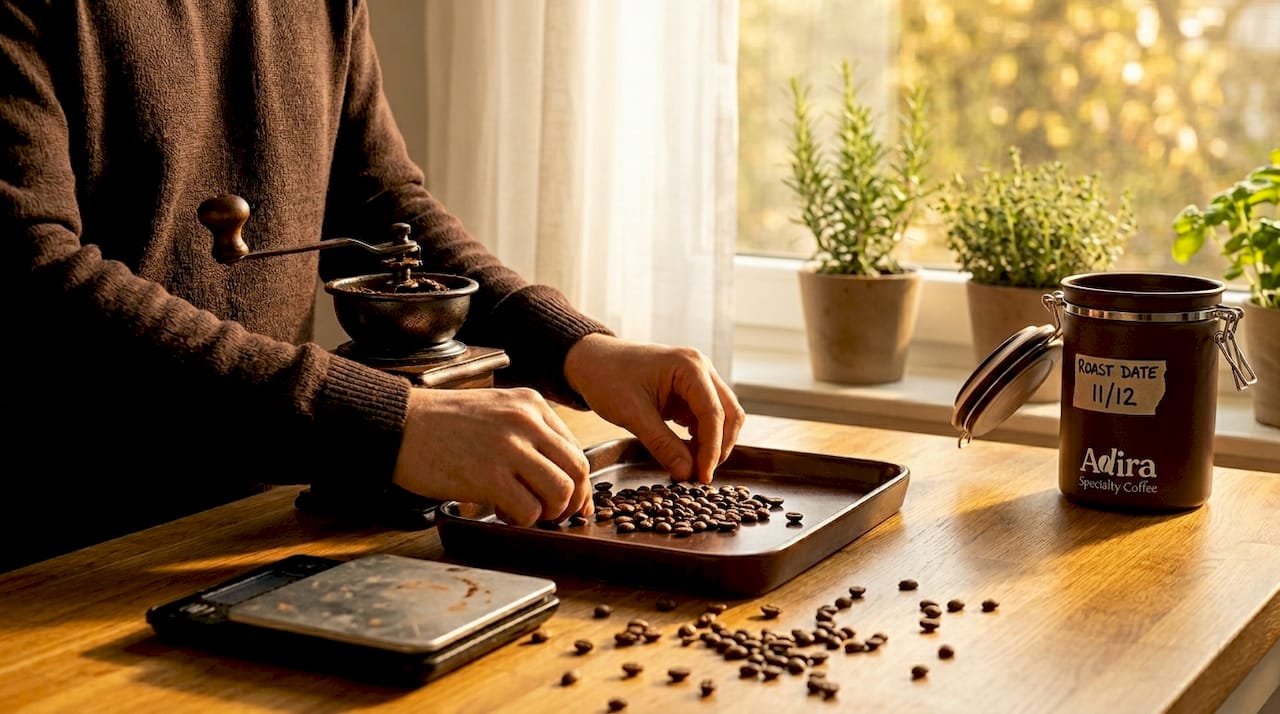
Bean freshness is the single largest variable. Coffee releases CO2 steadily after roasting through a process called degassing. Beans older than 4 to 5 weeks typically yield very little or no crema because the available CO2 has already escaped. But beans that are too fresh present the opposite problem. Pull a shot with beans roasted less than 48 hours ago and you will get a tall, bubbly, unstable crema that collapses in seconds. The sweet spot is real. Too much or too little CO2 both disrupt crema formation and stability. If you are buying whole bean coffee, roast date is the number you are looking for on the bag, not the “best by” date.
Roast level shapes crema color and persistence. Medium roasts produce the most balanced crema: enough oil development for stability, enough CO2 retention for volume. Very light roasts can yield thinner, paler crema because the beans have not fully developed their oils. Very dark roasts often produce crema that looks dramatic but collapses fast, since aggressive roasting drives off CO2 rapidly while over-developing surface oils.
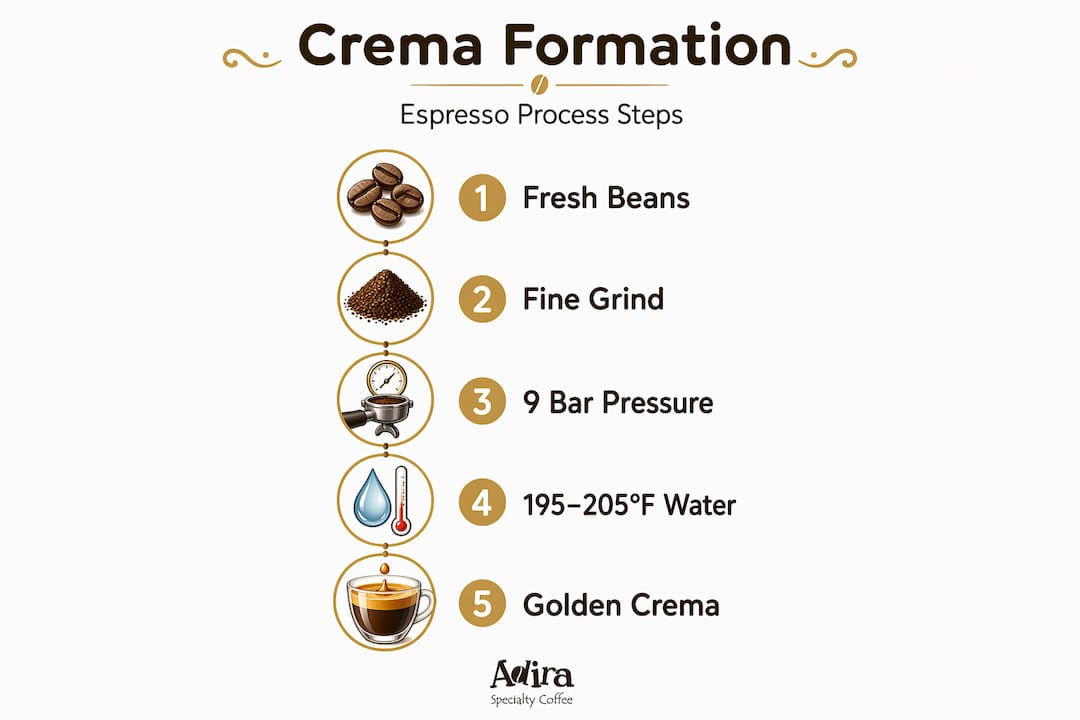
Grind size and tamping determine how much resistance the coffee puck provides. Here is something most home brewers miss: effective 9-bar pressure happens at the coffee puck, not at the pump. Your machine might read 9 bars all day, but if your grind is too coarse or your tamp is too light, water flows through with minimal resistance and true emulsification never occurs. Crema suffers before you ever touch the dial.
Key factors checklist:
- Roast date: Use beans 7 to 14 days off roast for stable crema
- Roast level: Medium roasts offer the best balance of CO2 and oil development
- Grind size: Fine enough to create 25 to 30 second extraction; adjust by seconds, not guessing
- Dose: 18 to 20 grams for a double shot creates consistent puck resistance
- Tamping pressure: Even, level tamping at approximately 30 pounds of pressure
- Water temperature: 195 to 205°F as specified in SCA brewing parameters
- Machine pressure: Verify effective pressure at the puck, not just the pump gauge
Pro Tip: After getting new beans, wait two to three days before pulling your first espresso shot. That short rest allows the most chaotic CO2 to dissipate, giving you far more stable and readable crema on your first real pull.
The troubleshooting table below maps crema symptoms to their most likely causes:
| Crema symptom | Likely cause | Fix |
|---|---|---|
| No crema at all | Stale beans or extremely coarse grind | Check roast date; grind finer |
| Collapses immediately | Beans too fresh or over-extracted | Rest beans 2 to 3 more days; shorten extraction |
| Very pale or thin | Under-extraction or light roast | Grind finer; increase dose slightly |
| Very dark and bitter-smelling | Over-extraction | Coarsen grind; reduce extraction time |
| Uneven or spotty | Uneven tamp or channeling | Re-tamp evenly; check grinder distribution |
Interpreting crema: what it tells you about your shot
Learning to read crema correctly turns you from a coffee maker into a coffee diagnostician. But you have to know what you are actually looking at, because crema can mislead as easily as it can inform.
Here is a practical guide to the characteristics you will see and what they suggest:
- Golden to reddish-brown, even color: Indicates balanced extraction. This is the target. The shot likely hit the right temperature, pressure, and extraction window.
- Very pale, almost cream-colored: Points to under-extraction. The shot ran too fast, the grind was too coarse, or the dose was too low. Expect thin, sour, or sharp-tasting espresso.
- Very dark brown or blackish patches: Suggests over-extraction. The water spent too long in contact with the coffee and pulled out bitter compounds. Crema will look dramatic but taste harsh.
- Tall and bubbly, collapses within seconds: Classic sign of very fresh beans producing excess CO2 that the emulsion cannot stabilize. Not an automatic quality problem, but points to a degassing timing issue.
- Thin but persistent, lasts a minute or more: Often a sign of well-balanced extraction. Do not confuse thin with bad. Thinner stable crema frequently reflects better extraction than a tall volatile layer.
The most important thing to understand about the role of coffee crema is that crema signals extraction quality but cannot replace taste judgment. A shot can produce beautiful crema during a mis-extraction, and some genuinely delicious espressos from lighter roasts or certain origins produce modest crema. Crema does not guarantee good taste. Always drink the shot. Let your palate be the final judge.
Crema does contribute real sensory value. It traps aromatic compounds and releases them as you bring the cup to your mouth, which amplifies the perception of fragrance. It also adds a slight thickness to the first sip that affects mouthfeel. Isolated, crema actually tastes slightly bitter. Integrated with the espresso body beneath it, it adds depth and complexity.
Practical tips for making espresso with great crema at home
Getting consistent crema at home comes down to controlling the variables you can actually control. The machine matters far less than most people think.
- Buy fresh, roasted-to-order beans. Look for a roast date on the bag, not a best-by date. Use beans between 7 and 14 days off roast for optimal CO2 balance. Adiracoffee’s Colombia single-origin is roasted fresh to order and ships within days of roasting, which puts you exactly in that window.
- Dial in your grind before anything else. Shoot for a 25 to 30 second extraction time on a double shot. If your shot runs fast and crema is thin, grind finer. If the shot chokes and crema is dark and spotty, coarsen the grind slightly.
- Use 18 to 20 grams for a double. Consistent dosing creates consistent puck resistance, which is what generates the pressure needed for proper emulsification.
- Tamp evenly and firmly. An uneven tamp creates channels where water bypasses the coffee bed entirely. That destroys both extraction balance and crema uniformity.
- Store your beans properly. CO2 dissipates faster in heat, humidity, and light. Keep beans in an airtight container away from sunlight. Adiracoffee has a thorough guide on storing coffee for freshness that covers this in detail.
- Troubleshoot systematically. Start with roast date, then grind, then machine calibration. Most crema problems are solved before you ever open the machine.
Pro Tip: If you want more crema volume without switching machines, try a blend that includes a small percentage of Robusta. Robusta contains nearly twice the caffeine and significantly more CO2 per gram compared to Arabica, which translates directly into more crema. Many Italian espresso blends use exactly this technique.
Variations on crema across styles and cultures
Not all espresso traditions treat crema the same way. Understanding those differences helps you avoid chasing one standard when multiple valid ones exist.
- Italian espresso tradition prizes a dense, hazelnut-colored crema that persists for at least a minute. Italian roasters often use medium-dark blends with some Robusta content specifically to guarantee crema volume and stability.
- Specialty coffee culture tends to favor lighter roasts and single-origin beans that may produce thinner, more fleeting crema. In this context, evaluating the role of coffee crema shifts toward aroma contribution rather than visual thickness.
- Café crema, common in Switzerland and parts of Northern Europe, is a longer espresso drink brewed with more water. It produces a lighter, thinner crema layer but a larger overall beverage.
- Professional cupping sessions rarely evaluate crema as a primary quality indicator. Cuppers prioritize aroma, acidity, body, and aftertaste scored separately from visual presentation.
The takeaway: crema preferences are cultural and contextual. A thin crema on a washed Ethiopian single-origin is not a failure. It is the expected result of that bean’s chemistry and roast profile.
My honest take on chasing crema
I have spent years roasting and tasting espresso, and the most consistent mistake I see in home brewers is prioritizing crema appearance over what is actually in the cup. People dial their grinder up and down, swap beans, and even change machines chasing a thicker layer on top. Then they drink the shot and it tastes sharp or flat, but the crema looked great so they assume they are close.
Crema is a useful signal. I use it every time I pull a shot. But I never let it override the palate. The shot I am most proud of from last year came from a washed Ethiopia that produced a modest, pale crema and tasted like peach and jasmine for thirty seconds after the last sip. No amount of visual crema analysis would have predicted that.
What I have learned is that the best approach is to use crema as a first filter. Look at the color and stability to catch obvious problems like under-extraction or stale beans. Then drink the shot and adjust from there. Balance freshness and technique, accept that crema will vary by origin and roast, and let your palate have the final word. Coffee is meant to be tasted, not photographed.
— Stefan
Get the beans that make crema actually work

Great crema starts with great beans, and great beans start with the roast date. Adiracoffee sources directly from around 50 farms across Colombia, Ethiopia, Costa Rica, Guatemala, Brazil, and Sumatra, and roasts in small batches to ship at peak freshness. If you want to put everything in this article into practice, you need beans that still have their CO2. Take the coffee preference quiz to get matched with a roast profile built for your brewing style, or browse by roast level using the roast selector to find something dialed in for espresso. Either way, you will be pulling shots with beans that are actually fresh, which is where every crema conversation has to start.
FAQ
What is the coffee crema definition?
Crema is the emulsified layer of CO2 bubbles, coffee oils, and suspended solids that forms on top of a properly pulled espresso shot. It requires pressurized extraction at around 9 bars to form.
Why does my espresso have no crema?
The most common cause is stale beans. Beans older than 4 to 5 weeks have lost most of their CO2 through degassing, which eliminates the gas needed to form crema. Check your roast date first.
Does more crema mean better espresso?
Not necessarily. Crema is a signal of extraction conditions, not a direct indicator of flavor quality. A shot with thin crema can taste exceptional, while thick crema can accompany an over-extracted or poorly sourced shot.
What is the difference between coffee crema vs foam?
Crema is a pressurized emulsion of oils and CO2 that forms during espresso extraction. Foam, like milk foam, is created by aerating liquid with air. They look similar but have completely different structures and origins.
How do I make coffee crema more stable?
Use beans 7 to 14 days off roast, grind fine enough to create 25 to 30 second extractions, tamp evenly, and verify your machine delivers effective pressure at the coffee puck. Storage in an airtight container away from heat also preserves the CO2 your crema depends on.