
TL;DR:
- Artisan coffee emphasizes meticulous sourcing, small-batch roasting, and high freshness to deliver complex, origin-specific flavors. It must score at least 80 points on the SCA scale and prioritize transparency, traceability, and craftsmanship, unlike commercial coffee. Recognizing roast date, origin details, and tasting notes helps identify genuine artisan brews, which offer a noticeably richer and more intentional coffee experience.
Artisan coffee is defined as coffee produced with exceptional attention to quality at every stage, from ethical sourcing and small-batch roasting to precise brewing, and it must score at least 80 points on the Specialty Coffee Association’s 100-point scale to qualify. The industry term you’ll also see used interchangeably is specialty coffee, though “artisan” carries an added emphasis on the human craft and philosophy behind each batch. What separates artisan coffee from the bag on a grocery store shelf isn’t just price or packaging. It’s a fundamentally different set of priorities: traceability, freshness, roasting skill, and a direct relationship between the farmer and the roaster.
What is artisan coffee, and what makes it different?
Artisan coffee is coffee where every decision, from which farm supplies the beans to how many days after roasting the bag ships, is made with flavor and quality as the primary goal. The Specialty Coffee Association (SCA) formalizes this with its grading system, and an 80-plus score is the floor, not the ceiling. Most serious artisan roasters aim well above it.
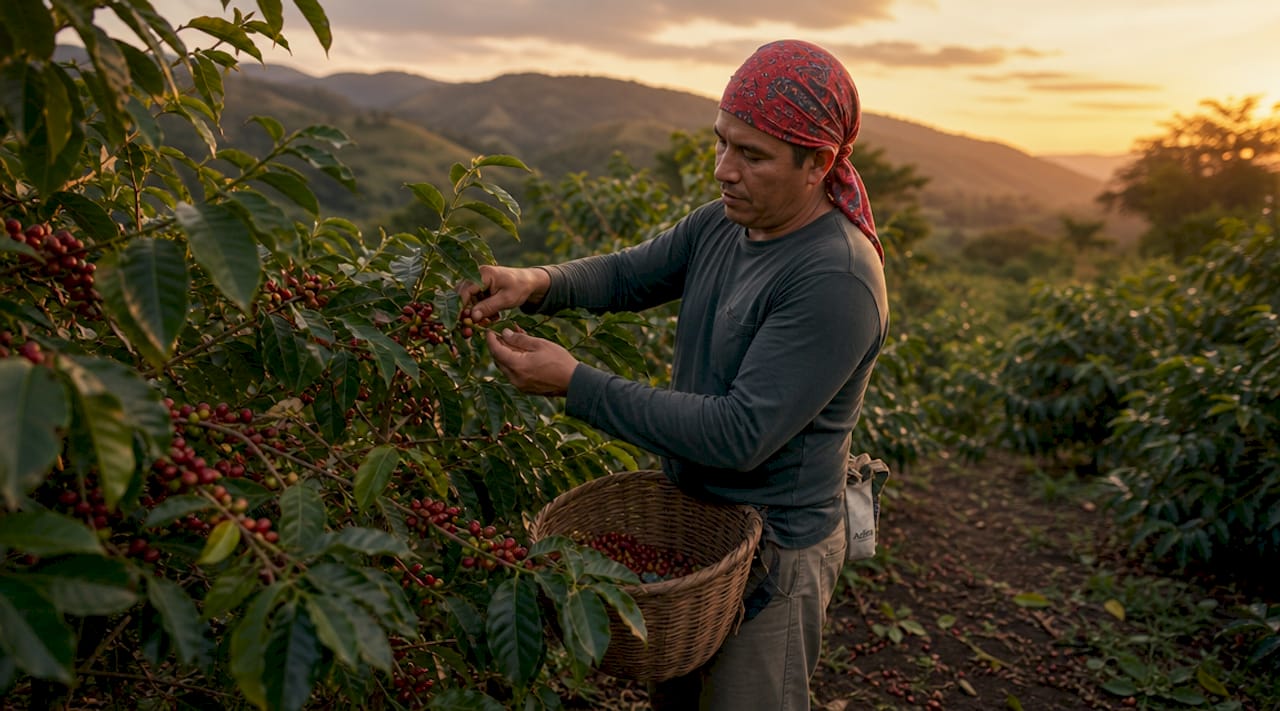
The term “artisanal coffee” carries the same meaning. Both phrases describe coffee that prioritizes craftsmanship over volume. Where commercial roasters optimize for consistency at scale, artisan roasters optimize for the best possible expression of a specific bean from a specific place.
This distinction matters because it changes what ends up in your cup. A bag of artisan coffee from Colombia’s Huila region tastes different from one sourced in Ethiopia’s Yirgacheffe zone, and a skilled roaster treats each origin differently. That specificity is the whole point.
Key characteristics that define artisan coffee
Several concrete practices separate artisan coffee from everything else on the market.
- Small-batch roasting. Artisan roasting batches typically run under 15kg. Smaller batches allow the roaster to monitor temperature curves, listen for the first and second crack, and adjust airflow in real time. A 300kg industrial drum doesn’t allow for that level of control.
- Manual sensory monitoring. Artisan roasters rely on sight, smell, and sound alongside digital roast-profiling software. The roaster’s judgment is the final call, not an automated timer.
- Single-origin sourcing. Many artisan coffees come from one farm, cooperative, or region. This traceability lets roasters communicate the story of the bean and lets you taste the specific terroir of a place.
- Direct trade relationships. Direct farm-to-roaster relationships improve both quality and sustainability. Farmers receive better prices, which funds better farming practices, which produces better beans.
- Freshness as a non-negotiable. Artisan roasters ship within days of roasting, not months. The volatile aromatic compounds that give coffee its complexity degrade quickly after roasting, so freshness is a quality issue, not just a marketing claim.
- Intentional blending. Artisan blends combine beans from complementary origins to create balanced flavor profiles, highlighting sweetness, body, and acidity in deliberate proportion.
Pro Tip: Look for a roast date on the bag, not just a “best by” date. A roast date tells you exactly how fresh the coffee is. Anything roasted within the past two to four weeks is in its prime window.
The philosophy behind all of these practices is the same: treat the bean with respect, and it will reward you with flavor that mass production simply cannot replicate.
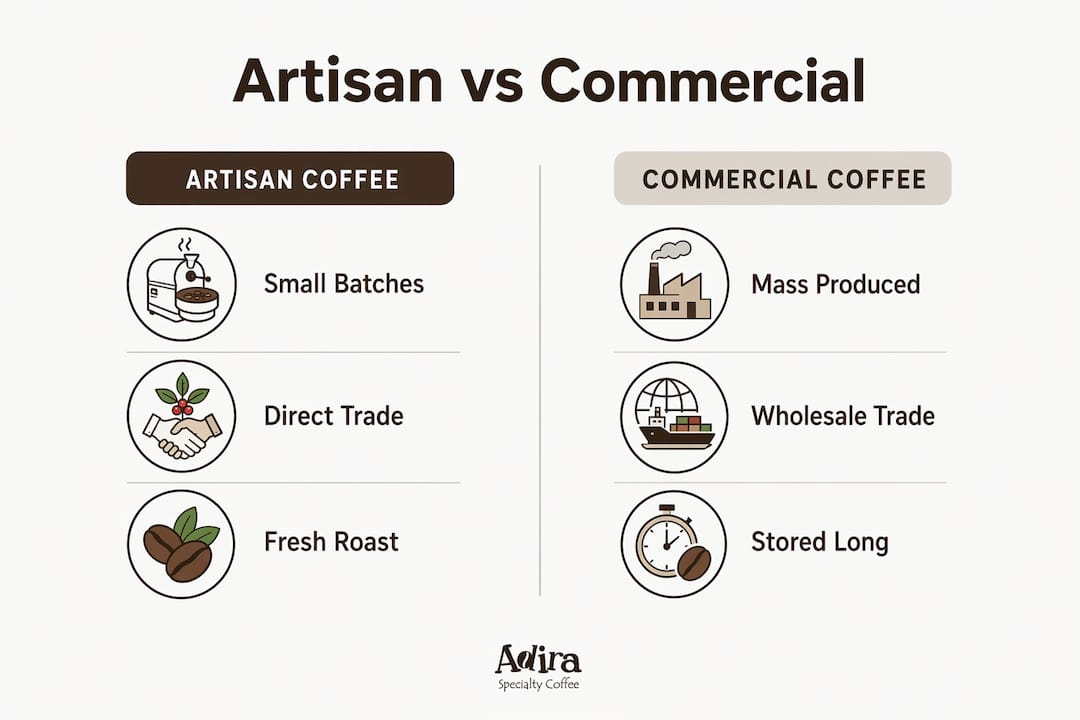
Artisan coffee vs regular coffee: what actually changes
The differences between artisan and commercial coffee run deeper than most people expect.
| Factor | Artisan coffee | Regular commercial coffee |
|---|---|---|
| Batch size | Under 15kg, manually monitored | Hundreds of kilograms, automated |
| SCA quality score | 80+ points required | Typically below 80 points |
| Sourcing | Single-origin or direct trade | Commodity blends from multiple origins |
| Roast-to-ship time | Days | Months, often stored in warehouses |
| Flavor profile | Complex, origin-specific, nuanced | Consistent but flat, often bitter |
| Transparency | Farm name, region, processing method listed | Generic “100% Arabica” or blend label |
The freshness gap is the most underappreciated difference. Mass-produced commercial coffee often stores beans for months before they reach a shelf, causing significant loss of volatile oils and aromatic compounds. By the time you brew it, much of what made the bean interesting is already gone.
Roasting precision is the second major gap. Roasting errors like scorching or underdevelopment ruin flavor regardless of how good the raw bean is. Commercial roasters accept a wider margin of error because consistency at scale is the goal. Artisan roasters have no such tolerance. One bad batch is a failure, not an acceptable defect rate.
Pro Tip: If your coffee tastes bitter and flat even with good brewing technique, the problem is almost certainly the roast date and batch size, not your grinder or water temperature. Fresh, small-batch coffee is far more forgiving to brew.
The factors affecting coffee flavor include roast level, bean origin, processing method, and storage conditions. Artisan coffee controls all four. Commercial coffee controls almost none of them with the same precision.
The artisan coffee production journey: from farm to cup
Understanding how artisan coffee gets from a farm in Ethiopia or Colombia to your kitchen helps explain why it tastes the way it does. Each stage is a deliberate choice.
-
Hand-picking at origin. Artisan-grade coffee starts with selective hand-picking, where only ripe cherries are harvested. This is labor-intensive compared to strip-picking, but it prevents unripe or overripe cherries from contaminating the batch and introducing harsh or fermented flavors.
-
Careful processing. After harvest, beans are processed using washed, natural, or honey methods. Each method affects the final flavor. Washed coffees tend toward clarity and brightness. Natural-processed beans develop more fruit-forward, complex sweetness. The artisan roaster chooses origins partly based on how the processing method aligns with the flavor profile they want to achieve.
-
Direct trade and sustainability. Artisan coffee emphasizes direct relationships between farmers and roasters, which creates accountability at origin. When a roaster visits a farm in Costa Rica or Sumatra and pays above commodity price, the farmer has both the incentive and the resources to maintain quality standards.
-
Small-batch roasting with manual control. This is where the artisan roaster’s skill becomes most visible. Batches under 15kg allow the roaster to adjust heat and airflow throughout the roast, following a specific profile designed for that bean. The delicate flavor oils in artisan coffee require precise temperature management to develop fully without scorching. Learn more about small-batch roasting and why it produces a fundamentally different result.
-
Rapid shipping after roasting. Artisan roasters ship within days of roasting. Carbon dioxide off-gasses from freshly roasted beans for 24 to 72 hours, after which the coffee enters its peak flavor window. Shipping fast means the customer gets the coffee at its best.
-
Intentional brewing. Artisan coffee rewards brewing methods that highlight its complexity. Pour-over methods like the Hario V60 or Chemex give you clarity and brightness. A French press emphasizes body and texture. Espresso concentrates the flavor, making the roast profile even more apparent. The brewing method is the final step in a long chain of intentional decisions.
How to identify and appreciate artisan coffee
Knowing what to look for on a bag and in a cup makes it much easier to find genuine artisan coffee and get the most from it.
- Check for a roast date. A specific roast date is a strong signal of an artisan producer. Vague “best by” dates suggest the roaster doesn’t want you doing the math on freshness.
- Look for origin transparency. Single-origin coffees list the country, region, farm, or cooperative. “Colombia” is a start. “Colombia, Huila, La Palma y El Tucán” is artisan-level transparency.
- Find the SCA score or specialty grade label. An 80-plus SCA score confirms the coffee meets the formal quality threshold. Some roasters publish cupping scores directly on the bag or their website.
- Read the tasting notes critically. Artisan coffees list specific flavor descriptors: jasmine, dark cherry, brown sugar, citrus zest. Generic notes like “smooth” or “bold” tell you nothing about the bean’s actual character.
- Store it properly. Keep artisan coffee in an airtight container away from light and heat. Don’t refrigerate it. The goal is to slow oxidation and preserve the volatile oils that took so much care to develop.
- Match your brewing method to the roast level. Light roasts shine in pour-over or Aeropress. Medium roasts work well across most methods. Dark roasts are built for espresso or French press, where their body and low acidity are assets. Exploring specialty coffee standards gives you a clearer framework for evaluating what you’re buying.
Key takeaways
Artisan coffee requires small-batch roasting, direct-trade sourcing, and an SCA score above 80 to deliver the flavor complexity and freshness that commercial coffee cannot match.
| Point | Details |
|---|---|
| SCA quality threshold | Artisan coffee must score 80 or above on the SCA’s 100-point scale to qualify as specialty grade. |
| Small-batch roasting | Batches under 15kg allow manual control over heat and airflow, preserving delicate flavor oils. |
| Freshness gap | Commercial coffee loses volatile oils during months of storage; artisan coffee ships within days of roasting. |
| Direct trade sourcing | Farm-to-roaster relationships improve bean quality, traceability, and sustainability at origin. |
| Brewing method matters | Matching your brewing method to the roast level extracts the full flavor complexity artisan coffee offers. |
Why artisan coffee is worth caring about
I didn’t grow up drinking artisan coffee. In Bulgaria, coffee was strong, fast, and functional. When Ekaterina and I moved to California and started looking for something worth a second cup, we kept hitting the same wall: bags with beautiful labels and coffee that tasted like it had been sitting in a warehouse since the previous year.
What changed my perspective wasn’t a single great cup. It was understanding the chain of decisions that produced it. When you know a roaster visited the farm in Colombia, paid a fair price, roasted the beans two days before shipping, and dialed in a specific profile to highlight the bean’s natural sweetness, the cup tastes different. Not just better. More intentional.
The misconception I hear most often is that artisan coffee is expensive for the sake of being expensive. It isn’t. The price reflects real costs: hand-picking, direct trade premiums, small-batch equipment, and the labor of a skilled roaster who treats every batch as a craft product. What you’re paying for is the absence of shortcuts.
My honest recommendation: buy a bag with a roast date from this week, brew it with a simple pour-over, and compare it to whatever you’re drinking now. The difference isn’t subtle.
— Stefan
Taste the difference with Adiracoffee
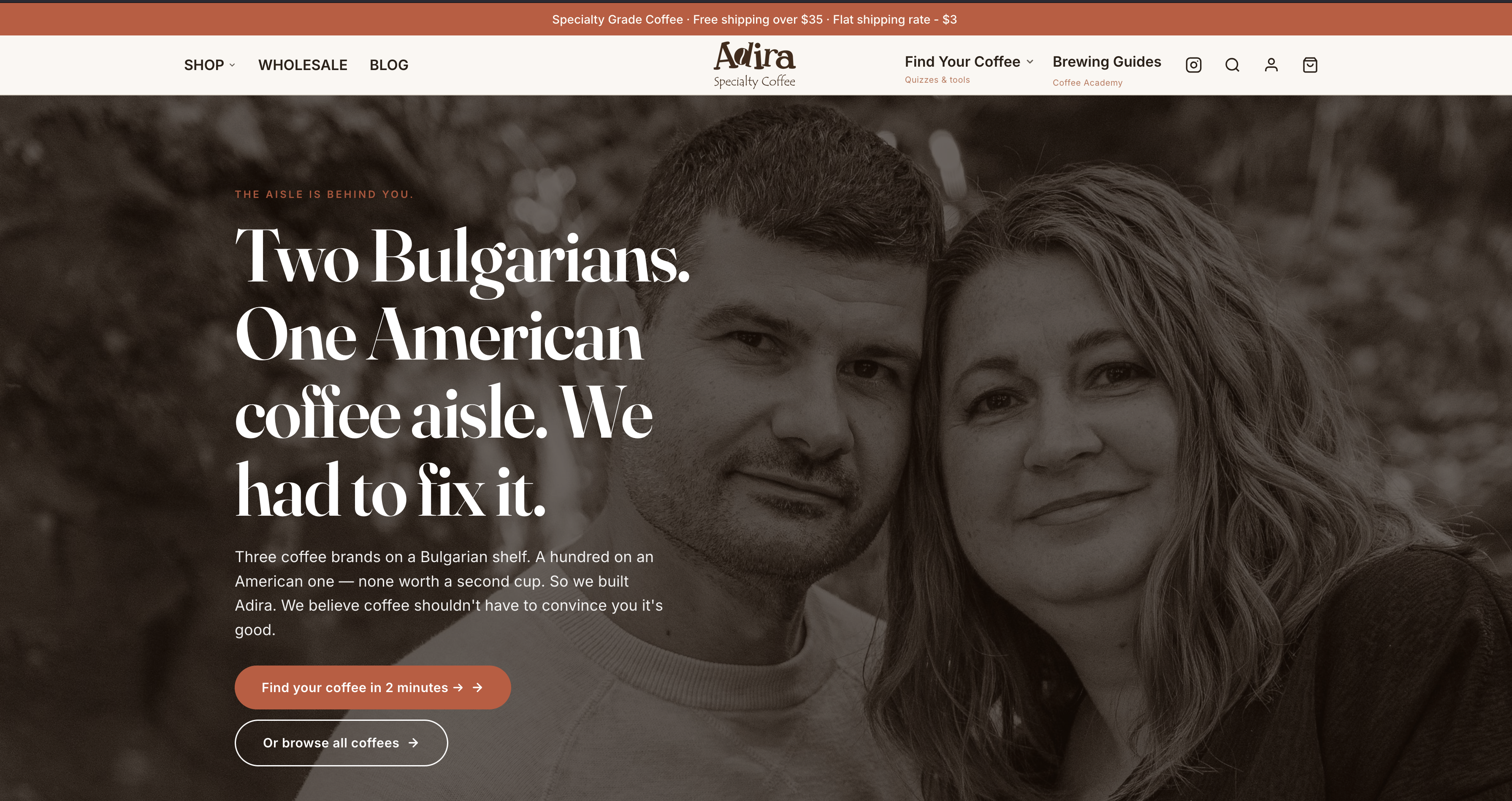
Adiracoffee was built on exactly the frustration Stefan described: too many bags, not enough quality. Every coffee Adiracoffee roasts in small batches in California comes from cooperatives and small farms in Colombia, Ethiopia, Costa Rica, Mexico, and Sumatra. Beans are roasted to order and shipped within days, so you get the coffee at peak freshness, not after months in a distribution center. If you want to experience what single-origin artisan coffee actually tastes like, start with the single-origin collection to taste the difference that origin and freshness make. For a balanced everyday cup, the Love Blend brings together complementary origins roasted to highlight sweetness and body. Subscriptions include 10% savings and free US shipping over $35.
FAQ
What is artisan coffee in simple terms?
Artisan coffee is high-quality coffee produced with careful sourcing, small-batch roasting, and expert craftsmanship. It must score at least 80 points on the Specialty Coffee Association’s 100-point scale to qualify as specialty grade.
What defines artisan coffee vs regular coffee?
Artisan coffee uses direct-trade sourcing, small batches under 15kg, and ships within days of roasting. Regular commercial coffee uses commodity beans, large automated roasters, and often sits in storage for months before reaching the consumer.
How can I tell if coffee is truly artisan?
Look for a specific roast date, named origin details such as farm or region, an SCA score or specialty grade label, and tasting notes that describe specific flavors rather than generic terms like “smooth” or “bold.”
Does artisan coffee taste noticeably different?
Yes. The combination of fresh roasting, precise heat management, and quality sourcing produces flavor complexity, brightness, and smoothness that mass-produced coffee cannot replicate. The difference is most apparent in a simple pour-over brew.
What brewing method works best for artisan coffee?
Pour-over methods like the Hario V60 or Chemex highlight the clarity and origin-specific flavors of light to medium roasts. French press works well for medium to dark roasts where body and texture are the focus.
Recommended
- How Coffee Farms Define Flavor: Practices That Impact Quality – Adira Coffee US
- Why Quality Coffee Beans Matter for Flavor and Ethics – Adira Coffee US
- Why Hand-Picked Coffee Beans Deliver a Superior Brew – Adira Coffee US
- Ethiopian Natural Coffee: Why We Chose This Origin at Adira – Adira Coffee US