
TL;DR:
- Cup scores quantify the quality of green coffee based on ten sensory attributes scored on a 100-point scale.
- Scores of 80 and above qualify as specialty grade, influencing pricing and trade categorization globally.
Cup scores are standardized numerical ratings that measure coffee quality across ten sensory attributes, forming the backbone of how specialty coffee is bought, sold, and understood worldwide. The Specialty Coffee Association (SCA) developed a 100-point cupping scale that defines the role of cup scores in coffee as both a quality benchmark and a trade language. Any coffee scoring 80 points or higher earns the designation “specialty grade.” That single threshold separates a premium product from a commodity, and it shapes everything from farm-gate pricing to what lands in your morning cup.
What attributes make up coffee cup scores?
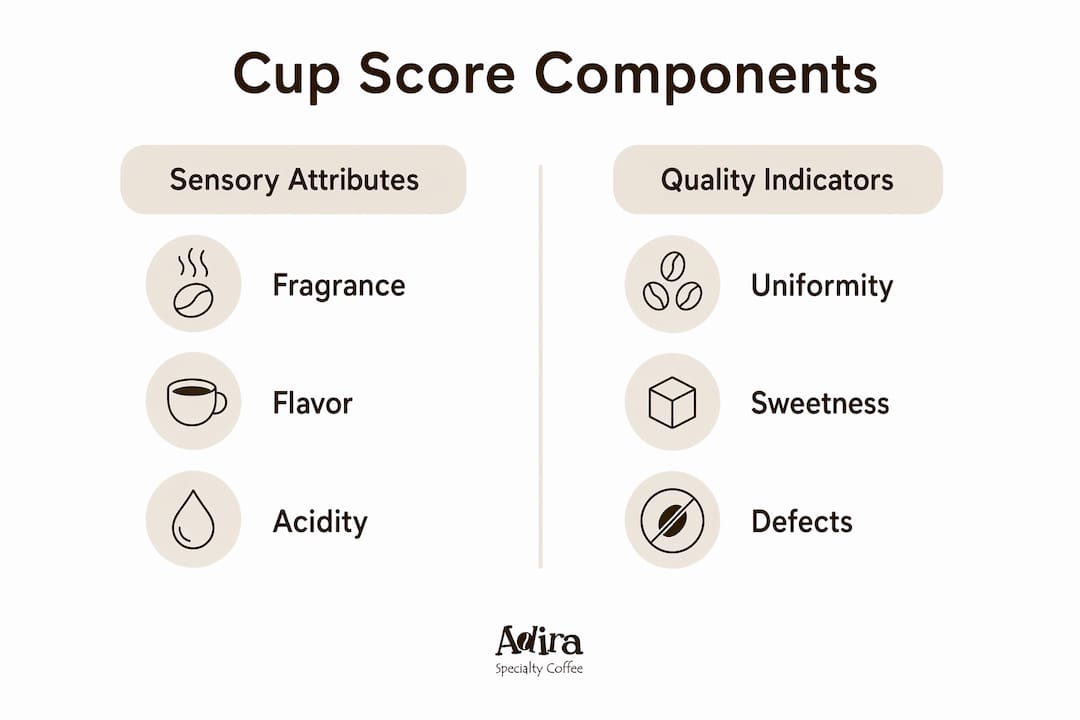
The SCA cupping protocol evaluates ten distinct sensory attributes, each scored on a scale from 6 to 10 in 0.25-point increments. Those attributes are fragrance and aroma, flavor, aftertaste, acidity, body, balance, uniformity, clean cup, sweetness, and an overall impression score. Each one captures a different dimension of the coffee’s sensory character.
Here is what each attribute measures:
- Fragrance and aroma: The dry and wet smell of the grounds before and after hot water is added.
- Flavor: The full taste impression, covering all sensations from first sip to swallow.
- Aftertaste: The quality and length of flavor that lingers after swallowing.
- Acidity: The brightness or liveliness of the coffee, not sourness. High-quality acidity reads as clean and pleasant.
- Body: The physical weight and texture of the coffee on the palate.
- Balance: How well all the above attributes work together without one overwhelming the others.
- Uniformity, clean cup, and sweetness: Each of these three is assessed across five separate cups of the same sample, with 2 points available per cup, totaling 10 points each.
The five-cup assessment for uniformity, clean cup, and sweetness is where defects hit hardest. One defect across all five cups can cause a 20-point deduction, which drops a coffee from specialty grade to commercial grade in a single evaluation. That is not a minor penalty. It reflects how seriously the protocol treats consistency.
Defects fall into two categories: taints, which are minor off-flavors, and faults, which are severe enough to make the coffee unpleasant. Both are subtracted from the final score after all attributes are totaled.
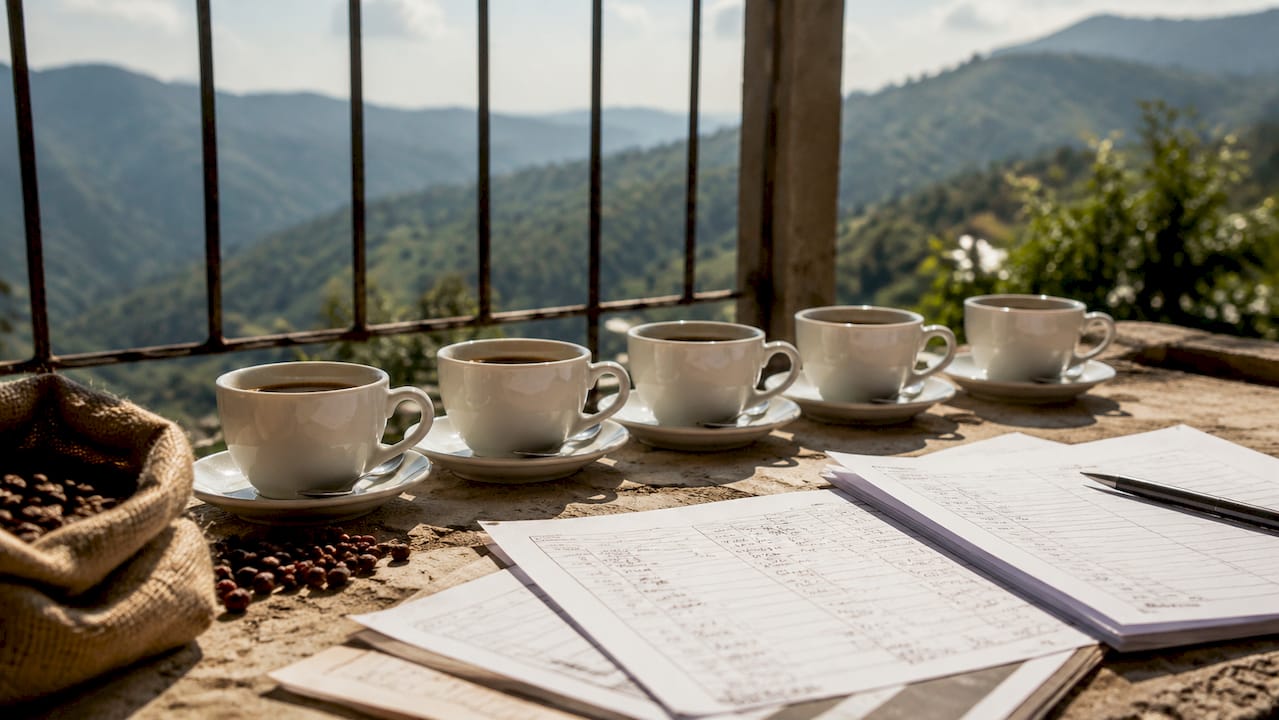
Pro Tip: If you are learning to cup coffee at home, start by evaluating fragrance before adding water and aroma immediately after. These two steps alone train your nose to detect off-notes like mustiness or fermentation before you even taste the coffee.
How do cup scores affect coffee pricing and quality grades?
Cup scores define quality grades with real financial consequences. Specialty coffee is defined as scoring 80 points or higher on the SCA scale. Scores from 85 to 89 represent very high quality. Coffees scoring 90 or above are exceptional and represent the top 1% of global lots.
The pricing impact is direct and significant. A 5-point cupping score difference correlates to $1 to $2 per pound in B2B markets. At container scale, that translates to price swings of $40,000 to $80,000. A single cupping session can determine whether a contract is signed or renegotiated.
| Score range | Quality grade | Typical retail price per bag |
|---|---|---|
| Below 80 | Commercial grade | Under $12 |
| 80–84 | Specialty grade | $14–$22 |
| 85–89 | Very high quality | $22–$35 |
| 90+ | Exceptional | $35–$65+ |
Only 5 to 10% of coffee worldwide scores 80 or above. Coffees scoring 90 or higher represent under 1% of global production. That scarcity explains why top-tier lots command prices that seem extreme to casual buyers but are entirely rational to professionals who understand the scoring system.
The 79-to-80-point jump is the most consequential single threshold in the entire industry. A coffee sitting at 79 points is a commodity. The same coffee at 80 points is specialty grade, eligible for premium pricing, specialty retail, and direct-trade relationships. Cup scores also appear in contract terms, where buyers specify minimum acceptable scores and use cupping results to resolve quality disputes.
What are the nuances and limits of cup scores?
Cup scores measure the quality of green coffee as a raw material. They do not guarantee what ends up in your cup. Two coffees with the same score can taste very different depending on how they are roasted. The score reflects potential, not a fixed flavor outcome.
The scoring scale is also nonlinear in a way that matters. Moving from the 80s to 90+ represents exponentially greater difficulty in farming, harvesting, and processing. Every point above 85 is a meaningful achievement. A coffee at 88 is not just slightly better than one at 83. It reflects a fundamentally different level of agricultural precision and care.
Three more nuances every coffee professional and enthusiast should understand:
- Scores reward protocol-favored attributes. The SCA system values brightness, clarity, and complexity. Coffees with earthy, rustic, or unconventional profiles may score lower even when they are genuinely enjoyable to many drinkers.
- Consumer preference diverges from scoring profiles. A coffee scoring 84 with a heavy, chocolatey body may satisfy a drinker far more than a 90-point coffee with delicate floral notes and high acidity. Scores are not a personal taste guarantee.
- Roasters are co-creators of flavor. The roasting profile applied to a high-scoring green coffee determines whether its potential is realized or lost. A skilled roaster can express the best of an 86-point lot. A poor roast can flatten a 90-point coffee into something forgettable.
Pro Tip: When buying specialty coffee, look for roasters who publish both the cup score of the green coffee and their roast date. The score tells you about the raw material. The roast date tells you whether the roaster respected it.
How are cup scores used in practice?
Cupping scores serve as a shared sensory language that producers, buyers, and roasters use worldwide to communicate quality without ambiguity. That function alone makes them indispensable in global coffee trade.
Here are the five most practical applications of cup scoring in the industry:
-
Quality control at origin. Producers cup their own lots before export to catch defects early. Cupping scores act as an early warning system for problems like mold, over-fermentation, or processing errors that would otherwise reach buyers undetected.
-
Sourcing and purchasing decisions. Importers and roasters use scores to compare lots from different farms and regions. A roaster sourcing from Colombia, Ethiopia, and Costa Rica needs a consistent metric to evaluate lots side by side. Cup scores provide that metric.
-
Contract terms and dispute resolution. Specialty coffee contracts often specify a minimum cup score. If a shipment arrives below that threshold, the buyer has documented grounds to renegotiate price or reject the lot. Scores make disputes objective rather than subjective.
-
Palate calibration for professionals. Certified Q Graders, the licensed professionals who conduct SCA-standard cuppings, use scoring sessions to align their sensory perception with international standards. Regular cupping keeps their evaluations consistent across time and geography.
-
Consumer education and transparency. Publishing cup scores on retail bags gives coffee enthusiasts a meaningful data point beyond vague descriptors. A score of 87 communicates more than “premium quality” ever could. It tells you exactly where the coffee sits in the global quality spectrum.
Understanding specialty coffee standards gives enthusiasts the context to interpret these scores correctly and make purchases they will not regret.
Key Takeaways
Cup scores are the most reliable single tool for assessing specialty coffee quality, but they require context from roast expertise and personal taste to deliver their full value.
| Point | Details |
|---|---|
| 80-point threshold matters most | Scoring 80+ earns specialty grade status, separating premium coffee from commodity. |
| Defects carry heavy penalties | One defect across five cups can deduct 20 points, dropping a coffee below specialty grade. |
| Scores drive real pricing | A 5-point score difference equals $1–$2 per pound, or up to $80,000 per container. |
| Scores show potential, not final flavor | Roasting expertise determines whether a high-scoring green coffee reaches its full taste potential. |
| Scores are a global trade language | Producers, buyers, and roasters use cup scores to communicate quality consistently across supply chains. |
Why I think cup scores are both indispensable and overrated
I have cupped hundreds of coffees over the years, and I hold the SCA scoring system in genuine respect. It gave the industry a shared vocabulary when it desperately needed one. Before standardized cupping protocols, quality disputes were settled by whoever argued loudest. Scores changed that.
But I have also watched buyers dismiss a genuinely beautiful 83-point coffee because it did not hit 85. That bothers me. The scoring system rewards specific attributes, and those attributes reflect the preferences of the people who designed the protocol. A dense, syrupy natural-processed Ethiopian coffee with unusual fermentation notes might score 84 and taste extraordinary. A clean, technically perfect washed Kenyan might score 88 and leave you cold.
My honest advice: use scores as a starting point, not a verdict. If you are building your palate, learn to cup using the SCA cupping techniques as a framework. It will sharpen your ability to detect specific attributes and defects. But then trust your own palate. A coffee that scores 86 and makes you stop mid-sip is worth more than a 90-point coffee that impresses you intellectually and bores you emotionally.
The market is also shifting. More roasters are publishing full cupping notes alongside scores, which gives buyers richer information. That trend is healthy. Scores without context are just numbers. Scores with tasting notes, origin details, and processing information become a genuine guide to what you are about to experience.
— Stefan
Adiracoffee sources coffees that earn their scores
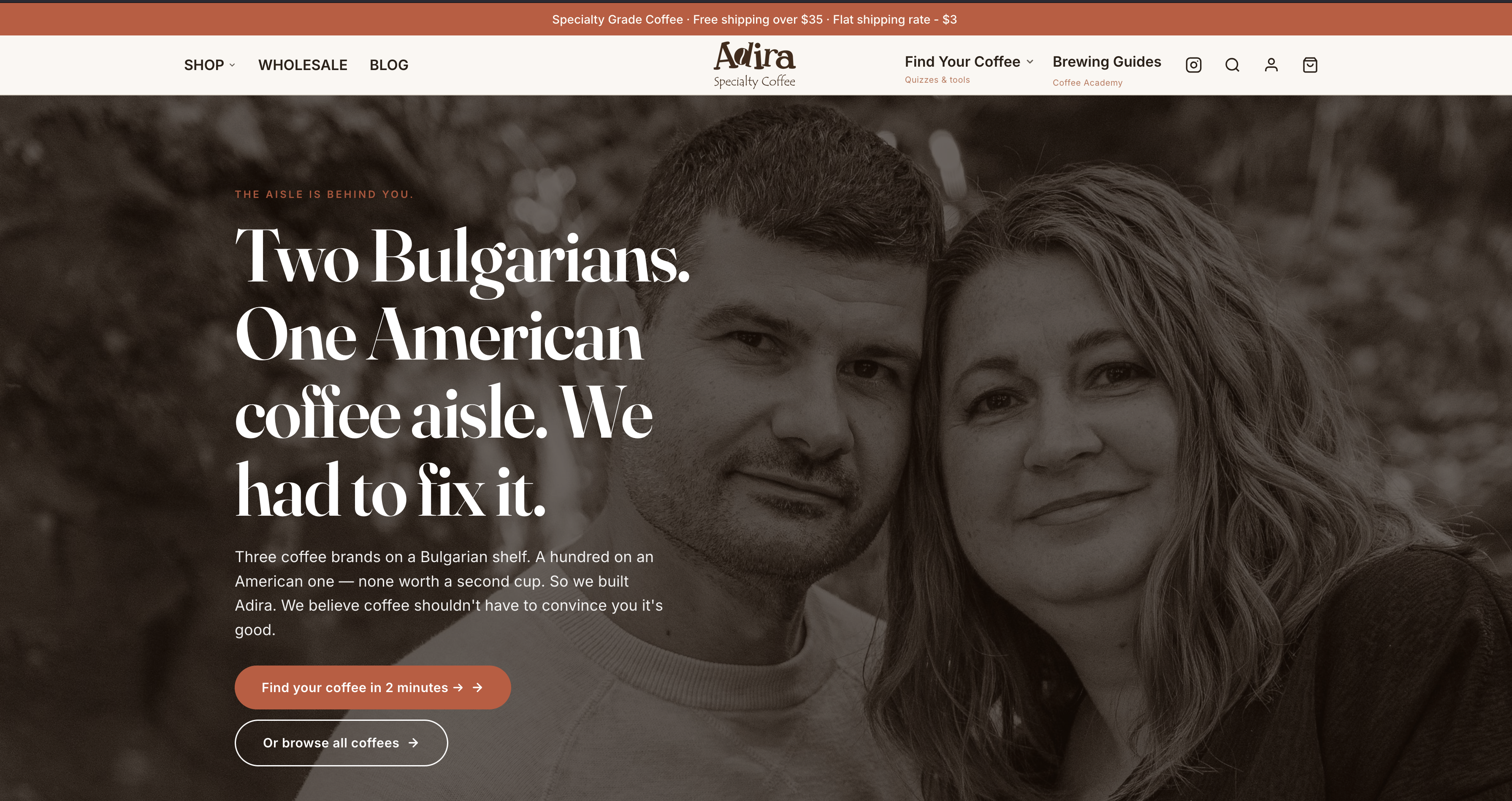
Every coffee Adiracoffee roasts starts with green beans evaluated against specialty-grade standards. Stefan and Ekaterina built Adiracoffee because they could not find a bag at the supermarket worth finishing. That frustration became a sourcing philosophy: only bring in lots that score at specialty grade or above, then roast them in small batches in California to honor what the cup score promises.
The Love Blend and the Mushroom Coffee Medium Roast both reflect that commitment. Each is roasted to order and shipped within days, so the quality the green coffee earned in the cupping room is still alive when it reaches your door. Free US shipping applies on orders over $35, and a subscription saves you 10%.
FAQ
What is the SCA cupping scale?
The SCA cupping scale is a 100-point system that scores coffee across ten sensory attributes in 0.25-point increments. Coffees scoring 80 or above qualify as specialty grade.
Why does the 80-point threshold matter so much?
The 80-point threshold separates specialty coffee from commercial grade, directly affecting pricing, trade terms, and retail positioning. Only 5 to 10% of global coffee production reaches this level.
Can two coffees with the same score taste different?
Yes. Two coffees with identical cup scores can have very different flavor profiles because scores reflect green coffee quality, not the final roasted flavor. Roasting decisions shape the taste experience beyond what the score predicts.
How do defects affect a cup score?
Defects are deducted from the final score after all attributes are totaled. A single defect appearing across all five cups in the uniformity, clean cup, or sweetness assessment can reduce a score by up to 20 points.
How should coffee enthusiasts use cup scores when buying?
Use cup scores as a quality floor, not a flavor guarantee. A score of 85 or above signals high-quality raw material. Pair that with roast date and tasting notes to predict whether the coffee matches your personal preferences.
Recommended
- What is specialty coffee? Standards, scoring, and real value – Adira Coffee US
- Coffee cupping: Techniques and sensory insights for home baristas – Adira Coffee US
- How Coffee Farms Define Flavor: Practices That Impact Quality – Adira Coffee US
- Top Coffee Farms in 2026: Rankings, Awards, and Trends – Adira Coffee US