
Medium-dark to dark roasts with chocolate, caramel, or nutty notes make the best iced latte coffee beans because those flavors stay pronounced once ice and cold milk enter the picture. Light roasts with delicate florals or bright citrus tend to disappear.
Here’s a recipe you can copy right now:
- Pull a double shot of espresso using 18g of finely ground coffee, dialed for a 30 second extraction.
- Fill a 12 oz glass with ice, ideally coffee ice cubes instead of plain water ice.
- Pour the espresso over the ice immediately, before it cools and skunks.
- Add cold whole milk or a barista-blend oat milk, adjusting to taste.
- Stir once, gently, and drink within a few minutes for the best texture.
Swap options: if you don’t own an espresso machine, sub in cold-brew concentrate diluted with milk instead of water. Want more presence? Pull a ristretto shot (same dose, shorter yield) for extra body without added bitterness.
Quick fixes if something’s off:
- Watery or thin: you’re diluting too much. Use fewer, bigger ice cubes or switch to coffee ice cubes.
- Bitter: your extraction ran long, or your beans are too dark and stale. Shorten the shot or check the roast date.
- Flat, no character: your beans are too light-roasted for milk. Move toward medium-dark and add notes like caramel or cocoa.
Key Takeaways
The best iced latte coffee beans are medium-dark to dark roasts with chocolate, caramel, or nutty notes, brewed as concentrated espresso or cold brew and diluted deliberately with milk and ice.
| Point | Details |
|---|---|
| Best roast profile | Choose medium-dark to dark roasts with chocolate, caramel, or nut notes; skip delicate florals and bright citrus. |
| Recipe baseline | Double shot (18g dose, 30 to 36g yield) over ice with 6 to 12 oz cold milk for a 12 oz drink. |
| Top brewing option | Cold-brew concentrate at a 1:4 ratio steeped 12 to 18 hours, diluted 1:1 with milk, works as a make-ahead alternative to espresso. |
| Storage tip | Buy whole bean, use within four to six weeks of roasting, and store in an airtight container away from light and heat. |
| Shopping check | Confirm the bag lists a roast date, roast level, and tasting notes before buying, like the Love Blend. |
Table of Contents
- Why Roast Level and Flavor Change Once You Add Ice
- What Bean Types Work Best for Iced Lattes?
- Espresso, Ristretto, or Cold Brew: Which Method Wins?
- Grind Size, Freshness, and Storage That Protect Flavor
- What Should You Check Before Buying Beans for Iced Lattes?
- How Adira Coffee Dials Beans for Milk-Forward Drinks
- A Home Barista’s Take on Getting This Right
- Ready-to-Brew Beans That Hold Up in Milk and Ice
- Sources
Why Roast Level and Flavor Change Once You Add Ice
Cold and dilution are brutal filters. A flavor that sings in a hot cup can vanish entirely once it’s mixed with 6 ounces of chilled milk and a fistful of ice.
Here’s the mechanism: many of the aromatic compounds that give coffee its bright, floral, or fruity character are highly volatile. They evaporate fastest at warm temperatures, which is exactly when your nose picks them up. Chill the coffee down and dilute it with milk, and those same compounds get muted or buried entirely. Meanwhile, the deeper, heavier flavor compounds, the ones responsible for chocolate, caramel, and roasted-nut notes, are far more stable. They survive the cold and the milk fat coats your tongue right alongside them.
That’s the whole reason medium-dark to dark roasts and espresso-focused blends produce a richer body and bittersweet notes that hold up better in milk than light roasts. It isn’t a stylistic preference. It’s straightforward chemistry.
- Delicate, high-volatility flavors (jasmine, stone fruit, citrus) fade fast under ice and milk.
- Heavier, low-volatility flavors (cocoa, toasted nut, brown sugar) hold their shape.
- Origin-driven acidity that reads as “bright and lively” hot can taste sour or thin once cold.
- Milk fat amplifies sweetness and body, which favors roasts that already lean rich rather than sharp.
Pro Tip: Buy beans within two to three weeks of their roast date and use them within a month. Roast date and small-batch roasting are trust signals tied directly to how predictable your espresso or cold-brew performance will be — stale beans lose the volatile oils that give iced drinks any personality at all.
What Bean Types Work Best for Iced Lattes?
Three categories consistently deliver for iced lattes: espresso-style blends, medium-dark single-origins from Brazil or Colombia, and Sumatran or other Indonesian beans when you want extra body.
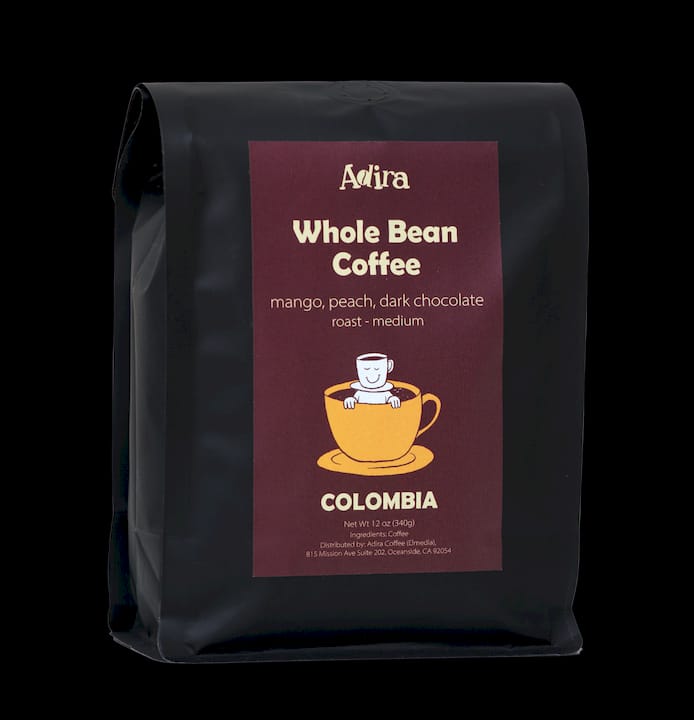
Brazilian beans tend to run naturally low-acid with chocolate and nut notes baked right into the profile. That makes them close to foolproof for milk drinks. Colombian coffee, depending on the roast, splits the difference between sweetness and a little brightness, which works well if you want an iced latte with a touch more character than a straight chocolate bomb. Sumatran and other Indonesian beans bring heavier body and earthy, sometimes syrupy sweetness. If your iced latte tastes thin even after you’ve dialed in the recipe, a Sumatran component is often the fix.
Some blends include a small percentage of Robusta alongside Arabica. Robusta carries more caffeine and produces thicker crema, which can help an iced latte feel more substantial when you’re pulling shots over ice that wants to dilute everything. It’s not required, but if you like a stronger caffeine kick and don’t mind a slightly more bitter edge, look for it on the label.
- Prefer: chocolate, caramel, brown sugar, roasted nut, molasses, dark cherry.
- Avoid: jasmine, bergamot, delicate stone fruit, bright citrus, tea-like florals.
- With whole milk: rich roasts taste rounder and sweeter, milk fat smooths out any bitterness.
- With oat or soy barista blends: nutty and caramel notes actually get amplified since these milks bring their own sweetness, while very dark, ashy roasts can taste flat against them.
If you’re shopping for beans that check these boxes, an espresso-style bean guide is worth a look before you commit to a bag.
Espresso, Ristretto, or Cold Brew: Which Method Wins?
Espresso wins on speed and control. Cold-brew concentrate wins on convenience and a naturally smoother, lower-acid cup. Both work, and the “right” one depends on your equipment and your schedule.
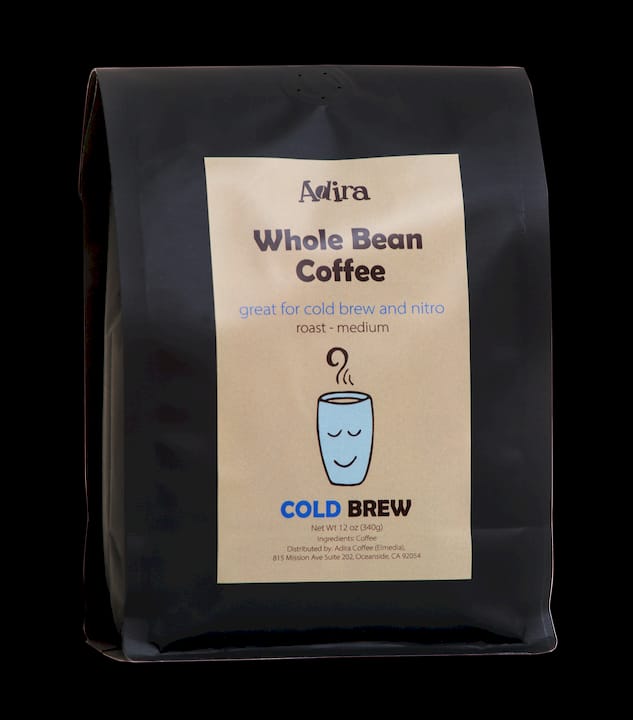
Concentration, cold milk texture, and strict temperature control are the three things that separate a genuinely good iced latte from a watery disappointment. Whichever brewing method you pick has to deliver concentration, because ice and milk are working against you the entire time.
Espresso method: Use 18g of finely ground coffee for a double shot, targeting roughly 36g of liquid espresso in about 28 to 32 seconds. That combination of espresso concentration and cold milk over ice defines the classic iced latte. Pour over ice immediately.
Ristretto tweak: Same 18g dose, but pull the shot short, stopping around 25 to 27g of liquid. You get more intensity and less bitterness per ounce, which matters once milk and ice start diluting things.
Cold-brew concentrate: Steep coffee and water at roughly a balanced ratio by weight for a suitable duration in the refrigerator, using a coarse grind similar to sea salt. Strain, then dilute the concentrate roughly 1:1 with milk instead of water for a latte-style drink. This method is genuinely convenient, since you can batch a jar and pour drinks all week. Full details on ratios and steep times are in our cold-brew coffee guide.
AeroPress or Moka pot concentrate: No espresso machine, no problem. Use a fine grind, roughly 30g of coffee to 60g of water in an AeroPress, pressed slowly for a syrupy concentrate close to espresso strength. A Moka pot with a fine grind and a full basket gets you similarly close.
| Cup size | Coffee dose | Target yield | Milk ratio |
|---|---|---|---|
| 12 oz | 18g (double shot or 1 oz concentrate) | 30–36g liquid | 5–6 oz cold milk |
| 12 oz | 18g (double shot) | 30–36g liquid | 7–12 oz cold milk |
| 12 oz | 25 to 27g | 40–50g liquid | 10–12 oz cold milk |
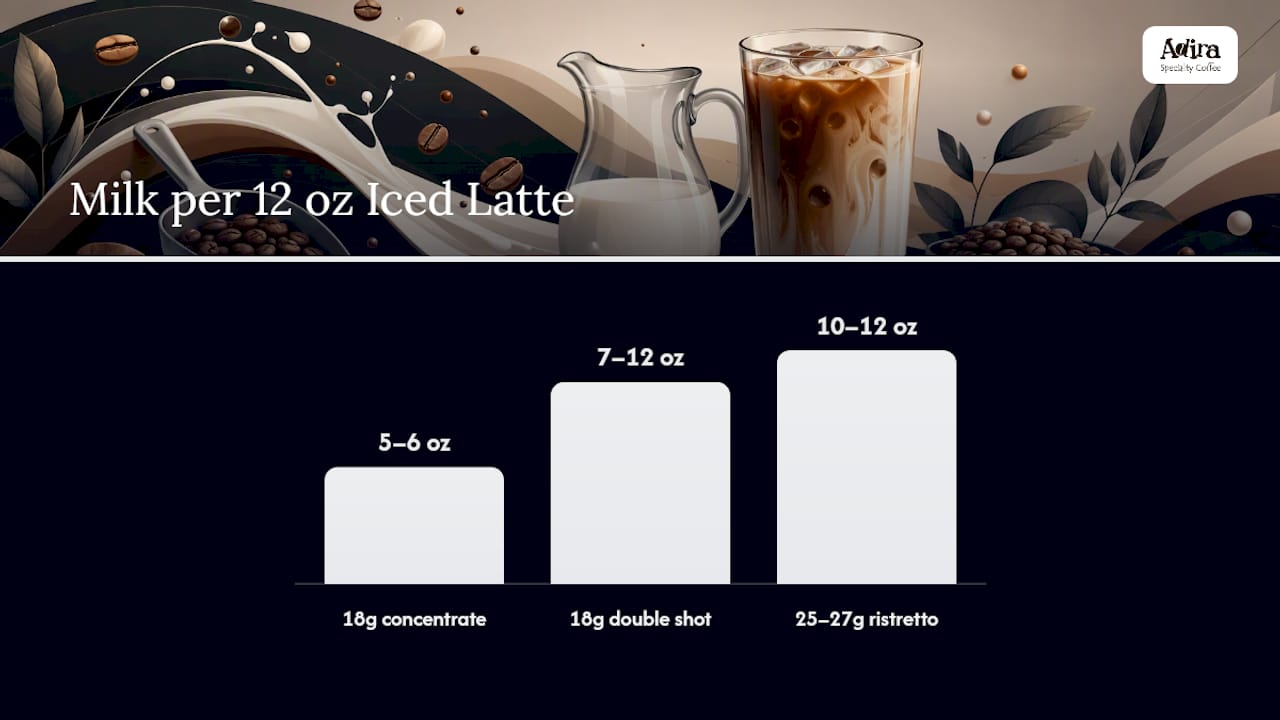
To assemble: pull or pour your concentrate, fill your glass with ice first, pour the hot espresso directly over the ice so it cools on contact, then add cold milk last and give it one stir.
Pro Tip: Freeze leftover espresso or cold-brew concentrate into ice cube trays instead of buying a separate ice cube tray for the freezer. As they melt, they reinforce the drink’s strength instead of watering it down. It’s the single easiest fix for a weak iced latte.
Grind Size, Freshness, and Storage That Protect Flavor
Grind size has to match your method, or the whole recipe falls apart regardless of how good your beans are.
For espresso, aim for a fine grind, close to table salt. AeroPress concentrate wants something slightly coarser, similar to fine sand. A Moka pot sits between the two, fine but not powdery. Cold-brew concentrate is the outlier: you want a coarse grind, similar to breadcrumbs or coarse sea salt, since a fine grind during a 12 to 18 hour steep turns muddy and over-extracted fast.
Roast date matters more for iced drinks than most people assume, because the volatile compounds that give a bean its personality begin fading within weeks of roasting. Beans roasted one to three weeks prior tend to hit a sweet spot: rested enough to avoid the sharp, gassy edge of a very fresh roast, but not so old that flavor has flattened out. Buy whole bean whenever you can and grind right before brewing. Pre-ground coffee loses aromatic oils within days of grinding, which shows up as a flatter, duller iced latte no matter how good your technique is.
- Store beans in an airtight, opaque container away from heat and direct light.
- Keep daily-use beans at room temperature, not in the fridge, since fridge humidity and food odors degrade flavor faster than they preserve it.
- If you’re stocking up for more than a month, freezing beans in an airtight container works, but portion them into small bags first so you’re not repeatedly thawing and refreezing the whole batch.
- Buy in quantities you can use within a reasonable freshness window rather than stockpiling a year’s supply.
Pro Tip: Chill your glass in the freezer for ten minutes before assembling your iced latte. A pre-chilled glass slows how fast your ice melts once the drink hits it, which buys you extra minutes of full-strength flavor before dilution creeps in.
What Should You Check Before Buying Beans for Iced Lattes?
Run through this checklist before you add a bag to your cart:
- Roast date printed on the bag. No date usually means the roaster doesn’t want you asking.
- Roast level stated clearly. Look for medium-dark or dark, or an explicit espresso designation.
- Tasting notes listed. Chocolate, caramel, nut, or molasses signals iced-latte suitability; heavy floral or citrus language is a flag to skip it for this use case.
- Recommended brew method mentioned. A bag that says “great for espresso and milk drinks” has already done the guesswork for you.
- Origin or blend description present. Single-origin bags should name the country; blends should describe the intended flavor outcome.
- Robusta content, if any, disclosed. Not mandatory, but worth knowing if you want extra caffeine and crema.
When you’re evaluating a product page, ask two direct questions:
- Is there a specific roast date, or just a vague “roasted fresh” claim with no timestamp?
- Does the roaster explicitly recommend this bean for milk-based or iced drinks, or is it positioned purely for drip and pour-over?
If you make iced lattes daily, prioritize freshness above all else and buy smaller bags more often. If it’s an occasional weekend treat, you have more room to prioritize an interesting flavor direction, like a Sumatran single-origin, over strict freshness timing. Our guide on choosing coffee beans for the perfect brew walks through more of the roast-and-origin tradeoffs if you want to go deeper.
How Adira Coffee Dials Beans for Milk-Forward Drinks
Roasting to order changes what’s possible for iced-latte drinkers, and it’s the core of how we approach this problem at Adira Coffee.
Instead of stocking a warehouse of beans that sit for months before reaching a shelf, we roast in small batches in California and ship within days. That timing window matters specifically for milk drinks, because the roast profile we choose has to hold its character through espresso extraction, ice contact, and dilution with cold milk, three separate stress tests that a delicate light roast simply fails.
Our origin choices reflect that priority. Colombian beans bring balanced sweetness with just enough acidity to keep an iced latte from tasting flat. Sumatran lots add the heavier body and earthy depth that make a milk drink feel substantial rather than watery. Brazilian beans anchor a lot of our darker roasts with dependable chocolate and nut notes that barely shift whether you’re drinking the coffee hot or over ice. We source from cooperatives and small farms across Colombia, Ethiopia, Costa Rica, Mexico, and Sumatra, and we test roast levels specifically for cold stability, not just for how a cup tastes fresh off the roaster.
Stefan and Ekaterina Nedelchev started Adira after moving to the US from Bulgaria and finding nothing on supermarket shelves worth a second cup. That frustration turned into a simple standard: every bag should perform exactly as intended, whether that’s a pour-over or an iced latte built on ice and milk.
- Roast profiles are tuned per bean for the equipment and drink style the customer specifies.
- Every bag ships within days of roasting, not weeks or months.
- Origin selection is matched to flavor stability under milk and ice, not just tasting-room appeal.
Pro Tip: If you’re building an iced latte and you’re unsure whether your bag skews too light, do a quick test: taste a shot black, then taste it again once it’s fully cooled to room temperature. If the flavor collapses as it cools, it will collapse further under ice and milk. Move to a darker roast.
A Home Barista’s Take on Getting This Right
Most people overthink their iced latte setup before they’ve even nailed the basics, and I think that’s backwards.
Start with one variable at a time. Pick a medium-dark bean, run the recipe above exactly as written, and taste it critically for a week before you change anything. Most home baristas jump straight to buying a new grinder or a fancier bean when the actual problem is inconsistent dosing or ice that’s diluting the drink before they even finish making it. Fix the fundamentals first: weigh your coffee, use coffee ice cubes, and pour the milk last.
Once that baseline tastes right, experiment with one thing at a time, a Sumatran single-origin for more body, or a ristretto pull for more intensity. Iced lattes reward patience more than they reward gear.
Ready-to-Brew Beans That Hold Up in Milk and Ice
Since roast level and freshness make or break an iced latte, we built our lineup around beans that actually survive milk and ice, not just a tasting room.
The Love Blend is our go-to recommendation for iced lattes: a signature mix built around chocolate and caramel notes that stay intact whether you’re pulling espresso shots or brewing it as concentrate. If you want convenience over a full week, the Cold Brew product ships ready to dilute with milk, no steeping equipment required. For something with a functional twist, Mushroom Coffee (Medium Roast) brings a gentler, rounder body that plays well with oat milk, while Mushroom Coffee (Dark Roast) leans into bittersweet, heavier notes for drinkers who want their iced latte to taste unmistakably strong.
Every bag ships within days of roasting, so the roast date on your bag actually means something. Subscribe through our coffee plan for 10% savings and free US shipping over $35, and never run out mid-batch again.
Sources
- Iced Latte vs Iced Coffee vs Iced Americano: The Real Difference | Pulled Journal
- How To Make The Best Iced Latte At Home 2026
- Leftover coffee uses — coffee ice cubes (Food Republic)
- Best Coffee Beans for Cold Brew (2026) – Top Amazon Best Sellers Ranked