
TL;DR:
- Using vacuum-insulated containers like thermoses significantly prolongs coffee’s heat retention, lasting up to 24 hours.
- Preheating your mug or thermos with hot water before pouring preserves warmth, adding 20 to 30 minutes of effective heat retention.
Heat retention in coffee is defined by how fast thermal energy transfers from your cup to the surrounding air, and every second after brewing, that transfer is already happening. The good news: you can keep coffee hot for hours with the right vessel, a few smart habits, and an understanding of what actually drives heat loss. This guide covers the science behind cooling, the best containers and tools available today, including vacuum-insulated thermoses, smart mugs like the Ember Cup, and electric warming plates, and the practical techniques that make the biggest difference from your first pour to your last sip.
How to keep coffee hot: understanding why it cools down
Coffee loses heat through three simultaneous processes: conduction, convection, and evaporation. Conduction pulls heat into whatever surface the cup sits on. Convection moves heat into the surrounding air. Evaporation carries heat away with steam rising from the surface. All three start the moment you pour.
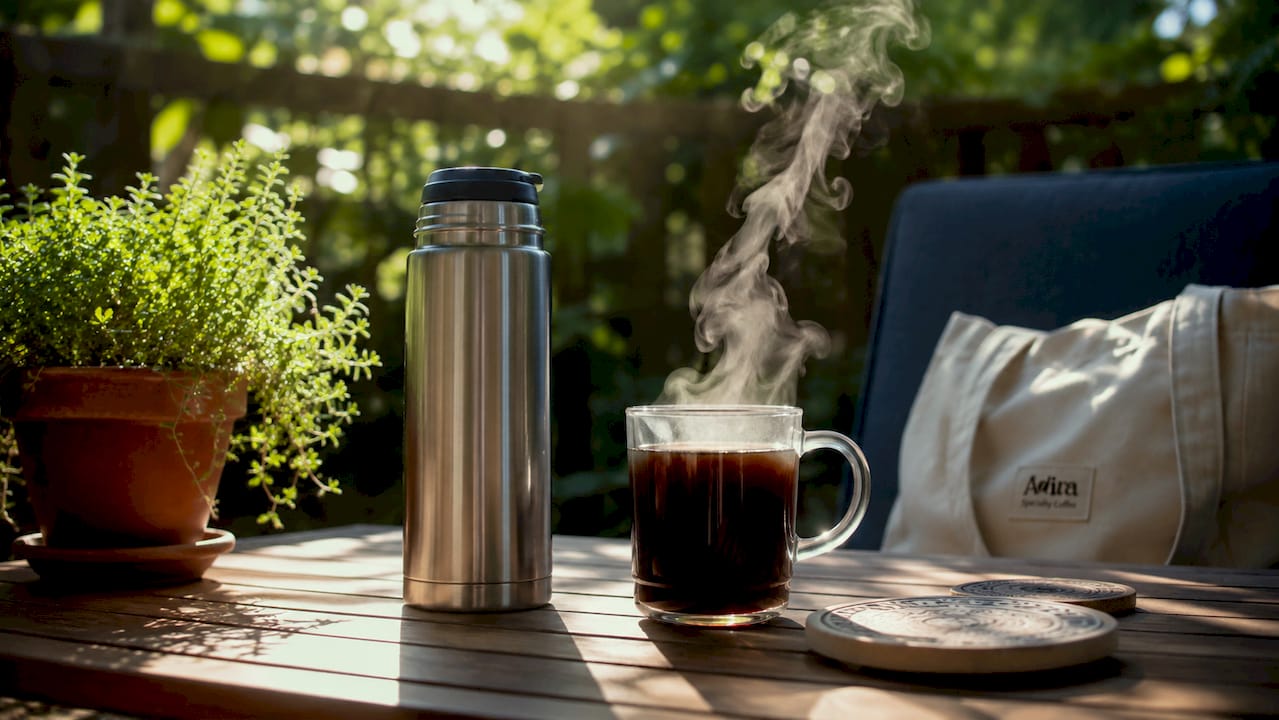
The material of your vessel matters more than most people realize. Thin glass and plastic lose heat fast because they conduct poorly and have almost no thermal mass to buffer the temperature drop. Ceramic mugs retain heat 15 to 20 minutes longer than uninsulated vessels, thanks to the thermal mass effect. That means a ceramic mug is already a meaningful upgrade over a standard paper cup or thin glass.
Air exposure is the other major variable. Every time you leave a mug uncovered, you accelerate both convection and evaporation. The ambient temperature of your room also plays a role. A cold kitchen in January drains heat from your cup faster than a warm office in July.
There is also a safety dimension worth knowing. The USDA temperature danger zone runs from 40°F to 140°F, the range where bacteria multiply rapidly. Keeping coffee above 140°F is not just about taste. It is about safe hot-holding.
Key factors that accelerate heat loss:
- Open or poorly sealed lids
- Cold vessel walls before pouring
- Low-mass materials like thin glass or plastic
- High air circulation around the cup
- Large surface-area-to-volume ratio (wide, shallow mugs lose heat faster)
Pro Tip: Place your mug on a folded cloth or silicone trivet instead of a cold countertop. Conduction through the base accounts for a surprising share of total heat loss, especially on stone or metal surfaces.
What container should you use to keep coffee warm longer?
The container you choose is the single biggest variable in coffee heat retention. Not all insulation is created equal, and the differences between materials are dramatic.
Glass, ceramic, and uninsulated carafes
Standard glass carafes sitting on a hot plate are the worst option for flavor. The heating element keeps coffee warm but slowly scorches it, producing that bitter, burnt taste familiar from office coffee. Ceramic mugs without lids perform better passively but still lose heat within 30 to 45 minutes in a typical room.
Vacuum-insulated thermoses and travel mugs
Double-wall vacuum insulation is the gold standard for passive heat retention. Modern thermoses use a vacuum-sealed gap between two stainless steel walls to eliminate conduction and convection almost entirely. Depending on the model, these containers maintain coffee heat for 8 to 24 hours. That is not a marketing claim. It reflects the physics of removing the medium through which heat normally travels.
The lid seal on a vacuum-insulated mug matters as much as the walls. A poor lid gasket allows rapid heat escape regardless of how good the insulation is. When shopping for a travel mug or thermos, press the lid firmly and check that the gasket sits flush with no gaps or cracks.
Smart mugs for active temperature control
The Ember Cup represents a different approach entirely. Rather than passively slowing heat loss, it maintains coffee at a precise temperature between 120°F and 145°F. On battery alone, it holds that temperature for up to 90 minutes. On the charging coaster, it runs all day. This is the right tool if you drink slowly or get interrupted frequently during your morning routine.
Electric warming plates take a simpler approach. They sit under your mug and apply low heat to offset cooling. The best warming plates target around 140°F rather than maximum heat, which preserves flavor and prevents burns.
| Container type | Heat retention | Best use case |
|---|---|---|
| Ceramic mug (no lid) | 30 to 45 minutes | Desk drinking, short sessions |
| Glass carafe on hot plate | Indefinite but scorches | Not recommended for flavor |
| Vacuum-insulated thermos | 8 to 24 hours | Commuting, travel, long work sessions |
| Smart mug (Ember Cup) | Up to 90 min on battery, all day on coaster | Slow drinkers, desk use |
| Electric warming plate | Indefinite at set temp | Desk use with ceramic mug |
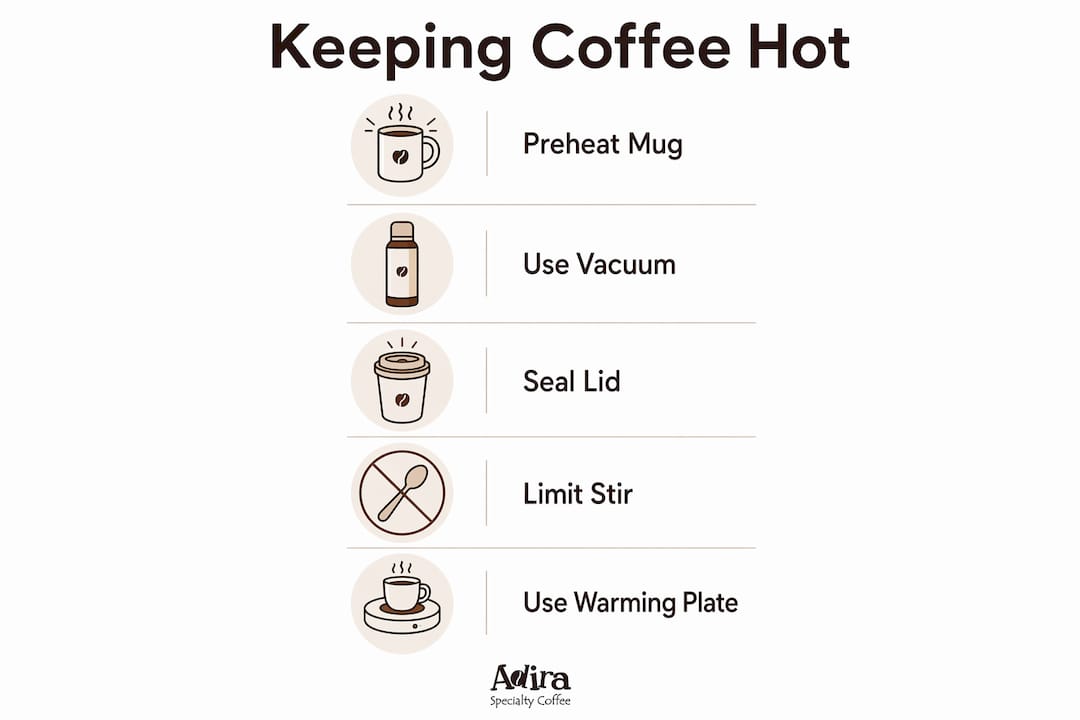
Pro Tip: Before pouring coffee into any container, fill it with hot tap water and let it sit for 60 seconds. This preheating step prevents cold interior walls from acting as a heat sink and can add 20 to 30 minutes of effective heat retention.
Practical habits that make a real difference
The right container only works if you use it correctly. These habits close the gap between what your thermos or mug is capable of and what you actually experience.
-
Brew smaller batches more frequently. Smaller batch brewing means you pour fresh, hot coffee into your mug rather than letting a full carafe sit and cool. If you brew a full 12-cup pot and drink two cups over three hours, the last cup was cold long before you reached it.
-
Preheat every container before use. This applies to mugs, carafes, and even travel cups. Hot water in for 60 seconds, then pour it out before adding coffee. The difference is noticeable immediately.
-
Keep the lid closed between sips. Opening lids frequently releases heat and can reduce hot retention time by 15 minutes or more per sip session. This sounds minor but compounds quickly over a 30-minute commute.
-
Fill your container close to capacity. A half-full thermos has more air space, which means more convection inside the vessel itself. Fill it to within an inch of the top for best results.
-
Skip the microwave if you can. Microwave reheating degrades flavor by unevenly heating the coffee and accelerating oxidation. If you must reheat, use 50% power in 20-second intervals rather than blasting it on high.
-
Add a sleeve or koozie to ceramic mugs. Neoprene sleeves and silicone koozies add a thin layer of insulation around the outside of a mug. They will not replace a vacuum-insulated thermos, but they add 10 to 15 minutes of passive retention for desk drinkers.
The brewing process itself also affects starting temperature. A manual pour-over into a cold ceramic mug loses more heat during brewing than the same coffee poured directly into a preheated thermos. Starting hotter means staying hot longer.
Pro Tip: Avoid stirring coffee in an insulated mug. Stirring disrupts the thermal boundary layer that forms near the walls and accelerates heat loss. Let it sit.
How to troubleshoot heat retention problems
If your thermos or carafe is not keeping coffee hot the way it used to, the problem is almost always one of four things.
Check the lid gasket first. Rubber and silicone gaskets compress and crack over time. A damaged gasket breaks the seal that traps heat inside. Remove the lid, inspect the gasket under good light, and press it with your finger. If it feels stiff, cracked, or does not spring back, replace it. Many brands sell replacement gaskets for under five dollars.
Assess whether you are preheating correctly. Cold container walls absorb a significant amount of heat from the first pour. If you skip preheating, you can lose 10 to 15 degrees of temperature before you even close the lid. Use water that is as hot as your tap produces, not lukewarm.
Clean your containers regularly. Coffee oils and mineral deposits build up inside thermoses and carafes over time. Beyond affecting flavor, heavy buildup can interfere with lid seals and gasket compression. Clean with a mixture of baking soda and hot water weekly, or use a dedicated thermos cleaning tablet.
Know when to replace your gear. Vacuum insulation does not last forever. If your thermos feels warm on the outside while holding hot coffee, the vacuum seal has failed and the double-wall insulation is no longer working. At that point, no amount of preheating or lid care will fix it. Replace the vessel.
- Warm exterior on a vacuum thermos signals a broken vacuum seal
- Lid that does not click or lock firmly needs a new gasket or replacement
- Coffee tasting metallic or stale despite fresh beans suggests residue buildup inside
- Warming plates that cycle on and off erratically may need recalibration or replacement
Key takeaways
Keeping coffee hot comes down to three things: starting with the right vessel, preheating it before every use, and keeping the lid closed between sips.
| Point | Details |
|---|---|
| Choose vacuum insulation | Double-wall thermoses retain heat 8 to 24 hours, far outperforming glass or ceramic alone. |
| Preheat every time | Filling your container with hot water for 60 seconds prevents cold walls from stealing heat on the first pour. |
| Keep lids closed | Opening lids frequently cuts retention time by 15 minutes or more per session. |
| Stay above 140°F | Coffee held above 140°F stays both enjoyable and safe from bacterial growth. |
| Brew smaller batches | Fresh, smaller pours stay hotter longer than a large carafe sitting on a burner. |
What I’ve learned after years of chasing the perfect hot cup
Most people buy a decent thermos and then undo half its performance through small habits they never think about. I did the same thing for years. I would pour coffee into a cold thermos straight from the carafe, leave the lid cracked while I answered emails, and then wonder why my coffee was lukewarm by 9 a.m.
The preheating habit changed everything for me. It feels unnecessary until you actually measure the difference. A cold thermos can drop your coffee temperature by 15 degrees in the first two minutes. That is the difference between a satisfying cup and one you are already thinking about reheating.
On the smart mug question: I think the Ember Cup is genuinely worth it for slow drinkers and desk workers. The flavor argument is real. Coffee held at a stable 140°F tastes noticeably better than coffee that has cooled to 110°F and been microwaved back up. The microwave does not just reheat. It changes the chemistry.
My honest recommendation for most people is a quality vacuum-insulated travel mug, preheated every single time, filled close to the top, with the lid closed between sips. That combination costs less than thirty dollars and outperforms most electric warming solutions for anyone who moves around during their day.
One thing I would push back on: the obsession with keeping coffee as hot as possible. Coffee brewed from high-quality single-origin beans often reveals more flavor complexity as it cools slightly from 175°F to around 140°F. Chasing maximum heat can actually work against you. The goal is a stable, comfortable drinking temperature, not a scalding cup. Learn more about brewing for better flavor and you will start to see temperature as a tool, not just a problem to solve.
— Stefan
Start with coffee worth keeping hot

All the thermoses and warming plates in the world will not save a mediocre cup. At Adiracoffee, Stefan and Ekaterina built the brand around one conviction: coffee should be worth a second cup. Every bag is roasted to order in small batches in California and shipped within days of roasting, so the coffee you pour into your preheated thermos is actually fresh. Explore single-origin coffees sourced from cooperatives in Colombia, Ethiopia, Costa Rica, Mexico, and Sumatra, or try the Love Blend for a consistent, crowd-pleasing cup that holds its flavor beautifully at any temperature. Free US shipping on orders over $35, with a subscription option that saves you 10%.
FAQ
How long does coffee stay hot in a vacuum thermos?
A quality vacuum-insulated thermos with double-wall construction keeps coffee hot for 8 to 24 hours depending on the model, starting temperature, and how often the lid is opened.
Does preheating a mug actually work?
Yes. Filling your mug or thermos with hot water for 60 seconds before pouring coffee prevents cold container walls from absorbing heat on the first pour, adding up to 20 to 30 minutes of effective retention.
Is it safe to keep coffee hot all day?
Coffee held above 140°F stays within the safe hot-holding range defined by the USDA temperature guidelines. Below that threshold, the drink enters the temperature danger zone where bacterial growth accelerates.
What is the best way to reheat coffee without ruining the flavor?
If reheating is necessary, use a microwave at 50% power in 20-second intervals rather than full power. This reduces uneven heating and minimizes flavor degradation from oxidation.
Why does my thermos not keep coffee hot anymore?
If the outside of your thermos feels warm while holding hot coffee, the vacuum seal between the double walls has failed. No maintenance fix will restore it. The vessel needs to be replaced.
Recommended
- Master the cold brew coffee workflow: perfect home brewing – Adira Coffee US
- Expert coffee brewing tips for better flavor at home – Adira Coffee US
- Coffee freshness tips: Keep your beans their flavorful best – Adira Coffee US
- Coffee roasting tips to unlock incredible flavor at home – Adira Coffee US