
Chocolatey coffee beans are beans that develop natural tasting notes resembling milk chocolate, dark cocoa, cocoa powder, or nutty cocoa, with nothing artificial added. To find them, look for three signals on the bag: origin (Brazil, Colombia, Guatemala, and Sumatra are reliable bets), roast level (medium to medium-dark brings out cocoa best), and tasting-note language that specifically names chocolate or cocoa. Certain coffee blends lean into this profile if you want a place to start.
TL;DR:
- Chocolatey coffee flavors originate from chemical reactions during roasting, influenced by bean genetics, altitude, soil, and fermentation practices, not added chocolate.
- Regions like Brazil, Colombia, Guatemala, and Sumatra frequently produce beans with natural cocoa and chocolate notes, especially when processed and roasted carefully.
- Medium roasts typically highlight milk chocolate and nutty flavors, while darker roasts deepen cocoa impressions but risk bitterness and loss of original subtleties.
- Proper brewing methods, such as using a French press or adjusting grind size, can amplify chocolate notes and avoid under-extraction that dull flavors.
- Selecting beans with known origin and processing details generally improves chances of achieving authentic chocolate flavors over relying solely on roast level or vague marketing claims.
Table of Contents
- Why Some Coffees Taste Like Chocolate
- Which Coffee Origins Lean Chocolatey?
- How Does Roast Level Change Chocolate Intensity?
- What Brewing Adjustments Bring Out Chocolate Notes?
- Best Chocolate Coffee Bean Picks to Try
- A Founder’s Hunt for Real Chocolate Notes
- Do Specific Coffee Varietals Produce More Chocolate Flavor?
- How Do Tasters Describe Chocolate Notes on the Flavor Wheel?
- Coffee “Chocolate Notes” vs. Real Chocolate: What’s the Difference?
- Does Soil Composition Really Affect Chocolate Flavor?
- What Coffee Drinkers Get Wrong About “Chocolatey” Beans
- Ready to Taste the Cocoa Difference?
- Sources
Why Some Coffees Taste Like Chocolate
Nothing about a chocolatey coffee involves actual chocolate. The flavor comes from chemistry that happens long before the bean ever meets a grinder, and understanding it will make you a sharper shopper the next time you’re reading a bag of beans.
Green coffee carries sugars, amino acids, and lipids that stay dormant until heat activates them. During roasting, those compounds undergo the Maillard reaction, the same browning reaction that gives seared steak and toasted bread their depth. It produces pyrazines, furans, and aldehydes, and several of these compounds happen to smell and taste remarkably like roasted cocoa. Caramelization runs alongside it, breaking down sugars into the sweeter, toffee-like notes that round out a chocolatey cup.
Genetics matter just as much as heat. Bean variety, the altitude a farm sits at, the mineral makeup of the soil, and how fermentation is managed after harvest all shape the raw chemical precursors available for roasting to transform. A coffee cherry grown at 1,500 meters on volcanic soil with a slow, controlled fermentation carries a different sugar and amino acid profile than one grown at low altitude with a rushed process. Roasting can’t create chocolate notes out of nothing. It develops what’s already latent in the bean.
That distinction trips up a lot of coffee drinkers. Roast level gets treated as the whole story, when it’s really the last step in a much longer chain that starts on the farm.
Where chocolate-like flavor actually comes from:
- Maillard reactions during roasting, producing pyrazines and furan compounds
- Caramelization of natural sugars, adding sweetness and toffee depth
- Genetic traits of the coffee variety itself
- Altitude and soil composition affecting sugar and acid development
- Fermentation practices during processing, which concentrate or dilute flavor precursors
Pro Tip: If a bag lists both origin and processing method, you’re getting a much better read on likely flavor than from roast level alone. A natural-processed Brazilian at medium roast is about as reliable a chocolate bet as you’ll find.
Roasters who understand this treat the roast curve as a tool for revealing flavor, not manufacturing it. Push the roast too far past the point where those cocoa compounds peak, and you don’t get more chocolate. You get carbon and bitterness, which is why the darkest roast on a shelf isn’t automatically the most chocolatey one.
Which Coffee Origins Lean Chocolatey?
Certain growing regions produce cocoa-forward cups often enough that they’ve become the default recommendation for anyone chasing chocolate notes, and knowing them saves you from guessing at the register.
Brazil sits at the top of most lists for a reason. Its lower altitudes and drier processing traditions consistently produce milk chocolate and nutty flavors with a smooth, low-acid body that reads as approachable rather than intense. Colombia, particularly lots from Huila and Nariño, tends toward a more balanced cocoa profile layered with caramel sweetness, giving you chocolate without losing brightness entirely. Guatemala, and Antigua specifically, is the region most associated with rich dark cocoa paired with warm spice. It’s often described as the spicy, chocolatey classic among single origins for good reason: the volcanic soil and high altitude push flavor development into darker, more complex cocoa territory. Sumatra delivers something different again: earthy, heavy dark chocolate with a thick body, thanks largely to its unusual wet-hulling process. Honduras, Peru, and Mexico show up regularly too, usually with lighter, nuttier cocoa impressions than their Central American neighbors.
Processing method shifts these baseline profiles considerably:
- Natural (dry) processing leaves the cherry’s fruit intact during drying, which concentrates sugars and tends to amplify sweetness and chocolate intensity.
- Honey processing removes some fruit but keeps mucilage on the bean, landing between natural and washed for balance and clarity.
- Washed processing produces cleaner, brighter cups, but a coffee with the right variety and roast can still show real chocolate character even fully washed.
Reading a bag critically matters here. “Chocolate notes” printed on packaging should ideally sit alongside an origin and processing method you can cross-check. A vague “hints of chocolate” with no supporting detail is often marketing shorthand rather than a genuine tasting profile. Adiracoffee’s guide to single origin coffee flavor breaks down how terroir shapes these regional signatures in more depth, if you want to go further down that rabbit hole.
How Does Roast Level Change Chocolate Intensity?
Roast level acts less like an on/off switch for chocolate flavor and more like a dial that shifts which kind of chocolate you’re tasting.
- Light roasts preserve origin character and acidity, so any cocoa notes present read subtle, often closer to raw cacao or bittersweet baking chocolate than a finished candy bar.
- Medium roasts hit the sweet spot most often associated with chocolate coffee. This is where caramelization and Maillard compounds reach a balance that reads as milk chocolate or cocoa powder without tipping into bitterness.
- Medium-dark roasts push further into deep cocoa and dark chocolate territory, adding body and a slightly roasty edge that many drinkers associate with a “classic” chocolatey cup.
- Dark roasts intensify roast-driven bitterness that can either deepen chocolate impressions into something like unsweetened baker’s chocolate or overwhelm them entirely with char, depending on how carefully the roaster manages the process.
Good roasters watch the roast curve closely near the end of the cycle, adjusting time and temperature to let cocoa-like compounds fully develop before pulling the batch, then cooling it fast enough to lock that flavor in rather than letting it drift toward flat bitterness. That’s the difference between a dark roast that tastes like rich dark chocolate and one that just tastes burnt.
Pro Tip: If you want milk chocolate sweetness, buy medium roast. If you want intense dark cocoa with more body, go medium-dark. Skip straight to dark roast only if you already know you like bittersweet, roast-forward flavor. It won’t give you more chocolate. It’ll give you a different kind.
For espresso drinkers specifically, Adiracoffee’s rundown of medium roast espresso beans walks through why that middle ground tends to work best for pulling cocoa-forward shots without dragging in excess bitterness.
What Brewing Adjustments Bring Out Chocolate Notes?
The right beans can still fall flat in the cup if the brew method fights against them, and a few small adjustments make a bigger difference than most people expect.
- French press. Use a slightly coarser grind and steep for four minutes. Immersion brewing extracts more oils and body, which carries chocolate and cocoa flavors through in a way that paper-filtered methods sometimes strip out.
- Espresso. Dial in a finer grind with a tighter ratio, around 1:2. Concentrated extraction under pressure tends to accentuate body and cocoa impressions more than any other common method, which is why a well-pulled shot of a chocolatey blend often tastes richer than the same beans brewed pour-over.
- Aeropress. A slightly longer steep with an inverted method favors sweetness over acidity. This is a reliable way to coax more chocolate character out of a lighter roast that might otherwise read too bright.
- Pour-over. Use water between 195°F and 205°F and a 1:16 ratio, then slow your pour slightly to extend contact time. Pour-over tends to highlight clarity over body, so nudging extraction longer helps chocolate notes survive alongside the brightness.
The most common mistake is under-extraction: water too cool, grind too coarse, or contact time too short. All three mute sweetness and leave a thin, sour cup where chocolate notes should be. The fix is almost always the same across methods: extend contact time slightly or go a touch finer on the grind, then taste again before adjusting further.
Best Chocolate Coffee Bean Picks to Try
Matching a bag’s flavor description to your own palate is mostly about knowing which chocolate register you actually want, since “chocolatey” covers a wide range from bright milk chocolate to bittersweet dark cocoa.
Mushroom Coffee (Medium Roast) leans toward smooth milk chocolate and nutty-cocoa notes, with the roast profile kept moderate enough to preserve sweetness rather than push into heavy bitterness. It suits drip and pour-over drinkers who want an easy, everyday chocolatey cup without much fuss.
Mushroom Coffee (Dark Roast) takes the same base further into deep cocoa and dark chocolate territory, with more body and a slightly bolder finish. It works well for French press or espresso drinkers who want intensity over subtlety.
Love Blend is built around balance: cocoa sweetness paired with a rounder, more mellow finish, positioned as a signature cup rather than a single-origin statement. It’s a solid pick if you want chocolate character without committing to one origin’s specific quirks.
- Match milk chocolate cravings to medium roasts and Brazilian or Colombian origin notes.
- Match dark cocoa cravings to medium-dark or dark roasts and Guatemalan or Sumatran origin notes.
- Check the roast date on the bag. Fresher coffee holds cocoa sweetness longer than coffee that’s been sitting for weeks.
| Bean | Flavor focus | Roast range | Best for |
|---|---|---|---|
| Mushroom Coffee (Medium Roast) | Milk chocolate, nutty-cocoa | Medium | Drip, pour-over |
| Mushroom Coffee (Dark Roast) | Dark chocolate, deep cocoa | Medium-dark to dark | French press, espresso |
| Love Blend | Balanced cocoa, mellow sweetness | Medium | Everyday drinking, mixed brew methods |
Some roasters ship every bag within days of roasting and offer grind options dialed to different equipment, along with subscription delivery for favorites.
A Founder’s Hunt for Real Chocolate Notes
Some roasters started from experiences with supermarket bags that failed to deliver on “chocolate notes,” leading them to source cocoa-forward lots from cooperatives and small farms in regions known for genetic and processing traits producing real chocolate flavor. Such roasters roast small batches locally and ship quickly, understanding that cocoa sweetness fades fast once a bag sits too long on a shelf.
Do Specific Coffee Varietals Produce More Chocolate Flavor?
Certain coffee varietals carry a genetic tendency toward the sugar and lipid content that roasting later converts into chocolate-like compounds, which is why some cultivars show up disproportionately often in chocolatey lots.
Bourbon and Typica, two of the oldest Arabica varietals still widely grown, tend toward higher sugar content and a sweeter cup profile that roasts into cocoa and caramel more readily than higher-yield hybrid varieties. Caturra and Catuaí, common throughout Central and South America, generally produce a rounder, nuttier cup that leans toward milk chocolate rather than dark cocoa. This is part of why Brazil and Colombia, both of which grow substantial Bourbon and Caturra, show up so consistently on chocolate-forward recommendation lists.
Varietal alone doesn’t guarantee flavor. A Bourbon grown carelessly at low altitude with poor processing can taste flat and one-dimensional, while a less celebrated cultivar grown well can outperform it. Varietal sets the ceiling on what’s genetically possible; farming and processing decide whether that potential gets realized. Treat a listed varietal as one useful data point among several, not a guarantee stamped on the bag.
How Do Tasters Describe Chocolate Notes on the Flavor Wheel?
Chocolate notes sit in a specific, well-defined region of the coffee flavor wheel, and knowing the vocabulary helps you read a tasting sheet or a bag description with more precision than “tastes like chocolate” alone offers.
On the sweet side of the wheel, cupping notes split into distinct registers: milk chocolate reads sweeter and creamier, dark chocolate skews bittersweet and more intense, cocoa powder describes a drier, more powdery version of the same flavor family, and nutty-cocoa blends chocolate with hazelnut or almond undertones. Tasters also distinguish chocolate from adjacent categories like caramel and brown sugar, which share sweetness but lack the roasted bitterness that defines true cocoa character.
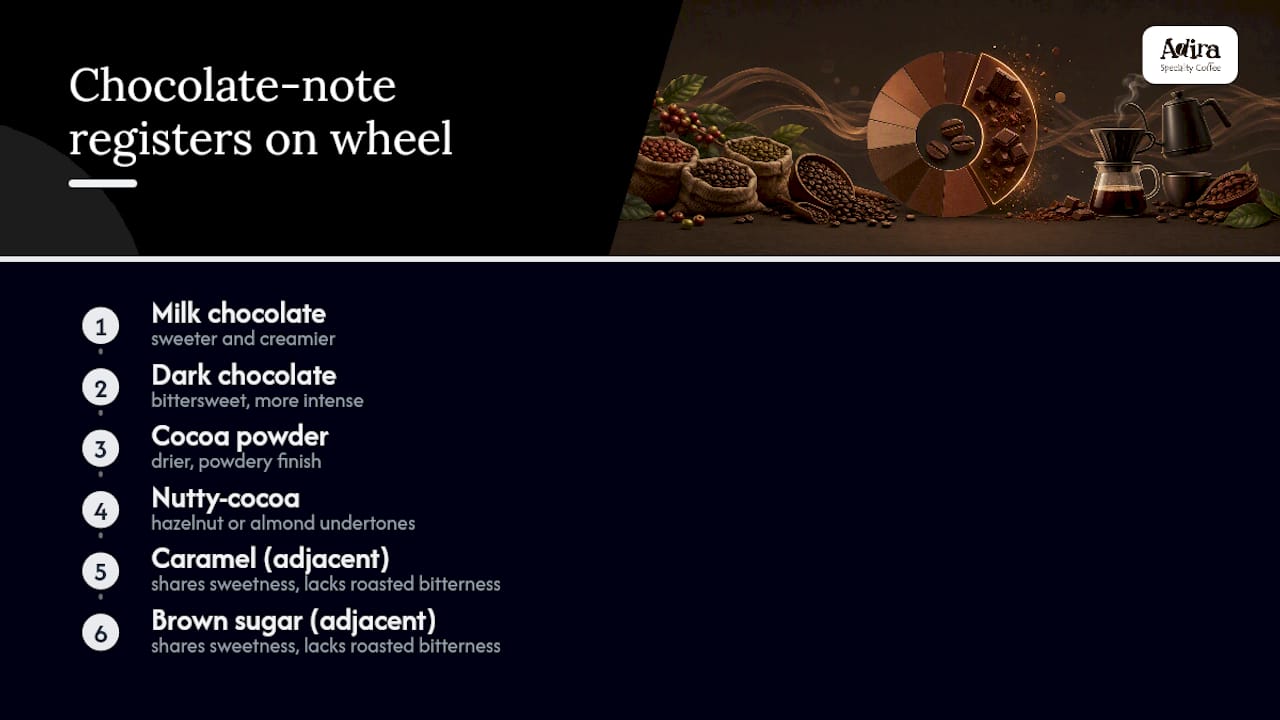
Precision here matters more than it seems. A bag described only as “chocolatey” tells you almost nothing useful, but one that specifies “dark chocolate with cocoa powder finish” gives you a real prediction of what’s in the cup. Adiracoffee’s breakdown of the coffee flavor wheel walks through how professional tasters map these distinctions, which is worth a read if you want to shop by flavor with more confidence than guesswork allows.
Coffee “Chocolate Notes” vs. Real Chocolate: What’s the Difference?
Coffee described as chocolatey does not actually contain chocolate. The descriptor refers entirely to tasting notes that resemble it, formed naturally through roasting chemistry rather than any added ingredient.
Real chocolate gets its flavor from roasted cacao beans, milk solids, and added sugar, a combination that produces a much sweeter, creamier, and more fat-forward experience than coffee ever will. Coffee’s chocolate notes come from pyrazines and related compounds that mimic cocoa’s aromatic profile without any of the fat or sugar content that defines an actual candy bar. That’s why even the most chocolatey cup of coffee still tastes fundamentally like coffee, with cocoa as an accent rather than the main event.
This distinction matters for anyone comparing “chocolate coffee” to “chocolate-flavored coffee.” The first describes a naturally occurring tasting profile from origin, processing, and roast. The second usually means a coffee sprayed or infused with actual flavoring oils after roasting, which produces a very different, often more artificial-tasting result. If you’re chasing authentic cocoa character, the labeling on a bag matters as much as the flavor description itself.
Does Soil Composition Really Affect Chocolate Flavor?
Soil chemistry shapes coffee flavor development more than most casual drinkers realize, working through the plant’s nutrient uptake rather than through any direct flavor transfer.
Volcanic soils, common across Guatemala, Costa Rica, and parts of Colombia, run rich in minerals like potassium, phosphorus, and nitrogen that support vigorous cherry development and higher sugar accumulation. Nitrogen levels in particular affect amino acid content in the bean, and amino acids are one of the two ingredients (alongside sugars) that the Maillard reaction converts into pyrazines and cocoa-like flavor compounds during roasting. Soil pH and drainage also affect how efficiently a plant absorbs those minerals in the first place, which is part of why the same varietal grown on different farms just a few miles apart can produce noticeably different cups.
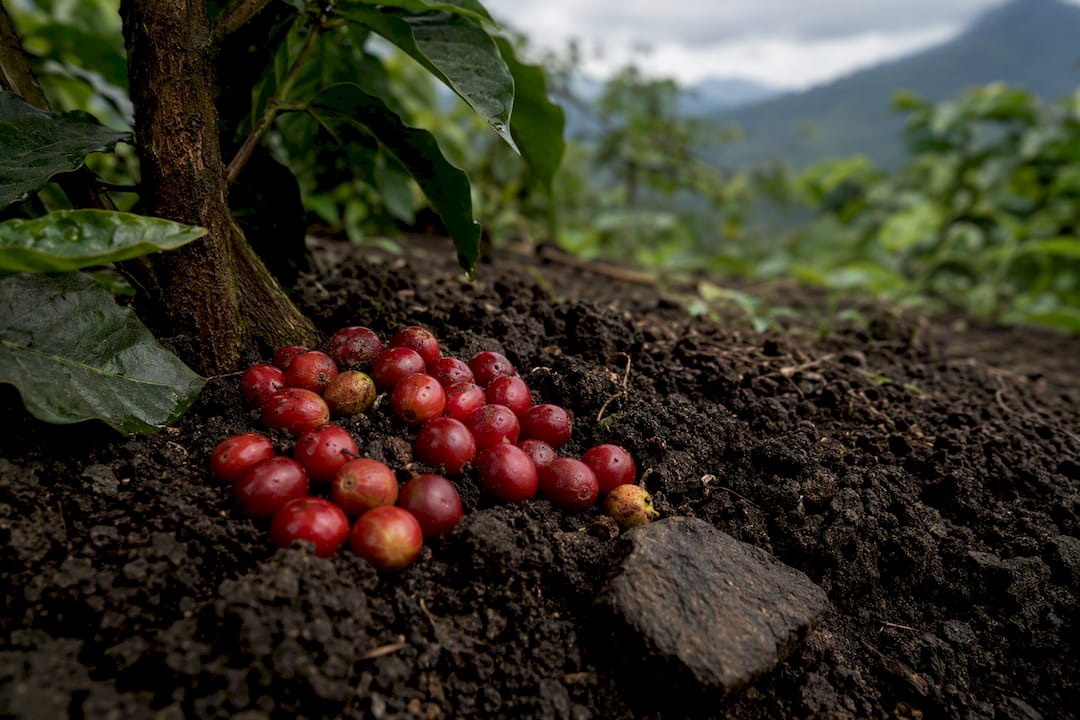
Altitude interacts with soil in ways that compound the effect. Higher elevations slow cherry ripening, giving the plant more time to develop sugar and amino acid reserves before harvest, which is part of why high-altitude volcanic regions like Antigua consistently produce the dense, complex cocoa flavors that dark chocolate lovers seek out. None of this shows up on a bag label directly, but it’s the underlying reason “grown at high altitude on volcanic soil” tends to correlate with richer chocolate character more often than not.
What Coffee Drinkers Get Wrong About “Chocolatey” Beans
The biggest misconception is that dark roast automatically means more chocolate. It doesn’t. Roast level develops flavor that’s already present in the bean. Push a mediocre, low-sugar coffee dark enough and you get bitterness dressed up as intensity, not real cocoa depth.
Origin and processing deserve more attention than they get. A well-grown, naturally processed Brazilian at medium roast will usually beat a dark-roasted coffee of unknown origin for genuine chocolate character, yet most shoppers default to roast level as their only signal. Read the processing method and origin before the roast color chart on the bag.
If there’s one thing worth prioritizing, it’s buying from a roaster who names both origin and processing rather than leaning on vague marketing language. That single habit will improve your odds of landing a genuinely chocolatey cup more than any other shopping tip in this guide.
— Stefan
Ready to Taste the Cocoa Difference?
Adiracoffee roasts every bag to order, dials the grind to your specific equipment, and ships within days so the cocoa sweetness in these beans hasn’t had time to fade on a warehouse shelf. That’s the practical edge over buying a supermarket bag labeled “chocolate notes” that’s been sitting for months.
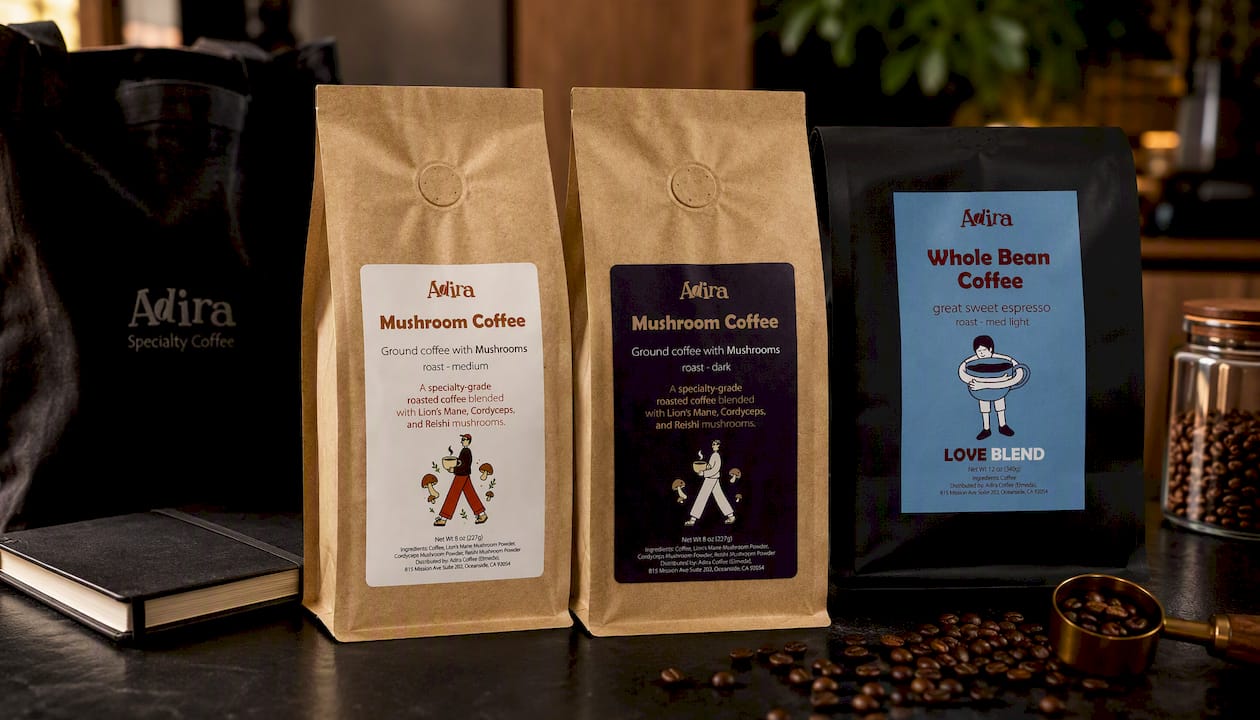
If milk chocolate and nutty sweetness sound like your cup, start with Mushroom Coffee Medium Roast. Want something deeper and bolder for espresso or French press? Go with Mushroom Coffee Dark Roast. Prefer a balanced, everyday chocolatey cup that doesn’t lean too far in either direction? The Love Blend is built for that.
Sources
- Why Some Coffee Has Chocolate Notes: The Science Behind Coffee’s Beloved Flavor Profile - Green Coffee Beans Wholesale
- Discover Why: What Coffee Tastes Like Chocolate?
- Know Your Coffee Green Beans: Guatemala Antigua, The Spicy & Chocolatey Classic - Roast Coffee