
TL;DR:
- Sustainable packaging minimizes environmental impact while enhancing brand trust and regulatory compliance.
- Choosing the right materials requires lifecycle analysis and alignment across operations for true sustainability.
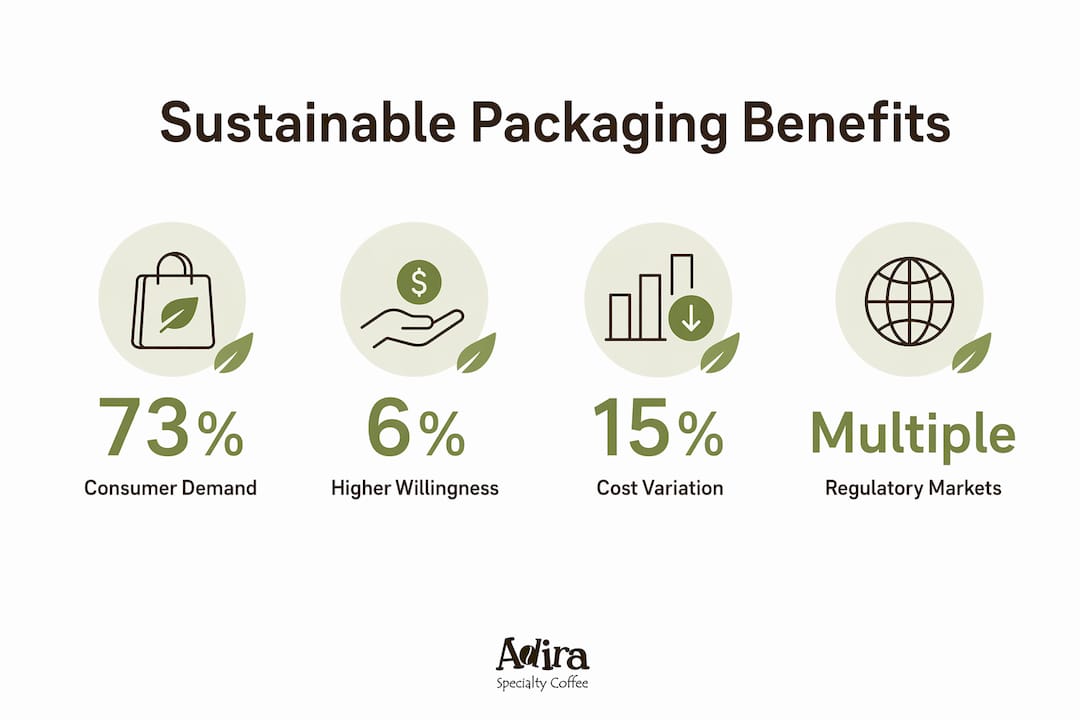
Sustainable packaging is packaging designed to minimize environmental impact across its full lifecycle while maintaining product functionality and consumer appeal. The case for choosing it is no longer just ethical. 73–85% of consumers say sustainable packaging influences their purchasing decisions, and 62% say it increases trust in brands. That level of market pull makes eco-friendly packaging choices a commercial priority, not just a values statement. The global sustainable packaging market is projected to reach $399.97 billion, with 43% of brand owners now prioritizing sustainability over cost savings.
Why choose sustainable packaging: the core benefits
Sustainable packaging delivers measurable advantages across four areas: environmental impact, brand reputation, cost structure, and regulatory compliance. Each benefit reinforces the others, which is why businesses that commit to green packaging tend to stay committed.
Environmental footprint reduction
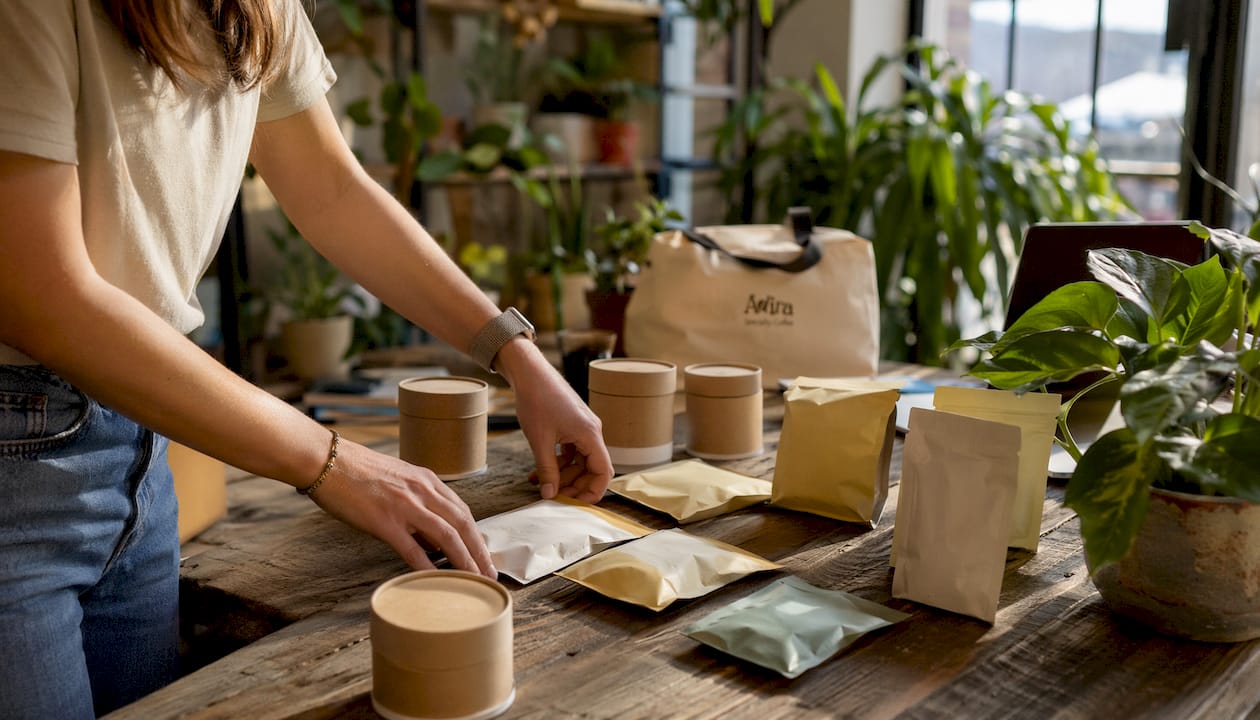
Sustainable packaging cuts waste at the source. Materials like recycled paper, post-consumer recycled (PCR) plastics, molded pulp, and compostable bioplastics all reduce the volume of virgin resources extracted and the waste sent to landfills. Lighter packaging also means lower transportation emissions per shipment. These gains compound across a supply chain that ships millions of units per year.
Brand trust and consumer willingness to pay
Consumers reward brands that package responsibly. Consumers pay about 6% more on average for products with sustainable packaging. That premium more than offsets the typical 5–15% higher upfront material cost over time, especially when repeat purchase rates rise alongside brand trust. Eco-friendly packaging choices signal that a brand’s values extend beyond the product itself.
Operational cost savings
Sustainable packaging often reduces total cost in use, even when unit material costs are higher. Lighter materials cut freight spend. Eliminating unnecessary packaging layers reduces material consumption and line waste. Right-sizing packaging to fit the product reduces weight and costs immediately, with no need for new materials at all.
Regulatory compliance and EPR fee reductions
Extended Producer Responsibility (EPR) frameworks now operate in dozens of markets. EPR fee modulation by recyclability means that brands using highly recyclable packaging pay lower fees than those using hard-to-recycle materials. Choosing sustainable packaging is, in this context, a direct cost reduction strategy tied to regulatory compliance.
Pro Tip: Start your sustainability audit by mapping every packaging component against its recyclability rating in your primary sales markets. EPR fee schedules are public documents. Use them to calculate your current fee exposure before selecting new materials.
How do different sustainable packaging materials compare?
Not all sustainable materials perform equally. The right choice depends on the product, the supply chain, and the end market’s recycling infrastructure. The table below summarizes the most common options.
| Material | Key strength | Key trade-off |
|---|---|---|
| Recycled paper and cardboard | Widely recyclable, low cost | Moisture sensitivity limits food use |
| PCR plastics | Reduces virgin plastic demand | Recycling quality varies by resin type |
| Compostable bioplastics | Breaks down in industrial composting | Requires industrial composting access |
| Molded pulp | Protective, recyclable, plastic-free | Higher unit cost, limited barrier options |
| Metal (aluminum, steel) | Infinitely recyclable, strong barrier | High production energy, heavier freight |
| Glass | Inert, premium perception, recyclable | Heavy, high transport emissions |
The critical insight here is that no material is automatically sustainable. Replacing plastic with other materials requires lifecycle analysis because substitutions can increase water use or transportation emissions. A glass jar may feel more natural than a plastic pouch, but its weight can triple the carbon footprint of shipping the same product. The label on the material is not the same as its lifecycle performance.
Why lifecycle thinking matters more than material labels
Lifecycle thinking identifies meaningful sustainability improvements better than single-attribute material changes. A lifecycle assessment (LCA) evaluates raw material extraction, manufacturing energy, transportation, consumer use, and end-of-life disposal together. Brands that skip this step often make substitutions that look good on paper but perform poorly in practice. Compostable packaging, for example, only delivers its environmental benefit if consumers have access to industrial composting facilities, which most American households do not.
Consumer behavior also shapes real-world outcomes. Clear labeling and communication improve recycling rates and close the gap between consumer intent and actual behavior. Packaging that is technically recyclable but confusingly labeled ends up in landfill at nearly the same rate as non-recyclable packaging.
Pro Tip: Before committing to a new material, request a simplified LCA from your supplier or use a free tool like the Sustainable Packaging Coalition’s How2Recycle program to benchmark end-of-life performance in your target markets.
What operational factors drive the decision to go green?
Sustainable packaging is a margin decision, not just an ESG commitment. Changing packaging impacts filling speeds, shelf-life, and freight costs, which means the total cost picture is always more complex than the material price alone.
Here are the four operational factors that most often determine whether a sustainable packaging switch succeeds or fails:
-
Filling line compatibility. New materials may run slower on existing equipment or require retooling. A 10% material cost saving disappears if line speed drops 15%. Pilot runs on production equipment before full commitment.
-
Shelf-life performance. Sustainable materials sometimes offer weaker moisture or oxygen barriers than conventional plastics. For food and beverage brands, a shorter shelf-life means higher spoilage costs and more frequent replenishment. Balancing circularity with functional performance like shelf-life and product protection is what separates successful transitions from costly reversals.
-
Supplier qualification and price volatility. Specialized sustainable materials often come from a narrower supplier base. Material selection decisions influence the supplier base, introducing risks like price volatility and supply allocation. Qualifying a second supplier before scaling is standard risk management.
-
Freight and dimensional weight. Lighter packaging reduces freight costs directly. Right-sizing a box to eliminate void fill can cut dimensional weight charges by a meaningful amount per shipment, especially for direct-to-consumer brands shipping thousands of orders per week.
Interdepartmental alignment is non-negotiable. Procurement, operations, marketing, and compliance teams each hold a piece of the total cost picture. Decisions made in isolation by one team routinely create problems for another.
Pro Tip: Build a simple total-cost-in-use model before approving any packaging change. Include material cost, line speed impact, freight, spoilage risk, and EPR fees. A one-page spreadsheet prevents expensive surprises at scale.
How does sustainable packaging future-proof your brand?
Regulatory pressure on packaging is accelerating globally. The EU Packaging and Packaging Waste Regulation (PPWR) sets mandatory recycled content targets and recyclability requirements that will affect any brand selling into European markets. American EPR frameworks are expanding state by state, with California, Oregon, Colorado, and Maine already operating producer responsibility programs. Brands that wait for full regulatory clarity before acting will spend more on compliance than those who move early.
The advantages of early adoption include:
- Lower EPR fees now. Fee modulation rewards recyclable packaging immediately, not just when regulations tighten further.
- Operational clarity. Early movers work out supplier qualification, line compatibility, and labeling before deadlines create pressure.
- Consumer loyalty. Brands with a credible, documented sustainability record attract and retain customers who choose eco-friendly products as a matter of habit.
- Reduced greenwashing risk. Substantiated environmental claims backed by LCA data and third-party certification protect brands from regulatory scrutiny and consumer backlash.
- Circular economy positioning. Brands that design for recyclability or reuse integrate more naturally into circular economy supply chains, which are becoming a procurement requirement for major retail partners.
Combining packaging reduction, recyclable designs, and reuse models as part of circular strategies maximizes both sustainability outcomes and compliance benefits. This is not a one-time project. It is an ongoing discipline that compounds in value as regulations tighten and consumer expectations rise.
Key Takeaways
Sustainable packaging reduces environmental impact, builds brand trust, and lowers regulatory costs when evaluated across the full product lifecycle rather than by material label alone.
| Point | Details |
|---|---|
| Consumer demand is real | 73–85% of consumers say packaging sustainability influences their purchase decisions. |
| Cost premium pays off | Consumers pay about 6% more for sustainable packaging, offsetting the 5–15% higher material cost. |
| Lifecycle analysis is non-negotiable | Material substitutions can increase emissions; always evaluate water use, transport, and end-of-life together. |
| EPR fees reward recyclability | Fee modulation means switching to recyclable packaging reduces compliance costs directly. |
| Operations must align | Filling speed, shelf-life, freight, and supplier resilience all affect whether a switch succeeds. |
Stefan’s take: sustainability is a discipline, not a checkbox
The conversation around sustainable packaging has matured significantly. When I look at how brands approach this decision, the ones that struggle are almost always treating it as a one-time project. They switch a material, announce it, and move on. Then they run into a supplier shortage, a shelf-life problem, or an EPR fee they didn’t model, and the whole initiative stalls.
What I’ve found is that the brands doing this well treat sustainable packaging the same way they treat margin management. They track it continuously, they model total cost in use, and they build supplier redundancy before they need it. The ethical sourcing discipline that strong food and beverage companies apply to ingredients translates directly to packaging decisions.
The consumer communication gap is also underestimated. Technically recyclable packaging that consumers don’t know how to recycle delivers almost no environmental benefit. Clear on-pack instructions, How2Recycle labels, and honest environmental claims are not marketing extras. They are the mechanism through which packaging sustainability actually works in the real world.
My honest advice: start with elimination and right-sizing before you touch materials. Remove what doesn’t need to be there. Shrink what’s oversized. Those changes cost almost nothing and deliver immediate margin and sustainability gains. Then layer in material upgrades with full lifecycle data behind them.
— Stefan
Adiracoffee’s approach to packaging that means something
At Adiracoffee, packaging is not an afterthought. Every bag of single-origin and signature blend coffee ships within days of roasting, in packaging chosen to protect freshness without excess. Stefan and Ekaterina built Adiracoffee around the idea that what surrounds the coffee matters as much as what’s inside it.

If you want coffee that takes both quality and responsibility seriously, Adiracoffee’s mushroom coffee medium roast is a good place to start. Small-batch roasted in California, sourced from cooperatives in Colombia, Ethiopia, Costa Rica, Mexico, and Sumatra, and shipped directly to you. Free US shipping on orders over $35, with a subscription option that saves you 10%.
FAQ
What is sustainable packaging, exactly?
Sustainable packaging is packaging designed to minimize environmental impact across its full lifecycle, from raw material extraction through manufacturing, use, and end-of-life disposal, while still protecting the product inside.
Does sustainable packaging actually cost more?
Sustainable packaging typically costs 5–15% more upfront in material costs, but consumers pay about 6% more on average for products that use it, which offsets the premium over time.
What is EPR and how does it affect packaging decisions?
Extended Producer Responsibility (EPR) is a regulatory framework that makes brands financially responsible for the end-of-life management of their packaging. Fee modulation by recyclability means brands using highly recyclable packaging pay lower fees.
Is compostable packaging better than recyclable packaging?
Not automatically. Compostable packaging only delivers its environmental benefit when consumers have access to industrial composting facilities. In markets without that infrastructure, recyclable packaging typically performs better in practice.
How do I know which sustainable material is right for my product?
A lifecycle assessment (LCA) is the most reliable method. It evaluates raw material extraction, manufacturing energy, transportation, and end-of-life performance together, rather than judging a material by a single attribute like its recyclability label.