
TL;DR:
- Eco-friendly coffee significantly reduces environmental impacts through sustainable farming practices like agroforestry and organic methods. These practices protect biodiversity, improve soil health, and sequester carbon, benefiting both ecosystems and farmers’ livelihoods. Choosing certified, regenerative coffee supports a more resilient and transparent supply chain that restores land and community well-being.
Most people who care about sustainability have thought about their food choices, their transportation, and their energy use. But coffee? It’s one of the most traded commodities on the planet, and the question of why choose eco-friendly coffee deserves more than a passing thought. Not all sustainable coffee is created equal, and the difference between a cup grown on a thriving agroforestry farm and one produced through conventional monoculture is larger than most consumers realize. This guide breaks down the environmental, agronomic, and ethical dimensions of eco-friendly coffee so your next purchase actually means something.
Table of Contents
- Key Takeaways
- Why choose eco-friendly coffee: the environmental case
- Agronomic and economic benefits for farmers
- Navigating certifications and sustainability labels
- Practical ways to maximize your eco-friendly coffee impact
- My perspective on eco-friendly coffee as a real commitment
- How Adiracoffee brings eco-friendly sourcing to your cup
- FAQ
Key Takeaways
| Point | Details |
|---|---|
| Eco-friendly coffee cuts emissions | Farming practices account for most of coffee’s carbon footprint, and sustainable methods directly reduce those emissions. |
| Biodiversity gains are measurable | Agroforestry coffee systems reduce biodiversity impacts by 32 to 42% compared to conventional monoculture farming. |
| Farm resilience improves significantly | Ecological farming in Kenya increased yield and cut major disease incidence by up to 93% at no added cost. |
| Certifications vary widely in rigor | Multi-impact standards like Rainforest Alliance Regenerative Agriculture cover soil, water, biodiversity, and livelihoods together. |
| Consumer choices compound over time | Buying local-roasted, certified coffee and composting grounds meaningfully reduces your personal coffee footprint. |
Why choose eco-friendly coffee: the environmental case
Coffee production carries a heavier environmental cost than most consumers suspect. A kilogram of roasted coffee can produce around 40 kilograms or more of CO2-equivalent emissions, with the majority coming from farming and land-use changes rather than shipping or roasting. That puts coffee squarely in the category of high-impact agricultural products, right alongside beef and rice.
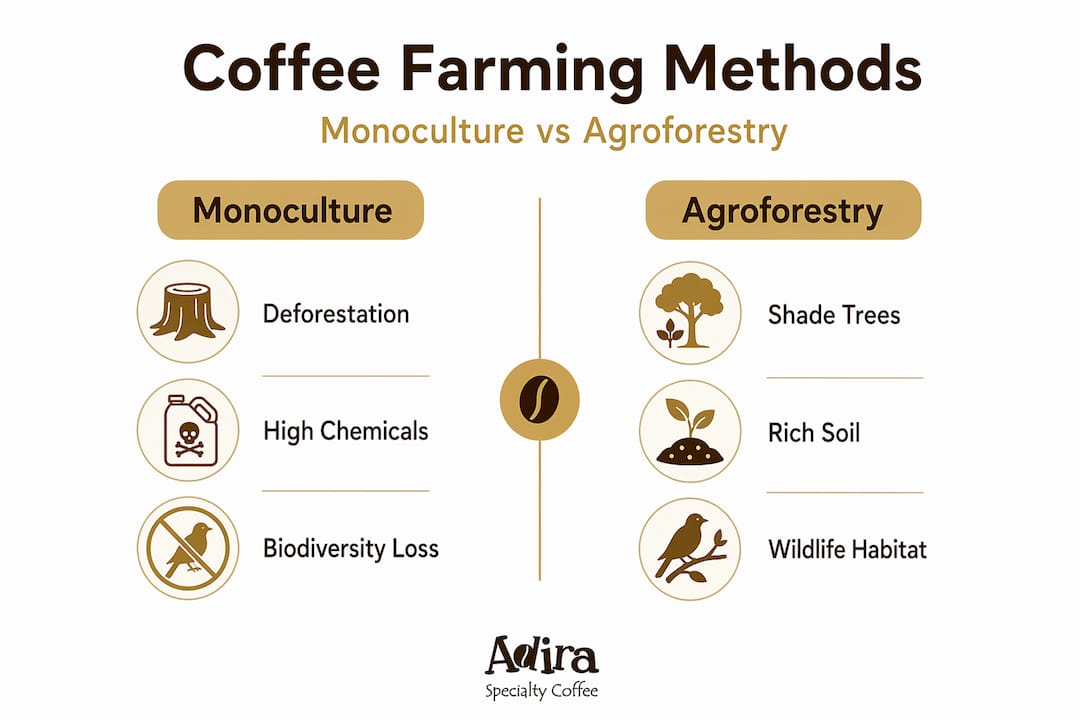
Monoculture vs. agroforestry: why it matters
Conventional coffee is typically grown as a sun-tolerant monoculture. That approach maximizes short-term yields but strips away the tree canopy that native birds, insects, and plants depend on. It also accelerates soil erosion and increases reliance on synthetic fertilizers and pesticides to compensate for the loss of natural soil biology.
Eco-friendly and shade-grown systems work differently. Agroforestry coffee systems reduce biodiversity impacts by 32 to 42% compared to conventional monoculture in Colombia studies, covering terrestrial, freshwater, and marine ecosystems. That’s not a marginal improvement. That’s a structural difference in how the farm functions as an ecosystem.
Here is what eco-friendly farming practices protect or restore compared to conventional methods:
- Soil health: Organic mulching and no-tillage practices rebuild microbial communities that keep soil productive without chemical inputs.
- Water quality: Reduced runoff from healthier soils means less fertilizer and pesticide contamination of nearby waterways.
- Carbon storage: Tree canopy in agroforestry systems sequesters carbon that monoculture farms release.
- Wildlife corridors: Shade trees provide habitat and movement corridors for birds and pollinators that are critical to regional biodiversity.
Pro Tip: When researching a coffee brand, look for farms explicitly described as “shade-grown” or “agroforestry” rather than just “natural” or “sustainable.” Those two specific terms signal a structural farming difference, not just a marketing position.
Rainforest Alliance frames regenerative agriculture as a climate-smart approach that restores ecosystem function and farm productivity simultaneously. That framing matters because it shifts the goal from “doing less damage” to actually rebuilding what industrial farming has degraded.
Agronomic and economic benefits for farmers
The case for eco-friendly coffee is not only environmental. It turns out that farming in a way that works with natural systems also produces better outcomes for the farmers themselves. The evidence is becoming hard to ignore.
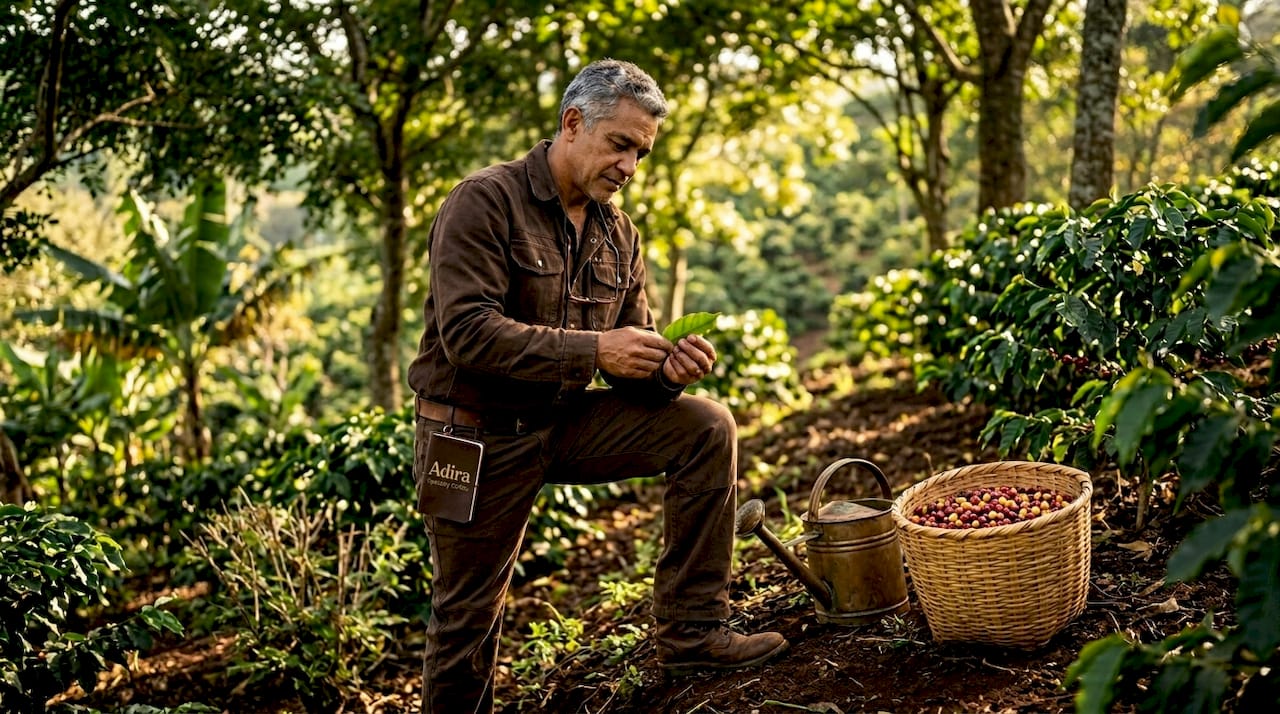
A study on ecological farming practices in Kenya found that disease incidence was reduced by 89 to 93% for major coffee diseases, with yield increasing by 1.12 kilograms per tree, and production costs remaining comparable to conventional methods. Those are extraordinary numbers. Think about what disease reduction of that scale means for a small farm family whose income depends entirely on a healthy harvest.
The mechanisms behind these results are worth understanding. Practices like no-tillage, mulching, and microbial inoculants enrich soil biological activity, which naturally suppresses pathogens and strengthens plant immune responses. When a farmer integrates Indigenous Microorganisms and organic mulch, the soil develops the kind of biological complexity that synthetic chemistry can never fully replicate.
Here is how those benefits compound for farming communities:
- Reduced input dependency: Less reliance on expensive synthetic fertilizers and fungicides means lower operating costs over time.
- Greater income stability: Healthier plants and more consistent yields reduce the financial volatility that devastates smallholder farmers during bad seasons.
- Longer productive lifespan of farms: Regenerative practices preserve the soil that conventional farming depletes, keeping land viable for the next generation.
- Community-level benefits: Healthier ecosystems around coffee farms support food diversity and water availability that entire communities depend on.
When you choose ethical coffee brands, you are supporting a supply chain that reinforces all of these outcomes. The purchase decision creates demand, and that demand gives farmers a reason to maintain practices that are better for everyone.
Pro Tip: Ask your coffee brand directly whether they work with smallholder farmers and how farmer livelihoods are factored into pricing. Brands that can answer specifically are typically operating at a level of supply chain transparency worth rewarding.
Navigating certifications and sustainability labels
Sustainable coffee options have multiplied, and so has the confusion around what the labels actually mean. “Eco-friendly,” “natural,” “responsible,” and even “organic” can appear on bags with very different realities behind them. Understanding the difference is one of the most practical things you can do as a consumer.
The most meaningful certifications cover multiple impact dimensions at once. Lavazza’s Rainforest Alliance certified regenerative blend, for example, addresses soil health, biodiversity, water stewardship, climate resilience, and farmer livelihoods in a single standard. That kind of multi-impact framework is fundamentally different from a single-issue label that addresses only one dimension like fair trade wages or organic inputs alone.
The table below shows how meaningful certification differs from generic sustainability claims:
| Feature | Generic “sustainable” label | Multi-impact certification |
|---|---|---|
| Soil health metrics | Rarely included | Monitored and required |
| Biodiversity protection | Vague or voluntary | Specific habitat requirements |
| Water stewardship | Not measured | Tracked and enforced |
| Farmer livelihoods | Often marketing language | Audited against standards |
| Third-party verification | Usually absent | Independent auditing required |
The deeper truth is that real differences in sustainability come from farm-level practices monitored through soil health, biodiversity, and water stewardship metrics. Two bags with similar shelf marketing can represent vastly different farm realities.
When reading labels, look for these signals of genuine commitment:
- Named farm origins or farm partnerships, not just country of origin
- Explicit third-party certifications with a verifiable organization behind them
- Published sourcing reports or farm visit documentation
- Language about regenerative practices rather than just reduced harm
You can go deeper on this with Adiracoffee’s guide to sourcing ethical coffee, which walks through the certification landscape step by step.
Practical ways to maximize your eco-friendly coffee impact
Choosing the right bag of coffee is the starting point, not the whole answer. The sustainable coffee benefits you care about get amplified or undermined by the choices you make before and after brewing.
Start with the purchase itself. Buying local-roasted coffee reduces transportation emissions and supports fresher beans, which means less waste from stale coffee that gets thrown away. Small-batch roasters that work directly with farms also tend to have higher supply chain transparency, so you know more about where the impact of your dollar actually lands.
Once you have brewed your coffee, do not throw the grounds in the trash. Composting coffee grounds prevents the methane emissions that happen when organic material decomposes in an anaerobic landfill environment. It also enriches soil with nitrogen, potassium, and phosphorus, making it genuinely useful for home gardens or community composting programs. That one habit turns a daily waste stream into a resource.
A few additional behaviors that strengthen your overall impact:
- Choose whole bean over pre-ground: Whole beans stay fresh longer, meaning less coffee ends up wasted.
- Use reusable filters: Paper filters generate unnecessary waste with every brew; cloth or metal alternatives work just as well.
- Buy from brands with disclosed farm partnerships: Transparency at the brand level usually reflects transparency at the farm level.
- Support small-scale brands: Small business coffee brands are often more directly connected to their farm sources, which keeps accountability higher throughout the supply chain.
Pro Tip: Start a small compost bin specifically for coffee grounds and unbleached paper filters. Within a few months you will have rich compost that eliminates the need for synthetic fertilizer in any container garden or planting bed.
My perspective on eco-friendly coffee as a real commitment
I have spent years working directly with coffee farms across Colombia, Ethiopia, Costa Rica, and beyond. What I have learned is that the sustainability conversation in coffee is often more complicated than the marketing suggests, and also more hopeful than the cynics claim.
What frustrates me most is how often the word “sustainable” gets used as a ceiling rather than a floor. I have visited farms that carry a certification but operate in ways that barely meet the minimum threshold. And I have visited farms with no official label that are doing genuinely regenerative work because the farmer understands the land better than any standard committee ever will. The label matters. But it does not tell the whole story.
What I believe is that regenerative agriculture represents the most honest direction coffee farming has taken in decades. Not just reducing harm, but rebuilding soil biology, restoring ecosystem function, and creating conditions where farms can survive the climate pressures coming in the next 20 years. I have seen what that looks like on the ground, and it is worth choosing.
My honest advice: stop asking whether a coffee is sustainable and start asking how the brand knows it is sustainable. The answer to that question separates the real commitments from the performance. When a brand can tell you which farms they source from, what certification framework those farms operate under, and what farm-level metrics they track, you are dealing with people who take this seriously. That is who deserves your business.
— Stefan
How Adiracoffee brings eco-friendly sourcing to your cup
At Adiracoffee, transparency and direct relationships with farmers are not talking points. Stefan built the brand around working with roughly 50 farms across Colombia, Ethiopia, Costa Rica, Guatemala, Brazil, and Sumatra, sourcing beans that meet real ethical and ecological standards rather than just label requirements. Every bag is small-batch roasted in California and shipped at peak freshness, so the quality you taste reflects the care that went into growing it. If you are ready to put your coffee habit to work for the farms and ecosystems behind it, explore the ethically sourced beans in the Adiracoffee collection. The Costa Rica single origin is a strong starting point for anyone new to the difference that regenerative sourcing actually tastes like.
FAQ
What is eco-friendly coffee exactly?
Eco-friendly coffee is grown using practices that reduce environmental harm and often restore ecosystem health, including agroforestry, organic inputs, and reduced water use. It is distinguished from conventional coffee by measurable impacts on soil, biodiversity, and carbon emissions.
Why is sustainable coffee important for the environment?
Coffee farming contributes significantly to deforestation, biodiversity loss, and carbon emissions. A kilogram of roasted coffee can generate 40 kilograms or more of CO2-equivalent, making sustainable farming practices critical for reducing the crop’s total environmental impact.
How do I know if a coffee certification is meaningful?
Look for multi-impact certifications like Rainforest Alliance that monitor soil health, water stewardship, biodiversity, and farmer livelihoods through independent auditing. Single-issue or self-declared labels carry far less weight and are harder to verify.
Does eco-friendly coffee taste better?
Eco-friendly farms that prioritize soil health tend to produce coffee with greater complexity and cleaner flavor. Agroforestry systems, in particular, allow beans to ripen more slowly in shade, which concentrates sugars and develops more nuanced flavor profiles.
Can composting coffee grounds really make a difference?
Yes. Composting coffee grounds diverts organic material from landfills where it would produce methane, a greenhouse gas far more potent than CO2 in the short term. It also returns nutrients to soil, supporting circular resource use at the consumer level.