
TL;DR:
- Genuine sustainable coffee farming emphasizes agroforestry, ecological outcomes, certifications, and community commitments. The most credible farms integrate native shade trees, verified standards, and long-term regenerative practices, often through cooperative models and vertical integration. Transparency through measurable data and long-term ecological and economic results distinguishes truly sustainable operations from marketing claims.
Sustainable coffee farming is defined as a production system that integrates agroforestry, ecosystem stewardship, and community well-being to produce coffee without depleting the natural resources it depends on. The farms setting the global standard for this model share three traits: verified certifications like Rainforest Alliance, Fair Trade, or Bird Friendly; measurable ecological outcomes like carbon neutrality and biodiversity corridors; and long-term commitments that go beyond planting a few trees. This article profiles the most instructive examples of sustainable coffee farms operating today, from Costa Rica to Vietnam to Peru, so you can recognize what genuine sustainability looks like in practice.
1. Agroforestry and shade-grown systems: the foundation of sustainable farms
Sustainable coffee systems use agroforestry with native shade trees to create wildlife habitats, improve soil health, build pest resilience, and conserve biodiversity. This is the single most important structural feature separating a genuinely sustainable farm from one that simply markets itself as green.
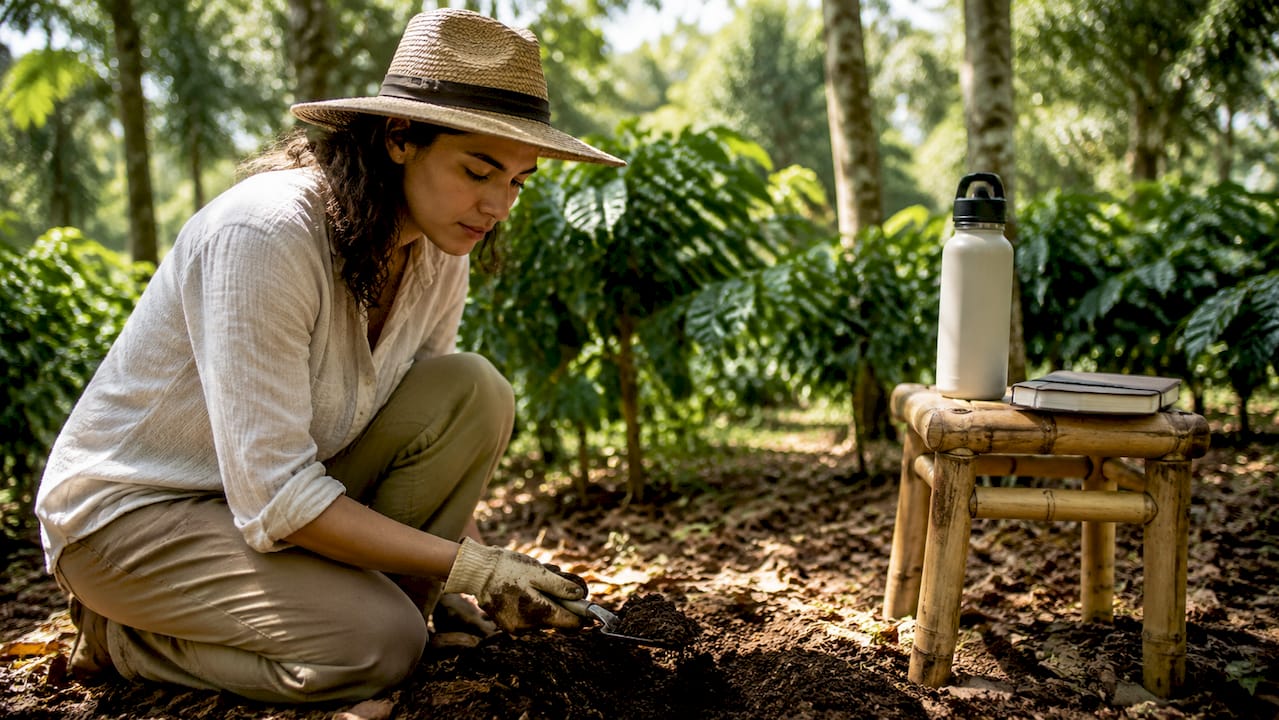
Conventional monoculture strips the canopy to maximize sun exposure and yield. The tradeoff is severe: soil degrades faster, chemical inputs increase, and the farm becomes a biological desert. Shade-grown farms operate as layered ecosystems. Nitrogen-fixing trees restore soil fertility. Flowering canopy species attract pollinators. Dense understory growth suppresses weeds without herbicides.
The YAKOPI project in Central Aceh, Indonesia, demonstrates this at scale. The project expands coffee agroforestry across 150 hectares involving 105 farmers, using multi-strata canopy systems that include nitrogen-fixing species and timber trees. The result is improved carbon sequestration, better soil structure, and diversified farmer income from timber and fruit alongside coffee.
- Multi-strata canopy means at least three vertical layers: ground cover, mid-story shrubs, and tall shade trees
- Native species diversity matters more than total tree count
- Nitrogen-fixing trees like Inga or Leucaena reduce the need for synthetic fertilizers
- Biological corridors between farm plots allow wildlife to move freely
Pro Tip: When evaluating a farm’s agroforestry claims, ask specifically about native species diversity and canopy age. A 20-year-old shade forest provides far more ecological value than newly planted saplings, regardless of how many trees were planted.
2. Certifications and carbon neutrality: how farms prove their claims
Certifications are the most reliable shortcut for assessing sustainability claims. Rainforest Alliance verifies biodiversity protection and worker welfare. Fairtrade audits pricing and community investment. Bird Friendly (Smithsonian) sets the strictest shade canopy standards. USDA Organic prohibits synthetic inputs. Each certification verifies different dimensions of sustainability, which is why the most credible farms hold more than one.
Aquiares Estate in Costa Rica is the country’s largest coffee farm and one of the clearest examples of carbon-neutral production. The farm measures emissions and offsets using IPCC-aligned verification methods, maintains protected biological corridors, and supports active biodiversity research. The surrounding community of 1,800 people depends on the estate, making social sustainability inseparable from the ecological model.
Fazenda Santiago in Brazil takes a parallel approach. The farm holds Rainforest Alliance, UTZ, and Starbucks C.A.F.E. certifications alongside on-site photovoltaic solar energy generation. Water source protection and native tree planting programs run alongside the renewable energy infrastructure, creating a farm where sustainability is embedded in operations rather than bolted on as a marketing layer.
“Protecting existing shade-grown agroforests provides more climate and biodiversity benefits than solely planting new trees.” — Specialty Coffee Association
This distinction matters enormously. Carbon programs frequently reward new tree planting while undervaluing the mature, biodiverse shade systems that have taken decades to develop. A farm with 30-year-old native canopy and no carbon certification may deliver more ecological value than a newly certified plantation that planted saplings last year.
Pro Tip: Don’t evaluate sustainability by certification count alone. Ask whether the farm publishes annual sustainability reports with measurable metrics: emissions data, water usage, biodiversity monitoring results, and worker wage benchmarks.
3. Farms transitioning to regenerative and organic practices
The transition from conventional to regenerative farming is where the most instructive stories emerge. These farms show what change actually looks like, including the timeline, the costs, and the measurable outcomes on the other side.
Vuong Thanh Cong, Vietnam
Vuong Thanh Cong’s farm in Vietnam eliminated all chemical inputs in 2017 and adopted a fully regenerative model. The transition to organic farming included soil restoration through composting, water source protection, and integrated pest management. The economic results are concrete: coffee value increased four to five times, and input costs dropped by approximately 30%. This is the clearest available data point showing that regenerative transition is not a sacrifice. It is a long-term investment with measurable returns.
- Eliminate synthetic fertilizers and replace with on-farm composting
- Restore soil biology through cover cropping and reduced tillage
- Protect water sources by creating buffer zones around streams
- Introduce integrated pest management using beneficial insects and trap crops
- Document outcomes annually to build credibility with buyers and certifiers
Monteverde Cooperative, Peru
The Monteverde cooperative in Peru’s Amazonas region operates at a different scale. The cooperative has renovated 4 million coffee trees, installed 400 composting systems, and plans to establish 160 model farms by 2026. Soil analysis programs and potable water units run alongside the agricultural improvements. The cooperative model means individual farmers access training, equipment, and market connections they could not afford independently.
Sustainability scaling depends heavily on cooperative networks and training hubs. Model farms spread practices and support local farmer empowerment beyond individual plots. Monteverde demonstrates this principle at a regional level, turning one farm’s practices into a replicable system across hundreds of smallholders.
Pro Tip: When assessing a farm’s regenerative credentials, ask for the transition start date and specific practices adopted by year. Credible transitions take three to seven years to reach full ecological functionality. Any farm claiming instant regenerative status deserves skepticism.
4. Vertical integration and cooperative models
The most transparent sustainable supply chains are managed by farms or cooperatives that control production from planting through packaging. Vertical integration removes the information gaps where sustainability claims typically break down.
Cafe La Prosperidad de Chirinos in Peru is the first cooperative in the country to hold both Regenerative Organic Certification and Fair Trade status simultaneously. The cooperative manages coffee from seedling to packaged product, operating its own roasting and packaging facilities. This means every step of the supply chain is audited under the same sustainability framework, with no handoffs to uncertified processors or exporters.
The economic empowerment dimension of this model is significant. When cooperatives control roasting and packaging, the value added by those processes stays within the farming community rather than flowing to external processors. Farmers earn more per kilogram, which funds the ongoing investment in sustainable practices. The model is self-reinforcing in a way that commodity-price farming never can be. For readers interested in ethical sourcing practices, vertical integration is one of the clearest signals of genuine supply chain accountability.
5. Comparing the leading sustainable farms
The farms profiled in this article represent different regional approaches, scales, and sustainability priorities. The table below compares them across the dimensions most relevant to ethical sourcing decisions.
| Farm | Location | Key certifications | Carbon status | Notable practice |
|---|---|---|---|---|
| Aquiares Estate | Costa Rica | Multiple, IPCC-verified | Carbon neutral | Biological corridors, community of 1,800 |
| Fazenda Santiago | Brazil | Rainforest Alliance, UTZ, C.A.F.E. | Renewable energy | On-site solar, water source protection |
| Vuong Thanh Cong | Vietnam | Organic | Input-free since 2017 | 4 to 5x value increase, 30% cost reduction |
| Monteverde Cooperative | Peru | Multiple | In progress | 4M trees renovated, 400 composting systems |
| La Prosperidad de Chirinos | Peru | Regenerative Organic, Fair Trade | Audited chain | Full vertical integration, own roasting |
| YAKOPI Project | Indonesia | In development | Carbon sequestration | 150 ha, 105 farmers, multi-strata canopy |
No single farm leads on every dimension. Aquiares sets the standard for carbon accountability. Vuong Thanh Cong demonstrates the most dramatic economic transformation from regenerative transition. La Prosperidad de Chirinos offers the most transparent supply chain. Monteverde shows what cooperative-scale sustainability looks like when training infrastructure is built alongside agricultural practice. The right model depends on what you prioritize as a buyer or consumer. Farms that rank highly across sustainability and quality metrics tend to share one trait: they measure outcomes and publish the results.
Key takeaways
The most credible sustainable coffee farms combine verified certifications, measurable ecological outcomes, and long-term community investment rather than relying on any single practice or marketing claim.
| Point | Details |
|---|---|
| Agroforestry is the core practice | Native shade trees create biodiversity, soil health, and pest resilience that monoculture cannot replicate. |
| Certifications verify different things | Rainforest Alliance, Bird Friendly, and Fairtrade each audit distinct sustainability dimensions; leading farms hold multiple. |
| Regenerative transition takes years | Vuong Thanh Cong’s model shows that a full transition requires at least three to seven years to deliver measurable ecological and economic results. |
| Cooperatives multiply impact | Monteverde and La Prosperidad de Chirinos show how cooperative models scale sustainability to hundreds of smallholder farmers. |
| Vertical integration signals transparency | Farms controlling production through packaging eliminate the supply chain gaps where sustainability claims typically break down. |
What I’ve learned from sourcing farms that actually walk the talk
I’ve spent years sourcing beans from cooperatives and small farms across Colombia, Ethiopia, Costa Rica, Mexico, and Sumatra. The pattern I keep seeing is this: the farms with the most impressive sustainability marketing are not always the ones with the most impressive sustainability outcomes. The farms that genuinely move the needle are usually quieter about it. They’re too busy measuring soil carbon, training neighboring farmers, and managing biological corridors to write press releases.
The carbon accounting gap identified by the Specialty Coffee Association is the clearest example of this problem. Incentive structures reward new tree planting because it’s visible and quantifiable. They underreward the farmer who has maintained a 40-year-old shade agroforest with 30 native species, because that system is harder to photograph and harder to monetize. The result is a market that accidentally incentivizes clearing old-growth shade systems and replanting them with younger, less biodiverse trees to qualify for carbon credits.
What I look for when evaluating a farm’s sustainability credentials is simple: transition timeline, species diversity in the canopy, third-party audit history, and whether the farmers themselves are earning more than commodity price. If a farm can answer those four questions with specific numbers, I trust it. If the answer is a certification logo and a photograph of someone planting a tree, I keep looking. The eco-friendly coffee conversation needs to move from symbols to data, and buyers have more power to push that shift than they realize.
— Stefan
Taste the farms behind the cup
At Adiracoffee, every bean we roast comes from a farm or cooperative we’ve deliberately chosen for its sourcing story, not just its cup score. Stefan and Ekaterina built this brand because supermarket coffee never told you anything about where it came from or who grew it. We wanted to change that.

Our single origin coffees come from cooperatives and small farms in Colombia, Ethiopia, Costa Rica, Mexico, and Sumatra. Each one is roasted to order in small batches in California and shipped within days of roasting. If you want coffee that connects you directly to the kind of farms profiled in this article, that’s exactly what we source. Subscribe and save 10%, with free US shipping on orders over $35.
FAQ
What is sustainable coffee farming?
Sustainable coffee farming is a production system that integrates agroforestry, soil restoration, water management, and community well-being to grow coffee without degrading the ecosystems it depends on. Certified farms use third-party audits to verify these practices against measurable standards.
Which certifications identify the best sustainable coffee farms?
Rainforest Alliance, Fairtrade, Bird Friendly (Smithsonian), and USDA Organic each verify different sustainability dimensions. The most credible farms hold multiple certifications and publish annual sustainability reports with measurable outcomes.
How does agroforestry make coffee farming more sustainable?
Agroforestry integrates native shade trees into coffee production, creating habitats, improving soil health, and reducing the need for chemical inputs. The YAKOPI project in Indonesia shows this model scaling to 150 hectares with documented improvements in carbon sequestration and farmer income.
Can a small farm be as sustainable as a large estate?
Yes. Vuong Thanh Cong’s farm in Vietnam demonstrates that small-scale regenerative transition can produce a four to five times increase in coffee value alongside a 30% reduction in input costs. Cooperative models like Monteverde allow small farms to access training and infrastructure that would otherwise require estate-scale resources.
How do I choose sustainable coffee as a consumer?
Look for coffees with multiple third-party certifications, single-origin sourcing with named farms or cooperatives, and brands that publish specific sourcing information rather than generic sustainability language. Vertical integration, where the cooperative controls production through packaging, is one of the strongest signals of supply chain transparency.