
TL;DR:
- Third wave coffee is an artisanal movement that treats coffee as a high-quality agricultural product with a focus on single-origin beans, light roasting, and manual brewing methods. It emphasizes transparency, ethical sourcing through direct trade, and precise flavor expression, contrasting with earlier coffee waves that prioritized convenience or atmosphere. The movement encourages tasting the true terroir of each bean, fostering a deeper appreciation for the craft and origin of coffee.
Third wave coffee is defined as an artisanal movement that treats coffee as a high-quality agricultural product, much like fine wine, with an emphasis on single-origin beans, light roasting, direct trade relationships, and manual brewing methods. The term was first coined around 1999–2000 by Timothy J. Castle and later popularized by Trish Rothgeb in 2002–2003. Roasters like Stumptown, Intelligentsia, and Counter Culture were among the first to build businesses around these principles. This guide breaks down the history, defining characteristics, and real-world impact of the third wave coffee movement so you can recognize it, appreciate it, and brew it well.
What are the three waves of coffee?
Coffee waves represent three distinct consumer mindsets that evolved over roughly a century. Each wave changed not just what people drank, but why and how they drank it.
First Wave: Coffee as Commodity
The first wave ran from the late 1800s through most of the 20th century. The goal was simple: get coffee into as many homes as possible. Brands like Folgers and Maxwell House dominated grocery shelves. Flavor was secondary to convenience. Dark roasting masked low-quality beans, and instant coffee became a household staple. Coffee was fuel, not an experience.
Second Wave: The Café as Social Space
The second wave arrived in the 1970s and exploded through the 1980s and 1990s. Starbucks is the defining example. Espresso drinks, flavored lattes, and the concept of the café as a “third place” between home and work became cultural fixtures. Roasts were medium to dark, and blends replaced single-origin beans. Quality improved over the first wave, but the focus remained on the drink as a social prop rather than the coffee itself.
Third Wave: Coffee as Craft
The third wave shifted attention to the bean. Origin, altitude, processing method, and the farmer’s name all became relevant information. Light roasts replaced dark ones because they preserve the natural flavor compounds that heavy roasting destroys. Manual brewing methods like pour-over and AeroPress replaced automated drip machines because they give the brewer precise control over extraction.
Here is a direct comparison of the three waves:
| Feature | First Wave | Second Wave | Third Wave |
|---|---|---|---|
| Focus | Mass production | Café culture | Bean origin and craft |
| Roast level | Dark | Medium to dark | Light to medium |
| Sourcing | Commodity blends | Branded blends | Single-origin, direct trade |
| Brewing method | Drip, instant | Espresso, automated | Pour-over, AeroPress, Chemex |
| Consumer role | Passive buyer | Social participant | Educated taster |
Pro Tip: If a coffee bag lists the farm name, altitude, and processing method, you are looking at a third wave product. If it lists only a roast level and a flavor description like “bold” or “smooth,” it is almost certainly second wave.
What defines third wave coffee: key characteristics
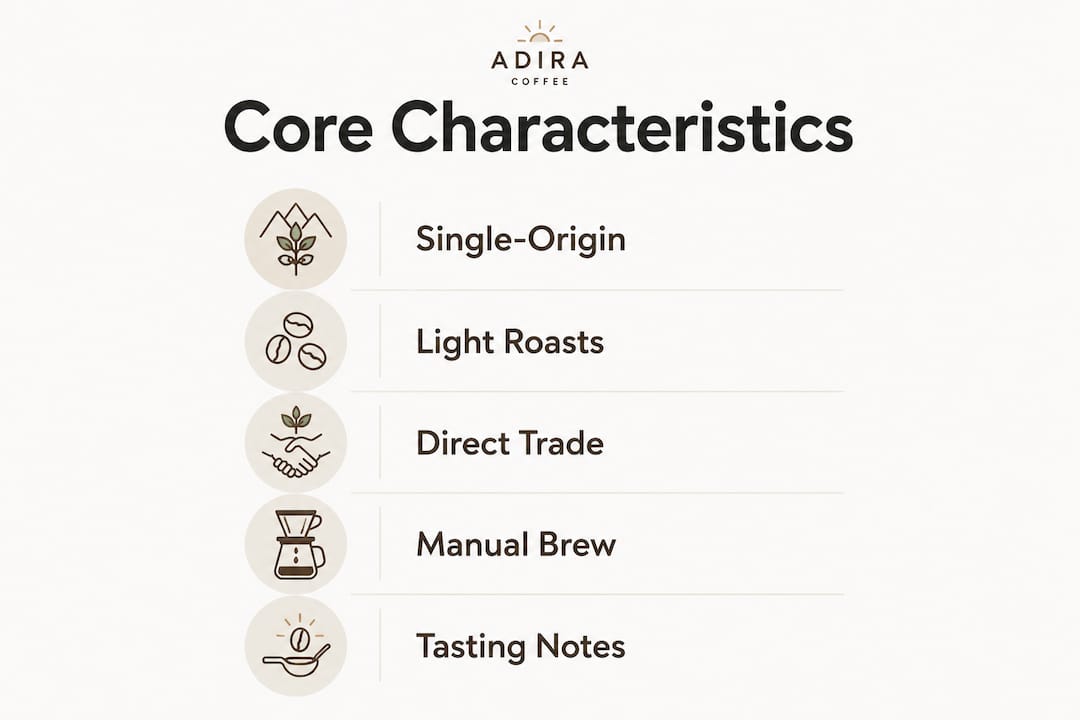
Third wave coffee is defined by five core characteristics that work together to deliver a cup that reflects its agricultural origin rather than a roaster’s brand identity.
Single-Origin Sourcing
Third wave coffee comes from a specific farm, cooperative, or washing station rather than a blend of beans from multiple countries. Coffee flavor is dictated by farm, altitude, and climate, not by the roaster’s name on the bag. This concept, borrowed from wine, is called terroir. A washed Ethiopian Yirgacheffe from a specific farm at 2,000 meters tastes completely different from a natural-processed Ethiopian bean from a farm at 1,600 meters. You can read more about how origin shapes flavor in detail.
Light to Medium Roasting
Heavy roasting burns off the volatile compounds responsible for fruit, floral, and complex flavor notes. Third wave roasters use light to medium profiles specifically to preserve those compounds. The result is a cup that might taste like blueberry, jasmine, or stone fruit rather than the generic “roasted coffee” flavor most people grew up with. Understanding how roasting profiles transform a bean’s character is central to appreciating this approach.
Direct Trade Relationships
Third wave roasters typically buy directly from farmers or cooperatives rather than through commodity brokers. This means higher prices paid to growers, greater supply chain transparency, and a direct feedback loop on quality. Direct trade practices are not a marketing label. They represent a structural change in how coffee moves from farm to cup.
Manual Brewing Methods
Pour-over, AeroPress, Chemex, and siphon brewing are the preferred methods in third wave culture. Each method gives the brewer control over water temperature, flow rate, and contact time. That control matters because manual brewing methods are favored for clarity over crema-heavy espresso, which can mask subtle origin flavors.
Detailed Tasting Notes
Third wave coffee bags list flavor notes like “dried mango, brown sugar, and hibiscus” rather than just “medium roast.” These notes are not marketing language. They reflect real flavor compounds present in the bean that a skilled roaster and brewer can coax out.
Specialty Coffee vs. Third Wave Coffee
These two terms overlap but are not identical. Specialty coffee refers to bean quality, specifically beans scoring 80 or above on the Specialty Coffee Association’s 100-point scale. Third wave is a cultural and commercial movement built around ethics, transparency, and craft. You can sell specialty-grade beans in a second wave shop. Third wave, by definition, requires specialty-grade beans plus the broader ethos of origin transparency and artisanal practice.
Common misconceptions about third wave coffee
The third wave coffee movement carries a few persistent misunderstandings that trip up even enthusiastic newcomers.
Misconception 1: Third wave and specialty coffee mean the same thing. They do not. Specialty is a quality grade. Third wave is a philosophy. A gas station selling high-scoring beans with no origin information is not third wave. A third wave shop will always use specialty-grade beans, but the reverse is not true.
Misconception 2: Fresher always means better. Peak flavor in third wave beans occurs 1–3 weeks after roasting, not immediately after. Beans that are too fresh off the roaster release excess CO2 during brewing, which produces a gassy, uneven cup lacking clarity and depth. Most serious roasters print a roast date rather than a “best by” date so you can time your brewing correctly.
Misconception 3: Single-origin beans taste the same year-round. Third wave coffee beans are seasonal and variable. Flavor profiles can shift significantly between harvests. A Colombian Huila you loved in January may taste noticeably different by July as the crop changes. This variability is a feature, not a flaw. It reflects the agricultural reality of the product.
Misconception 4: You can add flavored syrups and still drink third wave coffee. Adding flavored syrups contradicts third wave principles because they mask the terroir and complex flavor notes the roaster worked to preserve. A jasmine-forward Ethiopian natural does not need vanilla syrup. The syrup replaces the flavor rather than complementing it.
“Third wave coffee asks you to taste what is actually in the cup, not what you expect coffee to taste like.”
Pro Tip: Buy beans with a printed roast date and brew them between 7 and 21 days after that date. This single habit will improve your cup quality more than any equipment upgrade.
How third wave coffee shapes culture and the café experience
Third wave coffee transformed the café into a culinary destination with education and transparency at its center. The shift goes well beyond what is in the cup.
Baristas in third wave shops function as educators. They explain where a bean comes from, why it was roasted to a specific profile, and which brewing method best suits its character. Trish Rothgeb described this shift as moving coffee from a grab-and-go transaction to a culinary experience where guests choose between micro-lots and brewing methods based on their own taste preferences.
The physical design of third wave cafés reflects these values. Open roasting areas, visible brew bars, and chalkboard menus listing farm names and processing methods are all deliberate choices. They signal transparency and invite curiosity rather than discouraging questions.
The impact on global supply chains is real and measurable. Direct trade relationships mean farmers in Colombia, Ethiopia, and Costa Rica receive higher prices and more consistent demand. Roasters who visit farms and publish sourcing reports create accountability that commodity trading never required.
Popular third wave roasters shaping the market today include Stumptown Coffee Roasters, Intelligentsia Coffee, Counter Culture Coffee, Blue Bottle Coffee, and Onyx Coffee Lab. Each built its reputation on origin transparency, light roasting, and direct relationships with growers. Their influence pushed the broader specialty coffee industry toward higher sourcing standards.
Key takeaways
Third wave coffee is a cultural and commercial movement that treats coffee as an agricultural product defined by its origin, roasting precision, and ethical sourcing rather than brand identity or convenience.
| Point | Details |
|---|---|
| Third wave defined | It is a cultural movement treating coffee as an agricultural product, not just a commodity. |
| Specialty vs. third wave | Specialty coffee is a quality grade; third wave is a broader philosophy of ethics and craft. |
| Freshness timing | Brew beans 7–21 days post-roast for peak flavor clarity and depth. |
| Terroir is central | Farm, altitude, and processing method determine flavor more than roast level or brand. |
| Syrups contradict the ethos | Flavored additives mask the origin flavors third wave roasters work to preserve. |
Why third wave coffee changed how i think about the cup
I grew up drinking strong, dark Bulgarian coffee. When Ekaterina and I moved to California, we spent months frustrated by supermarket bags that smelled promising and tasted like cardboard. That frustration is exactly what led us to build Adiracoffee.
What third wave coffee gave me was not just better coffee. It gave me a framework for understanding why coffee tastes the way it does. When I first tried a naturally processed Ethiopian from a small farm in Yirgacheffe, I genuinely thought someone had added blueberry flavoring. They had not. That flavor was in the bean, preserved by a light roast and a clean pour-over.
The learning curve is real. Third wave coffee asks you to slow down, pay attention, and accept that a cup might taste nothing like what you expect coffee to taste like. Some people find that disorienting. I found it fascinating.
My honest advice for newcomers: start with a washed Colombian or a light-roasted Costa Rican. These origins tend to produce clean, approachable cups with fruit and caramel notes that are easy to identify. Avoid brewing them too fresh. Read the roast date and wait at least a week. Then try the same bean again at two weeks and notice the difference.
Third wave coffee is not about snobbery. It is about paying attention to something most people drink every day without ever really tasting. Once you start tasting it, going back is genuinely difficult.
— Stefan
Explore single-origin coffee at Adiracoffee
Adiracoffee sources beans from small farms and cooperatives in Colombia, Ethiopia, Costa Rica, Mexico, and Sumatra. Every bag is roasted to order in small batches in California and ships within days of roasting, so you receive beans at the right point in their freshness window.
If you want to experience third wave principles firsthand, the single-origin collection is the right place to start. Each offering lists the origin, processing method, and tasting notes so you know exactly what you are brewing. Subscriptions are available with 10% savings, and US shipping is free over $35. Start with one origin, brew it at 10 days post-roast, and taste what terroir actually means.
FAQ
What is third wave coffee in simple terms?
Third wave coffee is an artisanal movement that treats coffee as a high-quality agricultural product, focusing on single-origin beans, light roasting, direct trade sourcing, and manual brewing methods to highlight the natural flavors of the bean.
How is third wave coffee different from second wave?
Second wave coffee, associated with chains like Starbucks, focused on espresso drinks, branded blends, and the café as a social space. Third wave focuses on bean origin, farm-level transparency, lighter roasts, and the coffee itself as the primary experience.
Is all specialty coffee considered third wave?
No. Specialty coffee is a quality grade for beans scoring 80 or above on the SCA scale. Third wave is a cultural movement that requires specialty-grade beans but also demands origin transparency, ethical sourcing, and artisanal presentation.
When should i brew third wave coffee after roasting?
Peak flavor occurs 1–3 weeks after roasting. Brewing too soon produces a gassy, uneven cup because the beans are still off-gassing CO2 from the roasting process.
What brewing methods are used in third wave coffee?
Pour-over, AeroPress, Chemex, and siphon brewing are the most common third wave methods. Each gives the brewer precise control over extraction variables, which is critical for highlighting the delicate origin flavors that light roasting preserves.