

TL;DR:
- Coffee acidity is a sensory perception of brightness created by organic acids in the beans, affecting flavor and stomach comfort. The levels and types of acids vary with origin, roast, and brewing method, with cold brew providing the lowest perceived acidity. Managing these factors allows for a tailored coffee experience that balances flavor and digestive sensitivity effectively.
Coffee acidity is the bright, tangy, and lively sensation you perceive in a cup, produced by over 30 organic acids that comprise 1–2% of green bean weight. Most coffee drinkers use the word “acidity” loosely, but it actually describes two separate things: a sensory experience of brightness and a measurable chemical property. Understanding both helps you choose beans you’ll love, brew them better, and figure out why some cups upset your stomach while others don’t. The key acids at work include citric, malic, chlorogenic, acetic, and tartaric, each contributing a distinct flavor character to your cup.
What is coffee acidity, and why does it matter?
Coffee acidity is defined as the perception of brightness, crispness, or tanginess in brewed coffee, driven by organic acids formed during the growth and roasting of the bean. Specialty coffee judges treat it as a quality marker. Brightness signals well-developed organic acids that enhance complexity and sweetness in the cup, which is why a Kenya or Ethiopia single origin often scores higher than a flat, dull brew.
The confusion starts because “acidity” means something different to a chemist than it does to a taster. A chemist measures pH or titratable acidity. A taster describes a sensation. Sensory acidity and chemical acidity are related but distinct, and conflating them leads to bad purchasing decisions and unnecessary stomach anxiety. You can have a chemically acidic coffee that tastes smooth, and a lower-acid coffee that still tastes sharp.
Acidity also affects how your body responds to coffee. Stomach discomfort after coffee is often blamed on pH, but caffeine’s effect on the esophageal sphincter plays a larger role than the coffee’s acid content alone. Knowing this distinction lets you troubleshoot your morning cup with far more precision.
How organic acids shape the flavor you taste
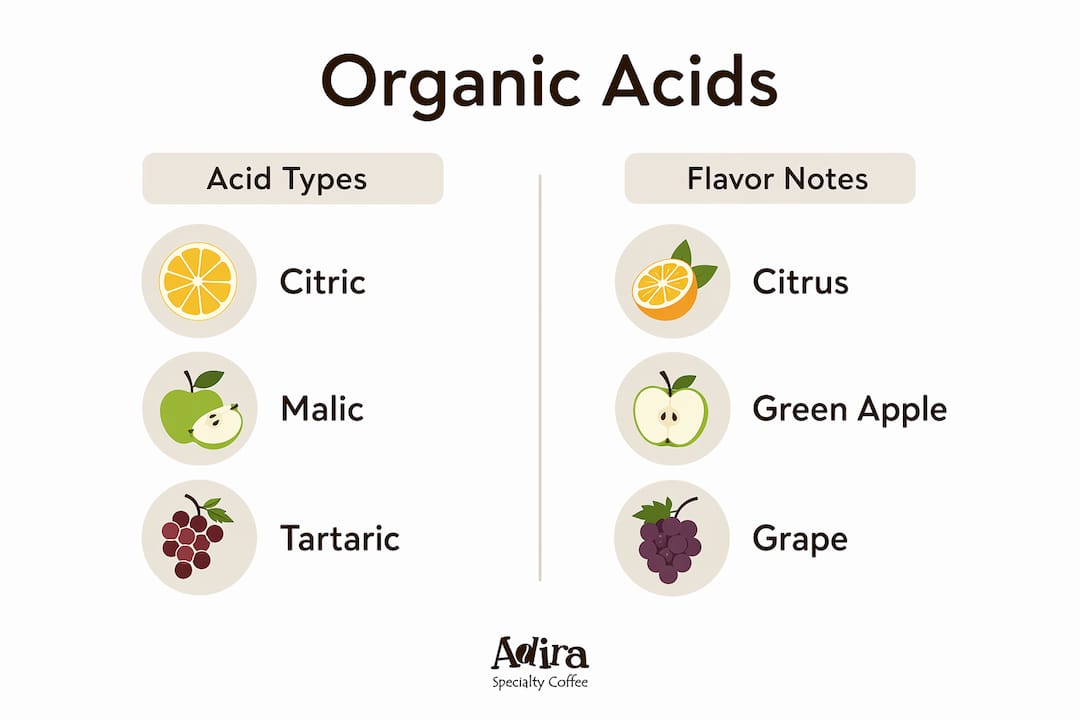
The flavor impact of each acid is specific and predictable once you know what to look for. Citric acid delivers the bright, lemon-like snap you find in Ethiopian Yirgacheffe or Colombian washed coffees. Malic acid reads as a softer, apple-like tartness, common in coffees from Costa Rica and Kenya. Tartaric acid, also found in wine grapes, adds structure and a dry finish. Acetic acid is the wild card. In small amounts it adds complexity, but when it dominates, the cup tastes like vinegar. Chlorogenic acid is the most abundant acid in green coffee and contributes to bitterness as it breaks down during roasting.
Here is how the main acids compare in terms of flavor contribution:
| Acid | Primary flavor note | Where you find it |
|---|---|---|
| Citric acid | Bright, lemon, citrusy | Ethiopia, Colombia, washed process |
| Malic acid | Apple, soft tartness | Kenya, Costa Rica |
| Tartaric acid | Dry, wine-like structure | Natural process coffees |
| Acetic acid | Vinegar (excess), complexity (trace) | Fermented or over-extracted coffees |
| Chlorogenic acid | Bitterness after roasting | All origins, increases with roast |
The right balance of acidity enhances sweetness and mouthfeel, but too much tips the cup into sourness that most drinkers reject. This is why roasters talk about “brightness” rather than “sourness.” Roasters use the term acidity to describe desirable fruit-like brightness, not a flaw. When a roaster says a coffee is “bright,” they mean the acids are balanced and expressive, not overwhelming. Understanding this vocabulary helps you read a coffee bag description and actually predict what you’ll taste. For a deeper look at how these compounds interact with other flavor variables, the Adiracoffee guide on key factors affecting flavor covers the full picture.
Pro Tip: If a coffee tastes sour rather than bright, the problem is usually under-extraction or a roast that is too light for your brewing method, not the bean itself.
pH vs. titratable acidity: what the numbers actually tell you
Brewed coffee sits at a pH of roughly 4.85 to 5.10 across most roast levels and origins. That range is less acidic than orange juice (pH 3.5) and roughly comparable to a banana. pH alone tells you very little about how a coffee will taste or how it will affect your stomach.
Titratable acidity is the more useful measurement. It measures the total concentration of acids in a solution, not just the free hydrogen ions that pH captures. Titratable acidity is a more reliable indicator of stomach impact than pH, which is why two coffees with identical pH readings can feel completely different on your digestive system. A dark roast and a light roast may share a similar pH, but the light roast carries significantly more titratable acidity.
Water chemistry adds another layer. Magnesium enhances the clarity and perception of acidity without changing the coffee’s actual pH. This is why the same beans brewed with soft water versus mineral-rich water taste noticeably different. Bicarbonate in water acts as a buffer, suppressing perceived acidity and making the cup taste flatter. If you brew with very hard tap water and wonder why your light roast lacks brightness, the water is likely the culprit. The Adiracoffee article on water quality and brewing explains exactly which mineral levels to target.
Pro Tip: For the most accurate read on how a coffee will affect your stomach, ask your roaster about titratable acidity rather than pH. It’s the number that actually correlates with digestive sensitivity.
How roasting level and origin affect acidity levels
Origin and altitude are the starting point for acidity. High-altitude origins like Kenya and Ethiopia develop higher, more complex acidity, while lower-altitude origins like Brazil and Sumatra produce milder, earthier cups with less perceived brightness. The reason is simple: cooler temperatures at altitude slow bean development, allowing more sugars and organic acids to accumulate.
Roasting then reshapes that acid profile significantly. Roasting degrades malic, citric, and tartaric acids while increasing bitterness from chlorogenic acid breakdown. The practical result is this:
- Light roasts preserve the most fruit-forward acids. Expect bright citrus and berry notes from Ethiopian or Colombian light roasts.
- Medium roasts balance brightness with body. Malic and citric acids are still present but softened, making them more approachable for daily drinking.
- Dark roasts reduce perceived acidity sharply. Chlorogenic acids have largely broken down into bitter compounds, giving you a bolder, less tangy cup.
- Sumatra and Brazil origins start with lower acid development and pair naturally with medium to dark roasts for a smooth, low-acidity result.
- Kenya and Ethiopia origins shine brightest at light to medium roasts where their natural citric and malic acids remain intact.
The roasting process is not just about color. Roasting transforms organic acids chemically, and the roaster’s decisions about time and temperature directly determine whether you get a vibrant, fruit-forward cup or a smooth, bitter-leaning one. Choosing the right roast profile for your preferred acidity level is one of the highest-leverage decisions you can make as a coffee buyer. The Adiracoffee guide on roast profiles for enthusiasts breaks down exactly how those decisions play out.
How brewing methods influence coffee acidity and digestion
Your brewing method is the final dial you can turn to control acidity in the cup. Here is how the most common methods compare, ranked from highest to lowest perceived acidity:
- Pour-over (V60, Chemex): High extraction efficiency and hot water temperature pull the most titratable acidity from the grounds. Best for showcasing the brightness of light-roast single origins.
- French press: Full immersion and a coarser grind produce moderate acidity with more body. The metal filter allows oils through, which softens the perception of sharpness.
- Espresso: Concentrated extraction produces high acidity in a small volume, but the short contact time and pressure change which acids are extracted. Espresso often tastes less sour than its concentration suggests.
- Moka pot: High heat and pressure can over-extract, pushing acetic acid levels up and producing a sharper, sometimes harsh cup if the grind is too fine.
- Cold brew: Cold brew reduces titratable acidity by 50–70% compared to hot-brewed coffee. The result is a smoother, less irritating cup that is significantly easier on sensitive stomachs.
If you experience stomach discomfort, cold brew is the most reliable brewing adjustment you can make. Beyond method, a higher coffee-to-water ratio increases the concentration of acids in the cup, so dialing back your dose slightly can reduce perceived sharpness without changing your brewing equipment. Water temperature also matters: brewing below 195°F extracts fewer acids and produces a rounder, less bright cup.
Key takeaways
Coffee acidity is a sensory property shaped by organic acids, and managing it through origin, roast, and brew method gives you precise control over both flavor and stomach comfort.
| Point | Details |
|---|---|
| Acidity is sensory and chemical | Perceived brightness and pH are related but different. Titratable acidity predicts stomach impact better than pH. |
| Acids define flavor character | Citric and malic acids create brightness; acetic acid causes sourness when excessive; chlorogenic acid drives bitterness. |
| Origin and altitude set the baseline | Kenya and Ethiopia produce high-acidity coffees; Brazil and Sumatra produce milder, lower-acidity cups. |
| Roast level reshapes acid content | Light roasts preserve fruit-forward acids; dark roasts reduce perceived acidity but increase bitterness. |
| Cold brew cuts acidity most effectively | Cold brew reduces titratable acidity by 50–70%, making it the best option for sensitive stomachs. |
Why I stopped blaming acidity for everything
When Stefan and Ekaterina started Adiracoffee, the most common complaint we heard from customers was “coffee is too acidic for my stomach.” After years of sourcing and roasting, I can tell you that sentence is almost always imprecise. Most of the time, people are reacting to caffeine, over-extraction, or a stale dark roast that has gone bitter, not to the organic acids that make a well-grown coffee bright and complex.
The distinction matters because the fix is different. If you avoid all bright coffees because you think acidity hurts your stomach, you are cutting yourself off from some of the most interesting cups in the world. A washed Ethiopian from Yirgacheffe, brewed as a pour-over with filtered water, is genuinely high in titratable acidity. It is also one of the most pleasant, stomach-friendly coffees I have ever tasted, because the acids are balanced and the extraction is clean.
What I recommend to anyone who is sensitive: start with a medium-roast single origin from Colombia or Costa Rica, brew it as cold brew or a lower-temperature pour-over, and pay attention to how your body responds. Then adjust one variable at a time. Roast, origin, and brew method each move the needle independently. You do not need to drink flat, dark, low-acid coffee to be comfortable. You need to understand which lever to pull.
The coffee world has overcorrected on “low acid” marketing. Some of those products are fine, but the framing implies that acidity is a flaw. It is not. It is the quality that separates a memorable cup from a forgettable one.
— Stefan
Find your perfect acidity match at Adiracoffee
At Adiracoffee, every bag is roasted to order in small batches in California and shipped within days, so the acids in your cup are at their peak, not degraded from sitting on a shelf for months.
If you prefer bright, fruit-forward cups, the single-origin collection includes coffees from Ethiopia and Colombia that showcase natural citric and malic acids at their best. If you want a smoother, more balanced cup, the Love Blend is built for exactly that. Not sure where your palate lands? Take the coffee quiz and get a recommendation matched to your flavor preferences and acidity tolerance. Free US shipping on orders over $35, with a subscription option that saves you 10%.
FAQ
What is the pH of coffee?
Brewed coffee typically has a pH between 4.85 and 5.10, making it mildly acidic. That is less acidic than orange juice and most sodas.
Is high-acidity coffee bad for your stomach?
Not necessarily. Stomach discomfort from coffee is more often linked to caffeine’s effect on the esophageal sphincter than to the coffee’s acid content. Cold brew, which reduces titratable acidity by 50–70%, is the best option for genuinely sensitive individuals.
What causes coffee to taste sour?
Sourness in coffee usually comes from under-extraction, excessive acetic acid from over-fermentation, or a roast that is too light for the brewing method. It is a brewing or processing flaw, not an inherent property of high-acidity beans.
Does dark roast coffee have less acidity?
Yes. Roasting degrades citric, malic, and tartaric acids, so dark roasts have lower perceived acidity than light roasts. However, dark roasts increase bitterness from chlorogenic acid breakdown, which some drinkers find equally uncomfortable.
What brewing method produces the lowest acidity?
Cold brew produces the lowest acidity, reducing titratable acidity by 50–70% compared to hot-brewed methods. It is the most reliable choice for drinkers who want a smooth, low-irritation cup.
Recommended
- Key Factors Affecting Coffee Flavor, Explained – Adira Coffee US
- Explore the Best Coffee Flavor Profiles for Every Taste – Adira Coffee US
- How Coffee Farms Define Flavor: Practices That Impact Quality – Adira Coffee US
- The role of origin in coffee flavor: what every aficionado should know – Adira Coffee US