
What is cold coffee in a bottle, and how does it differ from iced coffee?
Cold coffee in a bottle is almost always cold brew: coarse coffee grounds steeped in cold or room-temperature water for 12 to 24 hours, then filtered and bottled. That long, heatless steep is what separates it from every other chilled coffee drink on the market.
Iced coffee takes a completely different path. Grounds brew with hot water in minutes, and the result gets poured over ice or chilled in the fridge. The flavor stays brighter and sharper because heat extracts acids quickly. Cold brew, by contrast, produces a higher pH and more floral notes with measurably less bitterness than chilled hot brew, even when both are served at the same strength.
A few characteristics set bottled cold brew apart:
- Lower acidity: Cold brew consistently tests at a higher pH than hot-brewed coffee chilled to the same temperature.
- Smoother, sweeter body: Sugars and floral compounds extract preferentially at low temperatures, while harsh acids stay behind.
- Higher caffeine potential: The large coffee-to-water ratio and long steep pull more caffeine than a standard iced coffee serving.
- Flexible concentration: Bottled as a concentrate, it dilutes to taste; bottled ready-to-drink, it needs no adjustment.
Cold brew is not simply iced coffee in a nicer bottle. The chemistry, the process, and the flavor are genuinely different.
How to brew cold coffee in a bottle at home
Getting the brew right before you bottle anything is where most home enthusiasts either win or lose. The variables that matter most are grind size, steep time, and ratio.
Grind size is the single biggest lever. Research on Colombian specialty coffees found that coarse grinding produced the highest extraction yield, total dissolved solids, and sensory scores. A coarse grind slows extraction just enough to favor sweetness and florals over astringency, and it filters cleanly without clogging.
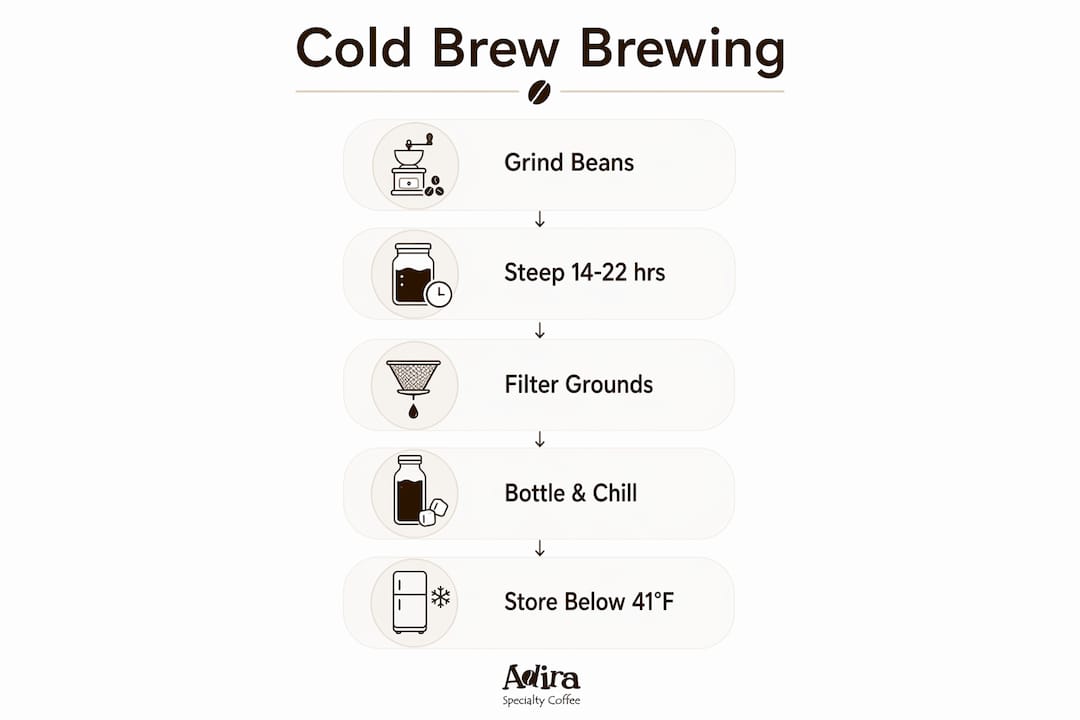
- Steep time: Target 14–22 hours. Sensory panels rated 14-hour cold brews highest for sweetness, fruity notes, and creamy body. Going longer extracts more, but not always better.
- Ratio: A common starting point uses a balanced ratio of ground coffee to water to achieve desired strength, with concentrate brewed at approximately twice the coffee amount and diluted before serving.
- Target TDS: Aim for a target range of total dissolved solids indicative of balanced strength, adjusting coffee-to-water ratio before changing steep time.
- Equipment: A French press, a mason jar with a fine-mesh strainer, or a dedicated immersion cold brew maker all work. The method matters less than the grind and ratio.
- Water quality: Filtered water with moderate mineral content extracts more evenly than distilled or very hard tap water.
Understanding grind size impact on extraction will save you from the most common flavor problems before they start.
Food safety and storage for bottled cold brew
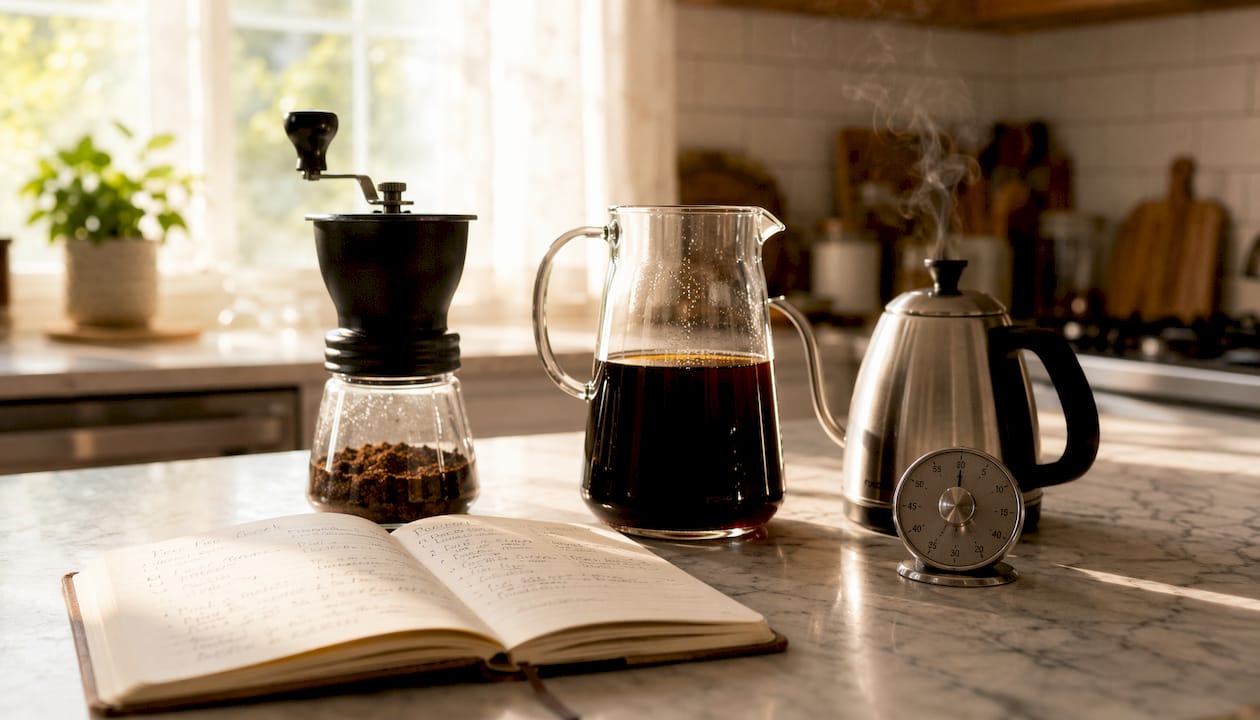
Cold brew looks stable in a bottle, but it is a perishable food that requires the same care as fresh dairy. No heat step kills pathogens during production, so temperature control is the only line of defense.
Store bottled cold brew at or below 41°F (5°C). Research confirms that pathogens including Salmonella, Listeria, and E. coli can survive 7 to 28 days in cold brew if temperature controls are ignored. Cold brew has a mildly acidic pH that does not sufficiently inhibit microbial growth on its own.
Critical safety fact: Unprocessed cold brew spiked with E. coli O157:H7, Listeria monocytogenes, and Salmonella enterica showed detectable pathogen counts after 60 days at 4°C, confirming that refrigeration slows but does not eliminate risk without proper handling.
Key storage rules for home-bottled cold brew:
- Filter immediately and cool fast. After steeping, strain the brew and get it into the refrigerator within 30 minutes.
- Consume within 7 days. That is the recommended shelf life under continuous refrigeration for home-prepared cold brew.
- Use clean, sealed bottles. Glass is preferred. Any vessel must be sanitized before filling.
- Never leave cold brew at room temperature for extended periods after brewing. The Specialty Coffee Association’s guidance on cold brew production emphasizes rapid cooling and efficient filtration as non-negotiable steps.
Proper cold brew storage tips make the difference between a week of great coffee and a batch you have to throw out.
Common mistakes and how to avoid them
Most home cold brew problems trace back to a handful of fixable errors. Knowing them ahead of time is faster than troubleshooting a bad batch.
- Steeping past 22 hours: Beyond that window, oxidation and over-extraction introduce stale, woody off-flavors. The brew does not get stronger in any useful way; it just gets worse.
- Skipping rapid cooling: Filtering into a warm container and leaving it on the counter for an hour creates a window for microbial growth. Cool it fast, bottle it sealed, refrigerate immediately.
- Treating cold brew like canned coffee: Home-bottled cold brew is not shelf stable. It needs refrigeration from the moment it is filtered.
- Using plastic bottles: Plastic can introduce off-flavors over time and may leach compounds into the brew. Glass bottles preserve flavor and are easier to sanitize.
- Chasing bitterness by extending steep time: The fix for a bitter batch is almost always a coarser grind or a lower ratio, not a shorter steep. Extraction efficiency depends more on grind and ratio than on adding or subtracting hours.
Pro Tip: Steep at room temperature (around 68–72°F) rather than in the refrigerator if you want a fuller extraction in 14–22 hours. Fridge-temperature steeping takes closer to 18–22 hours to reach the same TDS. Either works; just adjust your timing accordingly.
For a deeper look at the full cold brew workflow, including filtration and temperature management, Adiracoffee has a step-by-step guide worth bookmarking.
Which coffee beans make the best bottled cold brew?
Bean selection shapes the flavor of bottled cold brew more than any single brewing variable. Light roasts often disappoint here because their delicate aromatics do not survive the long, cold extraction. Medium and dark roasts hold up better.
Research on caffeine and chlorogenic acid extraction found that medium roast beans retain higher concentrations of 3-chlorogenic acid than dark roasts, contributing to a cleaner, more nuanced flavor. Dark roasts add body and smoothness, with less perceived acidity. Both work well for cold brew; the choice depends on whether you want brightness or depth.
Origin matters too. Beans from different regions produce distinct cold brew profiles:
- Colombia (Huila, Nariño): Fruity, balanced acidity, excellent clarity in cold extraction.
- Ethiopia: Floral and citrus notes that cold brew preserves beautifully.
- Costa Rica and Mexico: Clean, sweet profiles with mild acidity, easy to drink black.
- Sumatra: Earthy, full-bodied, low acidity. Exceptional for concentrate-style cold brew.
Adiracoffee sources single-origin beans directly from cooperatives and small farms in all five of these regions, roasted in small California batches and shipped within days of roasting. Freshness matters for cold brew because stale beans extract unevenly and produce flat, papery flavor regardless of technique. Store whole beans in an airtight container away from light and heat, and grind immediately before brewing.
Nutrition and additives in bottled cold coffee
Plain cold brew is essentially coffee and water, which makes its nutritional profile straightforward. A standard serving contains caffeine, small amounts of antioxidants including chlorogenic acids, and negligible calories on its own.
A few things worth knowing:
- Caffeine: Cold brew concentrate may contain more caffeine per ounce than standard iced coffee, due to the higher coffee-to-water ratio typically used in its preparation. Diluted ready-to-drink cold brew is closer to a regular cup.
- Antioxidants: Cold brew has a lower total antioxidant capacity than hot-brewed coffee, particularly with light and medium roasts. The cold water extracts fewer polar, heat-sensitive compounds.
- Additives in commercial products: Many ready-to-drink bottled cold coffees on store shelves include added sugar, dairy or dairy alternatives, natural flavors, and preservatives to extend shelf life. Home-brewed cold brew in a bottle contains none of these unless you add them yourself.
- Homemade vs. prepackaged: When you brew your own cold coffee in a bottle from freshly roasted specialty beans, you control every ingredient. No stabilizers, no mystery “natural flavors,” no added sweeteners.
If you want a ready-to-drink option without the additives, Adiracoffee’s cold brew is worth trying as a benchmark for what clean, well-sourced cold brew actually tastes like.
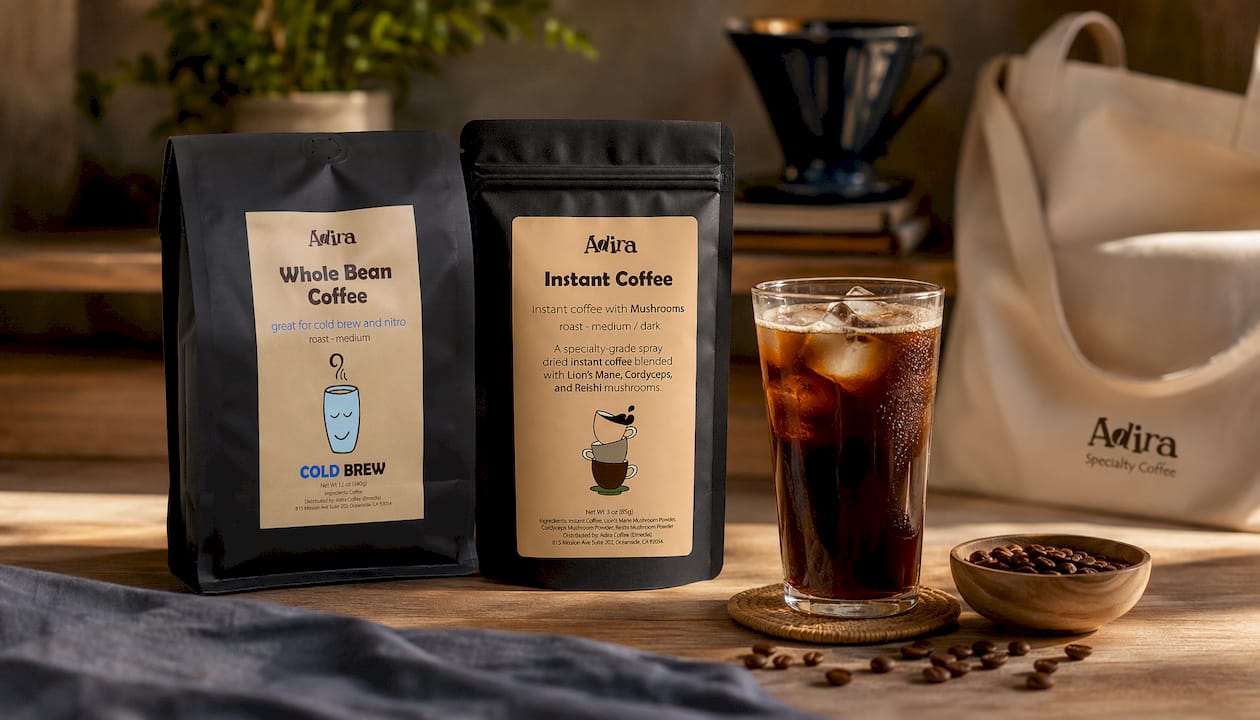
Adiracoffee roasts every batch to order from single-origin beans across Colombia, Ethiopia, Costa Rica, Mexico, and Sumatra. Free US shipping on orders over $35, with a subscription option that saves 10%. If you are serious about what goes into your bottle, start with beans that are serious about where they come from.
Key Takeaways
Cold brew coffee in a bottle, steeped 14–22 hours at coarse grind and stored below 41°F, consistently delivers smoother, less acidic flavor and higher caffeine than iced coffee made by hot brewing.
| Point | Details |
|---|---|
| Steep time window | Target 14–22 hours; beyond 22 hours risks stale, woody off-flavors from oxidation. |
| Grind size is primary | Coarse grind drives extraction yield and flavor quality more than steep time adjustments. |
| Refrigerate immediately | Store below 41°F; pathogens like Salmonella and Listeria can survive 7–28 days without temperature control. |
| Consume within 7 days | Home-bottled cold brew is perishable, not shelf stable; treat it like fresh dairy. |
| Bean origin shapes flavor | Medium and dark roasts from Colombia, Ethiopia, Costa Rica, Mexico, or Sumatra produce the most balanced cold brew profiles. |