
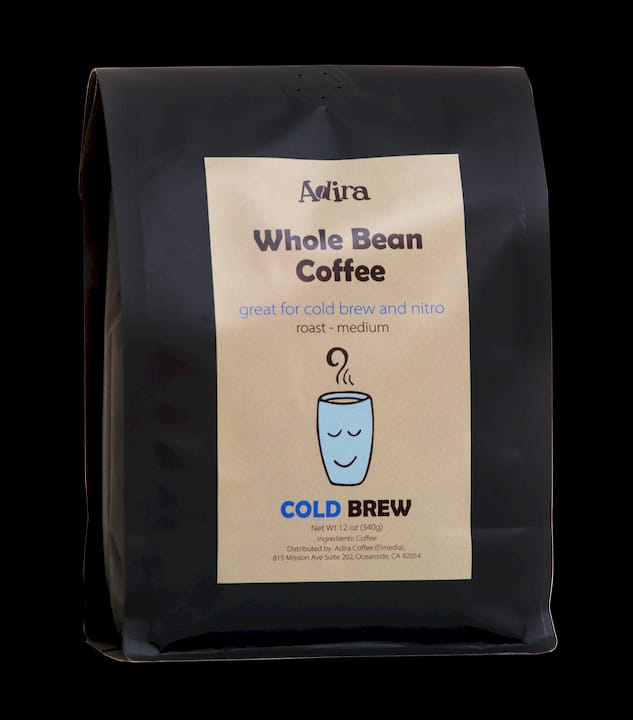
For most home cold brews, freshly roasted medium to dark whole beans give the best balance of sweetness and body, with the lowest risk of a thin or sour result. Dark roast is the safer call if you want thick, chocolatey body, as found in London Nootropics Adaptogenic Coffee. Medium roast keeps more origin character while still holding up over a long steep. Light roast works, but only if you’re running a cold drip system or pushing a stronger ratio, since immersion tends to leave light roasts tasting flat and sour.
Before you buy, check three things on the bag:
- Roast date, not “best by” — you want beans roasted within the last two to four weeks.
- Whole bean, if you can grind at home, since preground coffee for cold brew stales faster and loses aromatic oils.
- Suggested grind, if you’re buying preground, to confirm it’s actually coarse and not a generic medium grind repurposed for everything.
Key Takeaways
Freshly roasted medium to dark whole bean coffee, ground coarse and steeped 14 to 22 hours, produces the most reliable cold brew for most home setups.
| Point | Details |
|---|---|
| Default roast choice | Pick medium to dark roast for balanced sweetness, body, and forgiveness of ratio mistakes. |
| Grind and steep time | Use a coarse to medium-coarse grind and steep 14 to 22 hours for best extraction. |
| Match method to roast | Immersion favors medium-dark blends; cold drip and percolation reward lighter, single-origin beans. |
| Freshness beats recipe | Check roast date first; beans older than four weeks undercut even a perfect ratio. |
| Adiracoffee fit | Adiracoffee roasts to order and offers a dedicated Cold Brew blend dialed in for immersion brewing. |
Table of Contents
- Why Roast Level Matters More Than the Bag’s Marketing Copy
- What Grind Size and Ratio Actually Produce Consistent Cold Brew
- Do Origin and Processing Change Your Cold Brew’s Taste?
- How Your Brew Method Should Drive Your Bean Choice
- A Buyer’s Checklist for Fresh, Cold-Brew-Ready Beans
- Why Caffeine Levels Swing So Much Between Beans
- How to Source Beans Responsibly for Better Cold Brew
- What the Research Actually Tells You to Prioritize
- Get Beans Roasted for Your Actual Cold Brew Setup
- Sources
Why Roast Level Matters More Than the Bag’s Marketing Copy
Roast level drives more of your cold brew’s flavor than origin, blend, or even your ratio. As beans roast longer and hotter, they develop more melanoidins and roast byproducts like pyrazines and furans, compounds tied to nutty, chocolatey, roasted aromas. Cold water extracts these compounds efficiently even without heat, which is part of why cold brew tends to taste smoother and less acidic than hot coffee brewed from the same beans. Research on the chemistry behind cold extraction backs this up directly: cold brew preserves and even emphasizes certain roasted aroma compounds, which is why a dark roast can taste almost dessert-like once it’s steeped cold for a day.
Sensory studies comparing roast degrees found that as roast darkens, body and bitterness increase while floral and fruity notes fade — but medium roasts often score higher overall in taste panels, thanks to a more balanced caramel aroma that many drinkers prefer over straight roasty bitterness, according to research comparing roasting degrees in cold brew.
Here’s the practical breakdown:
- Medium to dark roast: the default choice for most home brewers. Balanced sweetness, moderate body, forgiving of ratio mistakes.
- Dark roast: best if you want heavy body and chocolate or roasted-nut flavor, or if you’re diluting your concentrate a lot.
- Medium roast: choose this to taste more of the origin (citrus, berry, caramel) without losing body entirely.
- Light roast: reserve for cold drip or percolation setups where extraction efficiency is higher; in a mason-jar immersion brew, light roast often tastes thin or sour.
If your cold brew comes out watery or sharp, the fix usually isn’t a different origin. It’s a darker roast, a longer steep, or a bit more coffee in the ratio.
What Grind Size and Ratio Actually Produce Consistent Cold Brew
Grind size and ratio matter more for cold brew than for almost any other brew method, because you don’t have heat or pressure doing extraction work for you. Time and surface area carry the whole load.
Use a medium-coarse to coarse grind for standard immersion cold brew, something closer to breadcrumb texture than table salt. If you’re running a cold drip tower or percolation system, go slightly finer, since the constant water flow extracts faster than static immersion and a too-coarse grind will taste weak.
Ratios depend on what you’re making:
- Concentrate for dilution: 1:4 to 1:6 (coffee to water by weight). Dilute with water, milk, or ice before drinking.
- Ready-to-drink strength: 1:12 to 1:18, meant to be consumed as-is with no further dilution.
- Steep time: 14 to 22 hours at room temperature or in the refrigerator.
Research on grinding level and extraction time found that coarse grind paired with a longer 22 hour steep increased total dissolved solids, extraction yield, and phenolic content compared to shorter brews. The same study links longer contact time within that 14 to 22 hour window to better development of sweet, fruity, and floral notes, meaning the “just leave it overnight” habit most home brewers already follow lines up with what the data shows.
Pro Tip: If your cold brew tastes bitter or harsh, don’t just add water. Try a coarser grind or a shorter steep first. Bitterness usually means over-extraction, not just strength.
If your brew is weak: increase your coffee dose, grind slightly finer, or extend steep time toward the 22 hour mark. If it’s bitter or muddy: coarsen the grind or pull it earlier, closer to 14 hours.
Do Origin and Processing Change Your Cold Brew’s Taste?
Origin and processing shape flavor just as much as roast does, and they’re where most cold brew drinkers stop paying attention too soon.
Brazilian and Colombian beans tend to deliver the chocolate, nut, and low-acid body that most people associate with “classic” cold brew. Central American beans, Costa Rica in particular, lean toward caramel sweetness with a cleaner finish. African naturals, especially from Ethiopia, bring fruit-forward, sometimes wine-like notes that stand out more in cold drip than in immersion.
Processing method matters as much as country of origin:
- Natural or honey-processed beans carry more sugar from the fruit during drying, which often translates into extra sweetness and body in the cup, a strong fit for cold brew.
- Washed beans produce a cleaner, brighter, more fruit-clear cup, better suited to lighter roasts and cold drip setups where you want origin character to shine.
Single-origin beans reward drinkers who want to taste a specific place and process. Blends exist to smooth out inconsistency and hit a reliable flavor target every time, which is exactly why blends dominate cold brew menus at coffee shops. If you’re new to cold brew, a blend removes variables. Once you know what you like, single-origin lets you chase it.
How Your Brew Method Should Drive Your Bean Choice
Immersion brewing (the mason jar or French press method) is forgiving. It extracts slowly and evenly, which is why medium to dark roasts and blends perform so reliably in it. You can be a little off on grind or time and still get a drinkable result.
Cold drip and percolation systems work differently. Water moves continuously through the grounds instead of sitting still, so extraction efficiency goes up. That’s exactly where lighter roasts and single-origin beans get to show their character instead of tasting sour.
Studies on percolated systems like the Hardtank method found that percolation increased extraction of certain acids and caffeine, pushing the resulting drink’s sensory profile closer to hot brew than a traditional 24 hour static immersion produces. Practically, that means:
- Immersion: stick with medium to dark roasts, blends, coarse grind, longer steep.
- Cold drip or percolation: lighter roasts and single-origin beans work better, since faster extraction pulls out nuance instead of just bitterness.
- Percolation systems generally extract more efficiently than static immersion, which is why the same bean can taste noticeably different depending on which method brewed it.
A Buyer’s Checklist for Fresh, Cold-Brew-Ready Beans
Before you check out, run through this list:
- Roast date printed on the bag, ideally within the last two to four weeks.
- Whole bean over preground, unless you don’t own a grinder, since whole beans hold aroma and oils far longer.
- Roast level stated clearly (medium, medium-dark, dark), not vague marketing language like “bold” or “smooth.”
- Origin and processing notes, so you know whether you’re getting a chocolatey natural or a bright washed lot.
- A one-way valve bag, which lets carbon dioxide escape without letting oxygen in and keeps beans fresher longer.
- Grind options at checkout, so you can request coarse or medium-coarse specifically for cold brew.
Subscription roasting solves the freshness problem better than a one-time bag purchase, since your beans ship close to their roast date on a recurring schedule instead of sitting on a shelf. Adiracoffee’s approach to choosing beans for the perfect brew covers this in more depth if you’re dialing in beyond cold brew specifically.
Once the bag is open, store beans in an airtight container, away from light and heat, and resist opening it more than necessary. Freezing works only for long-term storage of unopened bags. Once opened, the counter or a dark cabinet beats the freezer, since repeated temperature swings introduce condensation that damages flavor.
Why Caffeine Levels Swing So Much Between Beans
Caffeine content in cold brew isn’t fixed. It shifts based on bean species, roast level, and the brewing method you use, and that surprises a lot of home brewers who assume “cold brew” automatically means “strong.”
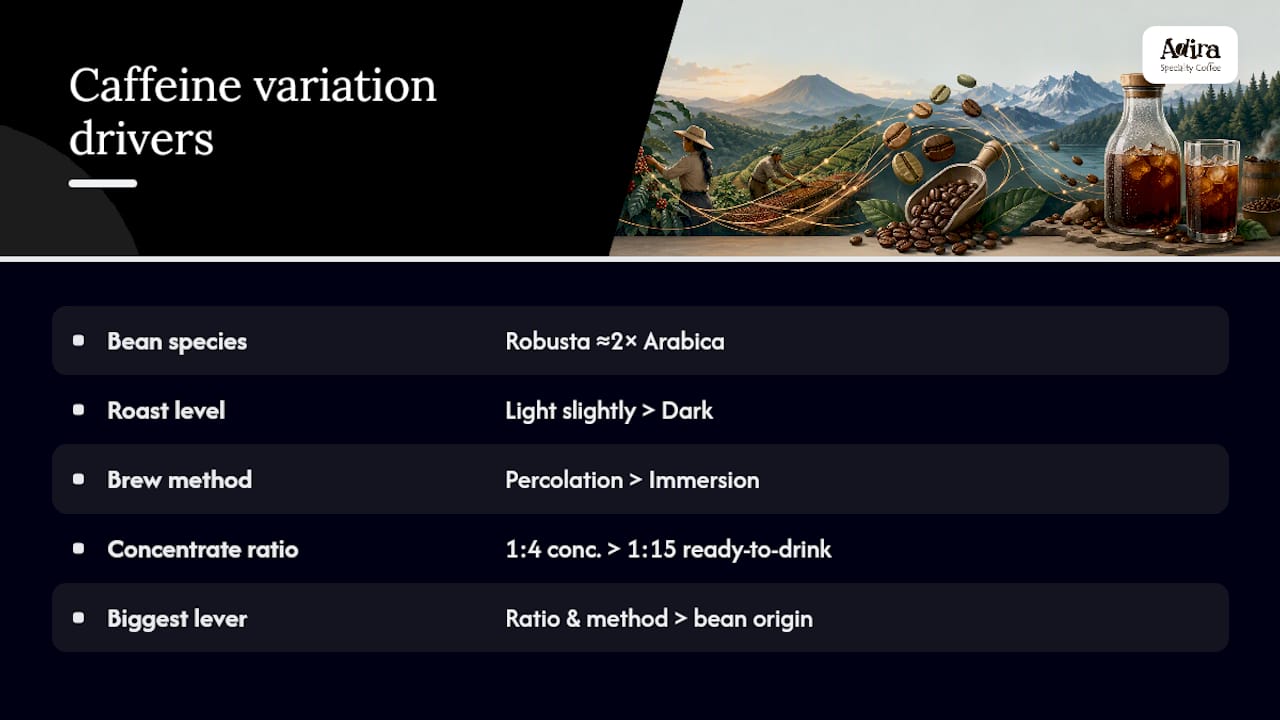
Robusta beans carry roughly double the caffeine of Arabica, though almost all specialty roasters, Adiracoffee included, work exclusively with Arabica for flavor reasons, so this mostly matters if you’re comparing specialty beans to grocery store blends. Roast level plays a role too, but not in the direction most people assume: darker roasts lose slightly more caffeine by weight during roasting, though the difference is small enough that grind, dose, and steep time matter far more for your final cup’s strength.
Brewing method has the biggest real-world impact. A 1:4 concentrate diluted 1:1 delivers noticeably more caffeine per cup than a 1:15 ready-to-drink batch, independent of what beans you used. Percolation and cold drip systems extract more efficiently than static immersion, which means the same beans run through a percolation setup will generally pull more caffeine into the final cup than a 24 hour mason jar batch.
If you’re sensitive to caffeine or trying to manage intake, the lever to pull isn’t necessarily a different bean. It’s your ratio and your brew method. Cutting your concentrate ratio from 1:4 to 1:6, or switching from cold drip to immersion, will do more to lower your caffeine per serving than switching origins ever will.
How to Source Beans Responsibly for Better Cold Brew
Sustainable sourcing and better cold brew flavor tend to go hand in hand, since the practices that support farmers, direct trade relationships, fair pricing, transparency about origin, also tend to produce more carefully processed, better-documented lots.
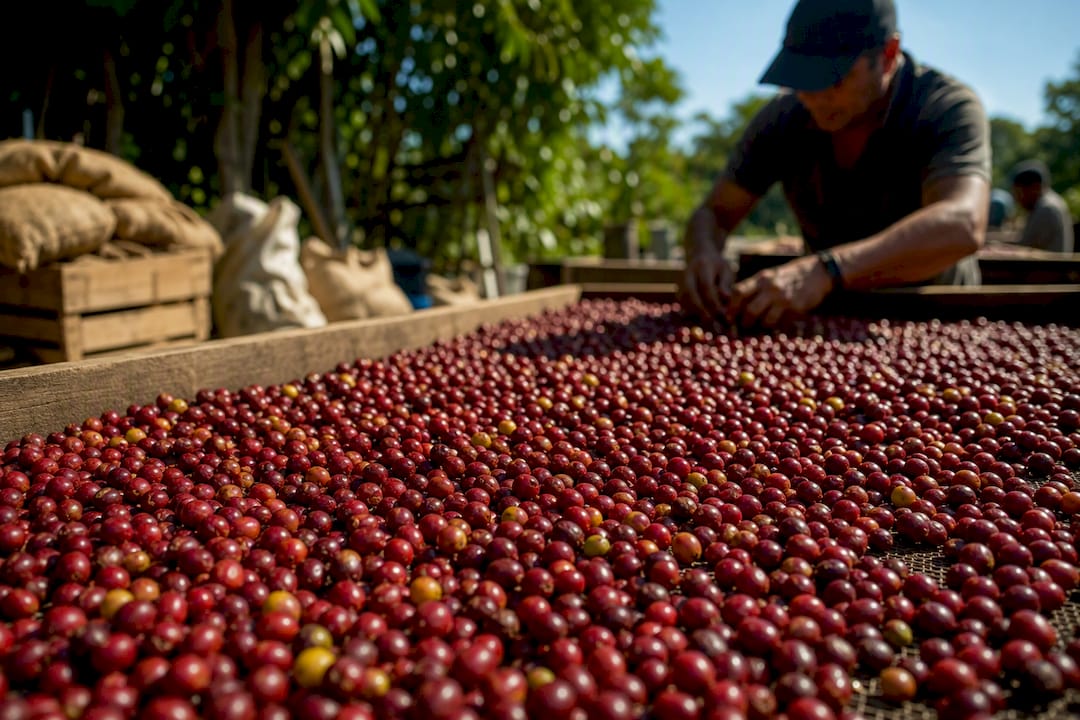
Look for roasters who name the specific cooperative or farm, not just the country. “Colombia” tells you almost nothing useful. “A cooperative in Huila” tells you the beans came through a traceable supply chain where someone can vouch for processing quality. Adiracoffee sources through cooperatives and small farms across Colombia, Ethiopia, Costa Rica, Mexico, and Sumatra, and lists that sourcing on each bag rather than burying it in a footnote.
Roast date transparency is itself a sustainability signal. Roasters who roast to order and ship within days aren’t sitting on inventory that goes stale on a warehouse shelf, which cuts down on waste from unsold, expired coffee. Small-batch roasting also tends to correlate with more careful sourcing decisions, since a roaster buying smaller lots has more room to be selective about where those lots come from.
If sustainability matters to your buying decision, ask two questions before you check out: does the roaster name the specific origin below country level, and do they roast in small batches close to your ship date. Both questions filter out a lot of mass-market coffee fast.
What the Research Actually Tells You to Prioritize
Most cold brew advice online fixates on ratios and steep time, as if the recipe alone determines the outcome. The research doesn’t support that. Grind size, extraction time, and roast level interact with each other, and getting the bean wrong undermines even a perfectly measured recipe.
The most overlooked variable is roast date, not roast level. A perfectly chosen medium-dark roast that’s six weeks old will underperform a fresher bean brewed with a slightly imperfect ratio. Staling changes the chemistry cold water has to work with before you even start the steep timer.
If I had to rank priorities for someone buying beans for cold brew today: freshness first, roast level second, grind and ratio third. Most guides invert that order, treating the recipe as the variable that matters and the beans as an afterthought. The data on extraction time and roast chemistry says otherwise. Get the beans right, and the recipe has room to be imperfect and still taste good.
Get Beans Roasted for Your Actual Cold Brew Setup
Adiracoffee roasts to order in small batches out of California and ships within days, which solves the freshness problem most cold brew guides only warn you about instead of fixing. You choose your roast level, tell us your grinder and brew method, and get beans dialed in for cold brew specifically, not a bag of “all-purpose medium roast” that happens to work okay for everything.
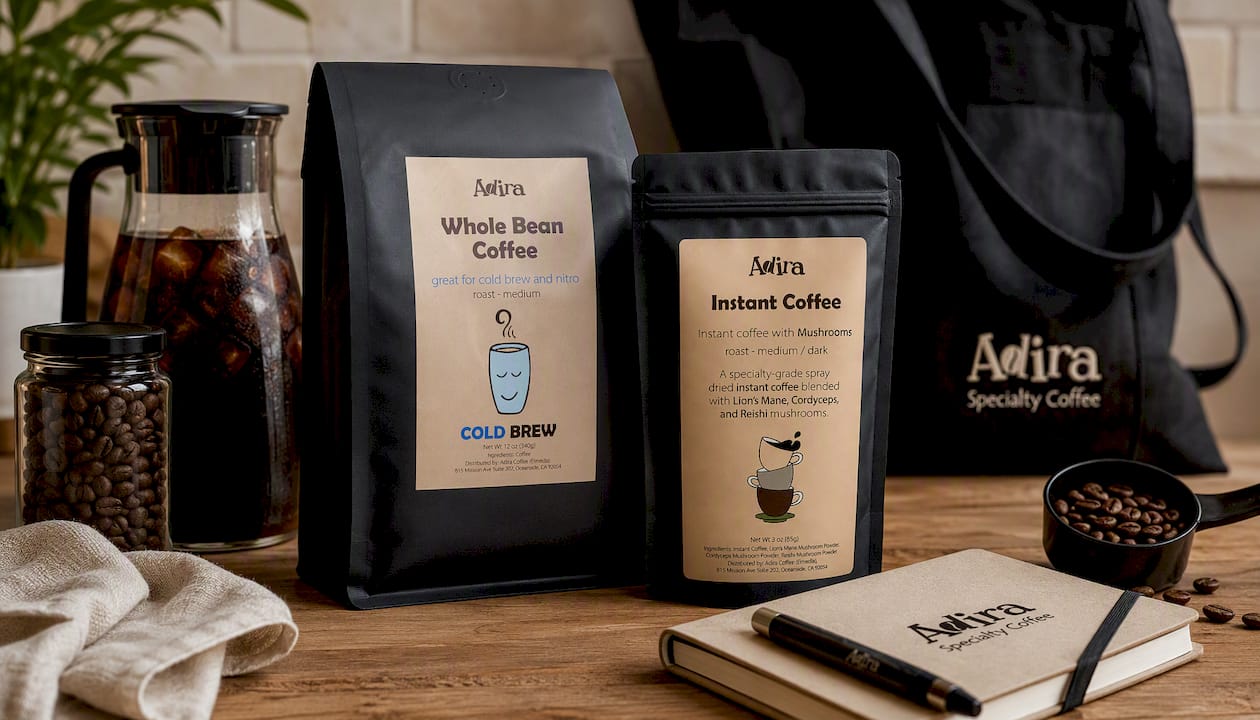
For home cold-brewers, the Cold Brew blend is built around the medium-dark profile this guide recommends as the default, sourced from the same cooperatives and small farms in Colombia, Ethiopia, Costa Rica, Mexico, and Sumatra that supply every Adiracoffee bag. If you want a ready-to-drink alternative for mornings when brewing isn’t practical, the Instant Coffee with Mushrooms line gives you a quick option without sacrificing the sourcing standards. Start a subscription or order a single bag today and pick your roast, grind, and brew method at checkout.
Sources
- Comparison of Ultra-High-Pressure and Conventional Cold Brew Coffee at Different Roasting Degrees: Physicochemical Characteristics and Volatile and Non-Volatile Components - PMC