
TL;DR:
- Direct-to-consumer coffee allows brands to control sourcing, roasting, and shipping, ensuring fresher products. It eliminates supply chain steps and retail markups, resulting in better prices and more variety for consumers. The model fosters direct relationships with farmers, promoting transparency, quality, and ethical sourcing.
Direct-to-consumer coffee, commonly called DTC coffee, is a model where coffee brands sell directly to buyers through their own channels, cutting out wholesalers, distributors, and retail stores entirely. The roaster controls everything: sourcing, roasting, packaging, and shipping. The result is coffee that reaches your door days after roasting, not weeks or months after sitting in a warehouse. Brands like Adiracoffee built their entire operation around this model, roasting small batches in California and shipping directly to customers. If you have ever wondered why supermarket coffee tastes flat compared to a bag from a specialty roaster, the supply chain is the answer.
What is direct to consumer coffee and how does it work?
Direct-to-consumer coffee means a brand manages sorting, packaging, shipping, and customer relationships without wholesalers or retailers involved. The brand owns the full transaction from roast to doorstep. This is the core definition of what DTC coffee means in practice.
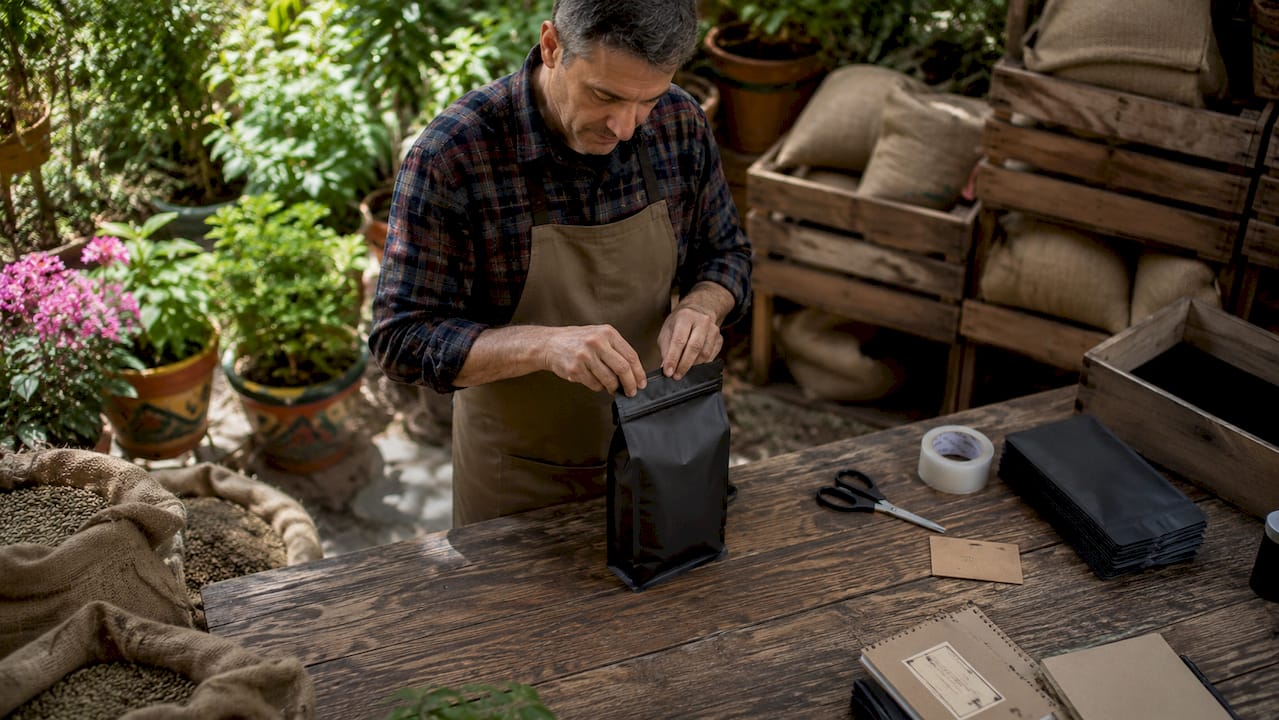
The model runs almost entirely through online channels. Customers visit a brand’s website, choose a coffee or take a preference quiz, and place an order. The roaster then roasts that specific batch, packages it, and ships it within days. Some brands also offer coffee subscription services, where orders ship automatically on a set schedule.
DTC is not a new concept in food and beverage. Brands like Dollar Shave Club and Warby Parker proved the model works across categories. Coffee is a natural fit because freshness degrades fast after roasting, and the DTC model shortens the time between roast and cup more than any retail setup can.
How does DTC coffee differ from traditional retail buying?
Traditional retail coffee moves through a long chain before it reaches the shelf. A roaster sells to a distributor, the distributor sells to a wholesaler, and the wholesaler sells to a grocery store. Each step adds time, cost, and handling. By the time a bag lands on a supermarket shelf, it may be weeks or months past its roast date.
DTC disintermediation gives brands end-to-end control over marketing, pricing, and shipping. That control directly improves the customer experience. There is no retailer setting shelf placement, no distributor managing inventory rotation, and no wholesaler marking up the price.
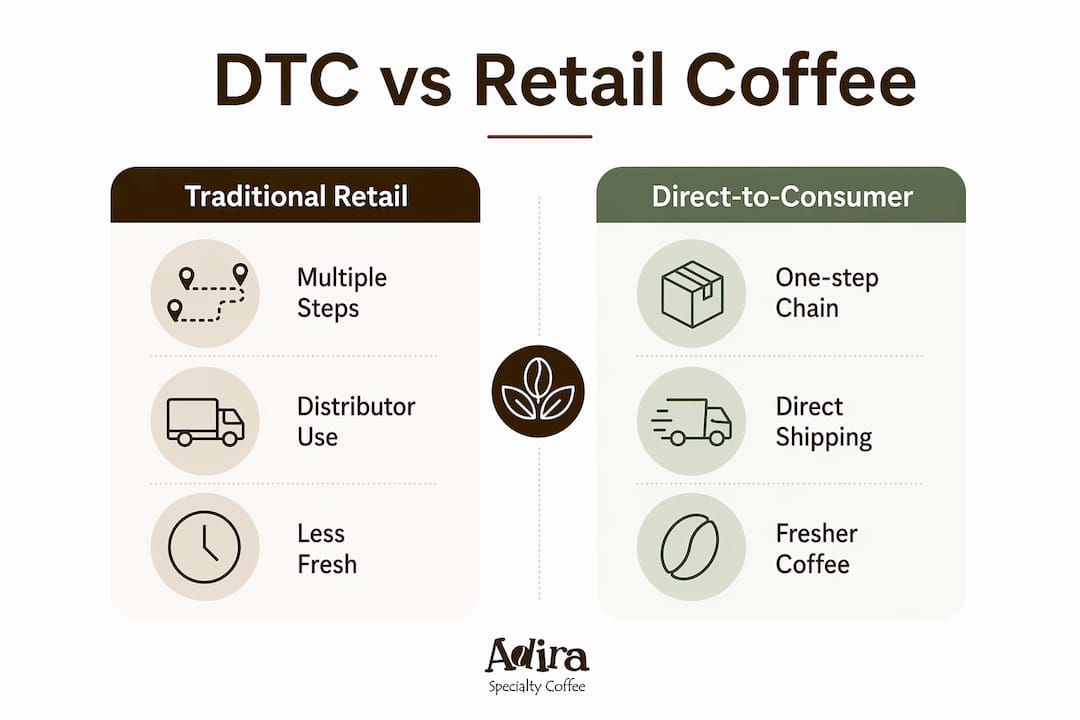
Here is a direct comparison of the two models:
| Factor | Traditional Retail | DTC Coffee |
|---|---|---|
| Supply chain steps | 4 or more (roaster, distributor, wholesaler, retailer) | 1 to 2 (roaster to customer) |
| Time from roast to buyer | Weeks to months | Days |
| Pricing control | Shared across intermediaries | Roaster sets price directly |
| Customer relationship | Retailer owns the data | Brand owns the data |
| Product variety | Limited to shelf space | Full catalog available online |
| Personalization | None | Quizzes, subscriptions, custom orders |
The practical difference shows up in the cup. Coffee that ships within 48 hours of roasting tastes noticeably brighter and more complex than coffee that sat in a distribution center for six weeks.
Four key shifts happen when you move from retail to DTC:
- Freshness improves. Roast-to-order fulfillment eliminates warehouse aging.
- Variety expands. You access the full roaster catalog, not just what a retailer chose to stock.
- Pricing becomes clearer. No retail markup means you often pay less for better coffee.
- The brand relationship is direct. Feedback, preferences, and loyalty perks go straight to the roaster.
What are the main direct to consumer coffee benefits?
The most significant benefit is freshness. Coffee subscriptions that roast to order and ship directly eliminate the pre-stocked warehouse inventory that ages retail coffee. Freshness is not a marketing claim in DTC. It is a structural outcome of the model.
Beyond freshness, the benefits stack up quickly:
- Personalization. DTC brands use preference quizzes covering roast level, grind size, flavor notes, and consumption habits. Trade Coffee asks about decaf versus regular, roast levels, and flavor preferences to match buyers with the right roast. Adiracoffee offers a coffee quiz that guides buyers to the right roast and origin for their taste.
- Variety. Retail shelves carry a narrow selection. DTC opens access to single-origin coffees from Colombia, Ethiopia, Costa Rica, and beyond, plus small-batch specialty roasts that never reach grocery stores.
- Transparency. DTC brands publish sourcing details, farm names, and roast dates. Retail packaging rarely includes any of that information.
- Cost efficiency. Removing the retail markup often means better coffee at a comparable or lower price, especially with subscription discounts.
- Loyalty perks. Most DTC brands reward repeat buyers with discounts, free shipping thresholds, or early access to new roasts.
Pro Tip: Always check the roast date before buying DTC coffee. A brand that does not print the roast date on the bag is not actually committed to freshness, regardless of what the marketing says.
Specialty coffees not found in stores are one of the strongest reasons to use a DTC subscription. Discovery is built into the model.
How do direct coffee subscriptions work?
Most DTC coffee subscriptions start with a preference quiz. You answer questions about roast level, grind type, flavor preferences, and how much coffee you drink per week. The brand uses those answers to select a coffee or let you choose from a curated shortlist.
After setup, the subscription ships automatically. Delivery frequency is typically every one, two, or four weeks depending on your consumption. Good DTC brands let you pause, skip, or cancel without friction. That flexibility matters because your coffee needs change.
Here is how to evaluate a DTC coffee subscription before committing:
- Check roast-date transparency. The bag should show when it was roasted. Roast-date labeling and shipping cadence are the two clearest signals of a brand’s freshness commitment.
- Confirm the cancellation policy. A subscription with no easy exit is a red flag.
- Look at the frequency options. Weekly delivery only works if you drink a lot of coffee. Most buyers do better on a two-week or monthly cadence.
- Compare subscription price to single-bag price. A genuine discount of 10% or more is standard. Adiracoffee subscribers save 10% and get free US shipping on orders over $35.
- Test with a single bag first. Many DTC brands let you buy once before subscribing. Use that option to verify freshness and taste before locking in.
Pro Tip: If you want to keep exploring new coffees without losing a favorite, look for brands that let you mix subscription items. Rotating one slot to a new origin each delivery is the fastest way to build your palate.
Subscription models shift inventory risk to roasters, which means roasters must maintain rigorous quality control over roasting and fulfillment timing. That discipline is what separates great DTC coffee brands from mediocre ones.
Sourcing practices and quality control in DTC coffee
DTC coffee brands often practice direct trade, meaning the roaster works directly with farmers rather than buying through commodity brokers. Fewer intermediaries between farm and roaster means better quality control and fairer prices for growers.
The sourcing advantages of DTC coffee include:
- Traceability. Buyers know the farm, region, and often the harvest season for their coffee.
- Small-batch roasting. Without retail volume requirements, roasters can roast smaller, more frequent batches that preserve peak flavor.
- Ethical relationships. Direct sourcing creates long-term partnerships with cooperatives and small farms, supporting sustainable farming practices.
- Faster quality feedback. When a roaster talks directly to a farmer, quality issues get resolved in the next harvest, not years later through a broker chain.
Adiracoffee sources from cooperatives and small farms in Colombia, Ethiopia, Costa Rica, Mexico, and Sumatra. Every bag is roasted in small batches in California and ships within days of roasting. That sourcing model is only possible because the DTC structure removes the volume and timing pressures that retail distribution creates.
| Sourcing model | Intermediaries | Farmer relationship | Quality control |
|---|---|---|---|
| Commodity retail | 3 or more | None | Minimal |
| Fair Trade certified | 1 to 2 | Indirect | Standardized |
| Direct trade DTC | 0 to 1 | Direct | Roaster-controlled |
The direct trade model does not guarantee perfection, but it gives roasters the tools to catch and fix problems that commodity chains never even see.
Key Takeaways
Direct-to-consumer coffee delivers fresher, more traceable, and more personalized coffee than retail by removing every intermediary between the roaster and the buyer.
| Point | Details |
|---|---|
| DTC removes intermediaries | Coffee ships from roaster to buyer, cutting out distributors, wholesalers, and retailers. |
| Freshness is structural | Roast-to-order fulfillment means coffee arrives days after roasting, not weeks. |
| Personalization is built in | Preference quizzes and flexible subscriptions match coffee to individual taste. |
| Sourcing transparency improves | Direct trade relationships give buyers traceability from farm to cup. |
| Subscriptions need evaluation | Check roast-date labeling, cancellation terms, and frequency options before committing. |
Why the supermarket coffee aisle lost me for good
I grew up in Bulgaria, where coffee was a ritual, not a commodity. When Ekaterina and I moved to California, we spent months trying every bag on the supermarket shelf looking for something worth a second cup. Nothing came close. The coffee was stale, the sourcing was opaque, and the roast dates were either missing or months old.
That frustration is what led us to build Adiracoffee. But it also taught me something that most DTC coffee articles miss: the model only works if the roaster actually commits to the discipline it promises. DTC is not magic. A brand can sell direct and still roast in bulk, warehouse inventory for weeks, and ship stale coffee in a pretty bag. The structure enables freshness. The roaster has to deliver it.
The other thing I have noticed is that subscription variety can become overwhelming fast. Buyers sign up for discovery, then get paralyzed by too many options. My advice: start with one origin you already know you like, then swap one bag per cycle to something new. That pace builds real coffee knowledge without the fatigue of constant novelty.
The DTC model also changes your relationship with the people growing your coffee. When you buy from a brand that sources directly from farms in Ethiopia or Colombia, your purchase has a direct line to that farmer’s livelihood. That is not marketing language. It is the structural reality of cutting out the commodity broker.
— Stefan
Fresh roasted coffee, shipped directly to you
Adiracoffee roasts every bag to order in small batches in California and ships within days of roasting. No warehouses, no retail shelves, no stale coffee.
If you want to try the DTC model at its best, the Mushroom Coffee Medium Roast and Mushroom Coffee Dark Roast are two of the most popular options, combining specialty roasting with functional ingredients. For pure single-origin exploration, the single-origin collection covers Colombia, Ethiopia, Costa Rica, Mexico, and Sumatra. Subscribers save 10% on every order, with free US shipping on orders over $35.
FAQ
What does direct to consumer coffee mean?
Direct-to-consumer coffee means a roaster sells coffee directly to buyers through its own channels, without wholesalers, distributors, or retail stores. The roaster controls fulfillment, pricing, and the customer relationship from start to finish.
Is DTC coffee fresher than store-bought coffee?
DTC coffee is typically fresher because many brands roast to order and ship within days of roasting. Retail coffee often sits in distribution centers and on shelves for weeks or months after roasting.
How do I know if a DTC coffee brand is actually fresh?
Look for a printed roast date on the bag. Roast-date labeling and shipping cadence are the clearest indicators of a brand’s freshness commitment. If no roast date is listed, the brand is not prioritizing freshness.
Are coffee subscriptions worth it?
Coffee subscriptions are worth it if the brand roasts to order, offers flexible delivery frequency, and prints roast dates on every bag. The discovery benefit of accessing specialty roasts not found in stores adds significant value for buyers who want to expand beyond supermarket options.
What is direct trade coffee and how does it relate to DTC?
Direct trade means the roaster buys directly from farmers, skipping commodity brokers. Many DTC brands practice direct trade because the same philosophy of cutting intermediaries applies to both the sourcing and the selling side of the business.