
If your espresso tastes sour, grind finer by one or two clicks and pull a new shot with the same dose and yield. That single change fixes most sour shots, because sourness almost always means the water ran through the puck too fast to pull the sugars and body out of the coffee. The rule while you test: change only one variable at a time, or you won’t know what actually fixed it.
Run this now:
- Pull one shot at your current setting and time it from first drip.
- Weigh the output. You’re aiming for a 25 to 30 second shot per SCA-aligned timing standards, with 18 to 22% extraction yield.
- Taste it, then adjust grind finer and repeat.
Pro Tip: Keep a small notebook or phone note with grind setting, time, and yield for every shot. Adiracoffee builds recipes this way for customers, and it’s the fastest way to stop guessing.
Key Takeaways
Sour espresso is almost always under-extraction, and grinding finer while holding dose and yield steady fixes the majority of cases.
| Point | Details |
|---|---|
| Start with grind | Grind one to two clicks finer before touching temperature or ratio. |
| Change one thing at a time | Test grind, then temperature, then yield, in that order, never together. |
| Match recipe to roast | Light roasts need 30 to 35 seconds and higher heat; dark roasts run shorter and cooler. |
| Rest fresh beans | Beans under 7 days off-roast can run fast and sour from excess CO2. |
| Try a forgiving bean | Adiracoffee’s Love Blend and Mushroom Coffee roasts are built to dial in with less trial and error. |
Table of Contents
- Why Sour Espresso Happens and What It Actually Tastes Like
- What’s Actually Causing Your Sour Shots?
- How Do You Fix Sour Espresso Step by Step?
- What Recipe Should You Start With for Your Roast?
- How Roast Level and Freshness Change Your Dial-In
- What Machine Maintenance Fixes Sour Shots?
- A 20-Minute Troubleshooting Checklist You Can Run Right Now
- If the Beans Are the Problem, Here’s Where to Start
- Sources
Why Sour Espresso Happens and What It Actually Tastes Like
Sour espresso is under-extracted espresso. The shot ran too fast, so hot water grabbed the fruit acids that dissolve first and moved on before it could pull the sugars and deeper flavor compounds that balance them out. That’s different from pleasant acidity, which is the bright, clean note you get in a properly extracted light roast, the kind that tastes like citrus or berries rather than raw lemon juice.
You’ll recognize under-extraction by a few telltale signs:
- Sharp, one-note acidity with no sweetness behind it
- Thin, watery body that doesn’t coat your tongue
- A finish that vanishes almost immediately instead of lingering
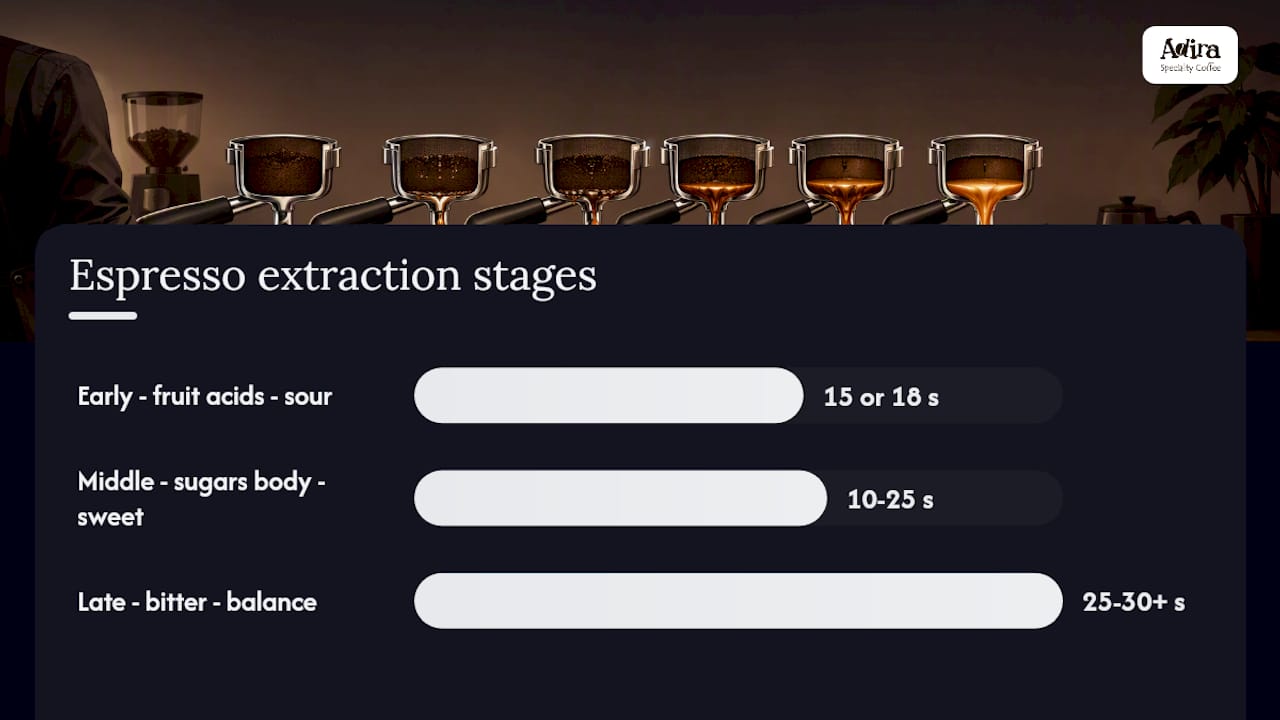
Extraction happens in stages: acids come out first, then sugars, then bitter and roasty compounds. A shot that finishes in 15 or 18 seconds never gets past stage one. That’s why the science of coffee extraction sets 18 to 22% extraction yield as the target for balance, with anything under 18% reading as sour and hollow.
| Extraction Stage | What Comes Out | Result if Shot Stops Too Early |
|---|---|---|
| Early | Fruit acids | Sour, sharp taste |
| Middle (10-25s) | Sugars, body | Sweetness, mouthfeel |
| Late (25-30s+) | Bitter compounds | Balance, or over-extraction if pushed too far |
What’s Actually Causing Your Sour Shots?
Before you run a full dial-in, scan this list. Most sour shots trace back to one of these:
- Grind too coarse. This is the most common cause by far. Water finds less resistance and blasts through the puck.
- Low or unstable brew temperature. A machine that hasn’t fully warmed up can’t extract sugars properly, even with a perfect grind.
- Insufficient dose or too-short yield. Too little coffee or pulling the shot too short leaves flavor compounds behind in the puck.
- Channeling from uneven puck prep. Water carves a path through the softer part of the grounds, which can produce sourness and bitterness in the same cup because parts of the puck under-extract while others over-extract.
- Very fresh or light-roasted beans. Beans still off-gassing CO2, especially light roasts, resist extraction and need more heat and time.
- Very soft or mineral-light water. Water with low mineral content exaggerates perceived acidity, even when your extraction is technically fine.
- Dirty group head or dull burrs. Buildup and worn burrs change flow rate and grind consistency without you touching a dial.
| Cause | How to Spot It | Fix Priority |
|---|---|---|
| Coarse grind | Shot runs under 20 seconds | First |
| Low temperature | Sour even with correct timing | Second |
| Short yield/dose | Timing fine, still thin and sour | Third |
| Channeling | Sour and bitter together, uneven flow from portafilter spouts | Fix before recipe changes |
| Fresh/light roast | Sourness fades over 1-2 weeks of rest | Adjust temp/time upward |
| Soft water | Sourness even on a dialed-in recipe | Check water source |
How Do You Fix Sour Espresso Step by Step?
Start with a baseline and write it down: 18 grams in, 36 grams out, targeting 25 to 30 seconds at 92 to 96°C. That 1:2 ratio is the standard starting recipe most guides recommend, and it gives you a fixed point to measure every change against. Pull two to three shots at baseline before touching anything, so you know what “normal” tastes like on your setup.
From there, work through the variables in order. Never change two things at once. That’s the single biggest mistake home baristas make, tweaking grind and dose and temperature in the same session, and then having no idea which change actually fixed the shot.
- Grind finer, one or two clicks. Keep dose and yield exactly the same. Pull two shots, taste, and check the timer. If the shot now lands in the 25 to 30 second window and tastes balanced, stop here.
- Raise temperature by 1°C. Do this only if timing looks right but sourness persists. Some beans, especially lighter roasts, need more heat to pull sugars out even at correct flow rates.
- Extend the yield to 38 to 40 grams. If temperature didn’t solve it, let more water through. This pulls further into the extraction curve without touching grind.
- Check puck prep if you’re getting sour and bitter together. That combination points to channeling, not a recipe problem. Use a WDT tool to break up clumps, tamp level, and pull with a naked portafilter to watch for fast streams or sprays, which mean water is finding a shortcut through the puck.
- Rule out the machine. Confirm your warm-up time was long enough, flush the group head, and clean the shower screen before blaming your recipe again.
Log every test: grind setting, dose, yield, time, and a one-word taste note. Two or three shots per change is enough to judge a pattern. If the second shot after a change tastes noticeably better and lands in your timing window, you’ve found your fix.
Pro Tip: If a shot tastes sour AND bitter at the same time, don’t touch the grinder yet. That combination is almost always channeling, and grinding finer will just make the channeling worse.
What Recipe Should You Start With for Your Roast?
Roast level changes the target numbers more than most home baristas realize. A recipe dialed for a dark roast will run sour on a light roast at the same settings, because lighter roasts are denser and less soluble.
- Medium roast: 18g in, 36g out (1:2), 25 to 30 seconds, 92 to 94°C.
- Light roast: 18g in, 40g out (roughly 1:2.2 to 1:2.3), 30 to 35 seconds, 93 to 96°C. Light roasts need longer extraction and higher heat to fully develop sweetness.
- Dark roast: 18g in, 36g out, 20 to 25 seconds, 91 to 93°C, slightly coarser grind than medium.
Measure timing from first drip, not from when you start the pump, and weigh your output on a scale rather than eyeballing the cup. Espresso concentrates flavor so heavily, running at 8 to 12% total dissolved solids compared to drip coffee, that a gram or two of yield can swing a shot from balanced to sour.
How Roast Level and Freshness Change Your Dial-In
Light roasts are simply harder to extract. The beans are denser and less soluble than dark roasts, which is why they need that extra 5 to 10 seconds and a few extra degrees of heat to reach the same 18 to 22% extraction yield. Skip that adjustment and a light roast will taste sour even on a technically well-dialed grinder.
Freshness matters just as much. Beans roasted within the last week are still releasing carbon dioxide, and that gas disrupts water flow through the puck, often causing fast, uneven, sour shots no matter how fine you grind. Resting beans 7 to 10 days after roasting usually settles this out.
A dial-in isn’t really about the machine. It’s about matching your recipe to what that specific roast needs to release its sugars. That’s why we build custom starting recipes around each customer’s grinder and roast, instead of handing out one generic number.
Pro Tip: If your sourness fades on its own over a week or two without any recipe changes, the beans were simply too fresh. Buy roast-to-order beans like Adiracoffee’s and give them a few days to settle before dialing in.
What Machine Maintenance Fixes Sour Shots?
Before you touch the grinder again, rule out the machine itself. A cold or unstable group head causes the same sourness as bad grind, and it’s the check most home baristas skip.
- Warm up the machine 15 to 20 minutes and flush a few ounces through the group head before your first test shot.
- Check that grinder burrs are sharp and purge any retained grounds after changing settings, since old grounds mixed into a fresh dose skew flow.
- Clean the shower screen, group head, and portafilter basket, and stick to a regular descale schedule if you’re on hard water.
- Confirm pressure holds steady through the shot if your machine has a gauge.
- Test your water. Very soft or demineralized water exaggerates acidity even on a well-dialed shot, so a basic mineral cartridge can help.
Pro Tip: A machine that hasn’t fully warmed up is one of the most overlooked causes of sour espresso. Flush before you blame the grinder.
A 20-Minute Troubleshooting Checklist You Can Run Right Now
- Record your baseline: dose, grind setting, time, yield, and temperature.
- Grind one to two clicks finer. Keep dose and yield fixed. Pull two to three shots.
- If timing is right but it’s still sour, raise temperature 1°C and pull two more shots.
- If still sour, extend yield to 38 to 40 grams and retest.
- If you’re tasting sour and bitter together, stop adjusting the recipe and check puck prep for channeling instead.
Pro Tip: Log every shot as you go. A sourness fix that isn’t written down is a fix you’ll have to find again next bag.
A Roaster’s Note on the One Mistake Everyone Makes
Change one variable, record it, taste it, then decide. Most sour shots I see traced back are from someone adjusting grind and dose in the same breath and never knowing which fix actually worked. We calibrate every Adiracoffee recipe to the customer’s own grinder and machine, so if you’re working through a bag of ours and still stuck, reach out and we’ll help you dial it in.
If the Beans Are the Problem, Here’s Where to Start
If you’ve worked through grind, temperature, yield, and puck prep, and the shot is still sour, the bean itself might be the mismatch. Some beans, particularly very light roasts, need a recipe most home setups aren’t tuned for. Others are simply more forgiving.
For a bean that dials in with less fuss, Love Blend is built for consistency shot after shot, which makes it a solid starting point if you’re tired of chasing a moving target. If you prefer less perceived acidity from the start, the Mushroom Coffee Dark Roast extracts on the shorter, cooler end of the range and tends to run more forgiving on timing. Prefer something in between, balanced but still bright? The Mushroom Coffee Medium Roast sits at the standard 1:2 benchmark most guides build around. And if pulling shots at all feels like the wrong fight some mornings, Cold Brew sidesteps extraction timing entirely with a naturally low-acid profile.
Every bag ships within days of roasting in small batches, and if you tell us your grinder and machine, we’ll send a starting recipe built for that exact combination instead of a generic number pulled off a chart. Check the coffee plan to get fresh beans on a schedule with a tailored recipe attached to every order.
Sources
- Extraction science guide | Complete Home Barista
- A guide to dialling in espresso | Perfect Daily Grind
- The Science of Coffee Extraction: Grind, Temperature, and Yield | 123 Food Science
- How To Fix Sour Espresso | CoffeeFile