
TL;DR:
- Successful coffee farm partnerships integrate processing infrastructure, quality checkpoints, farmer financial support, and traceability systems to ensure premium-quality coffee and farmer sustainability. Different models, such as hub-and-network, outgrower cooperatives, government-backed revitalization, and sustainability incentives, are chosen based on context and scale. Building quality and income improvements together fosters long-lasting, mutually beneficial collaborations.
Coffee farm partnerships are defined as structured collaborations between producers, cooperatives, buyers, and investors that integrate training, processing infrastructure, and quality governance to improve specialty coffee at scale. The best coffee farm partnerships examples on record, including Monteverde in Peru, the Kagumo cooperative in Kenya, and JR Farms in Liberia, prove that consistent cup quality and farmer income rise together when the right systems are built around them. These are not casual sourcing relationships. They are engineered alliances that connect farm-level agronomy to export-ready traceability, and they are reshaping how specialty coffee reaches the market.
1. What are the main coffee farm partnerships examples in specialty coffee?
The industry recognizes four structural models that account for most successful coffee farm alliances. Each organizes farmers, infrastructure, and services differently, but all share a commitment to quality governance and market access.
- Hub-and-network model: Monteverde operates an integrated system combining a dry mill, model farms, and cooperative networks in the Amazonas region of Peru. The hub manages a diverse portfolio and connects multiple cooperatives under one quality umbrella, giving buyers consistent traceability across origins.
- Outgrower and cooperative model: The Kagumo washing station in Kirinyaga, Kenya, runs nine washing stations and serves 1,500+ smallholder farmers with cooperative-managed processing, input credit, and cash advances. Farmers retain ownership through the cooperative structure while accessing infrastructure they could not afford individually.
- Government-backed revitalization model: JR Farms signed a US$60M, 20-year deal with Liberia to develop 250,000 hectares of coffee and support 200,000 farmers through nurseries, training, grading systems, and digital registration. This scale is only achievable with government backing and guaranteed offtake commitments.
- Sustainability-incentive model: WWF Denmark and Kyagalanyi Coffee Ltd. run a climate-resilient, deforestation-free coffee partnership in Uganda’s Rwenzori region, rewarding farmers with premiums and loyalty bonuses tied directly to measurable conservation performance.
Every model shares three common elements: quality checkpoints, farmer training, and a defined path to premium markets. The structural differences reflect scale, funding source, and regional context rather than fundamentally different goals.
Pro Tip: When evaluating which coffee partnership model fits your business, map your existing infrastructure first. A hub-and-network model requires dry mill capacity; an outgrower model requires cooperative legal structures. Choosing the wrong model for your infrastructure stage is the most common reason early partnerships stall.
2. How coffee farm partnerships ensure consistent quality and traceability
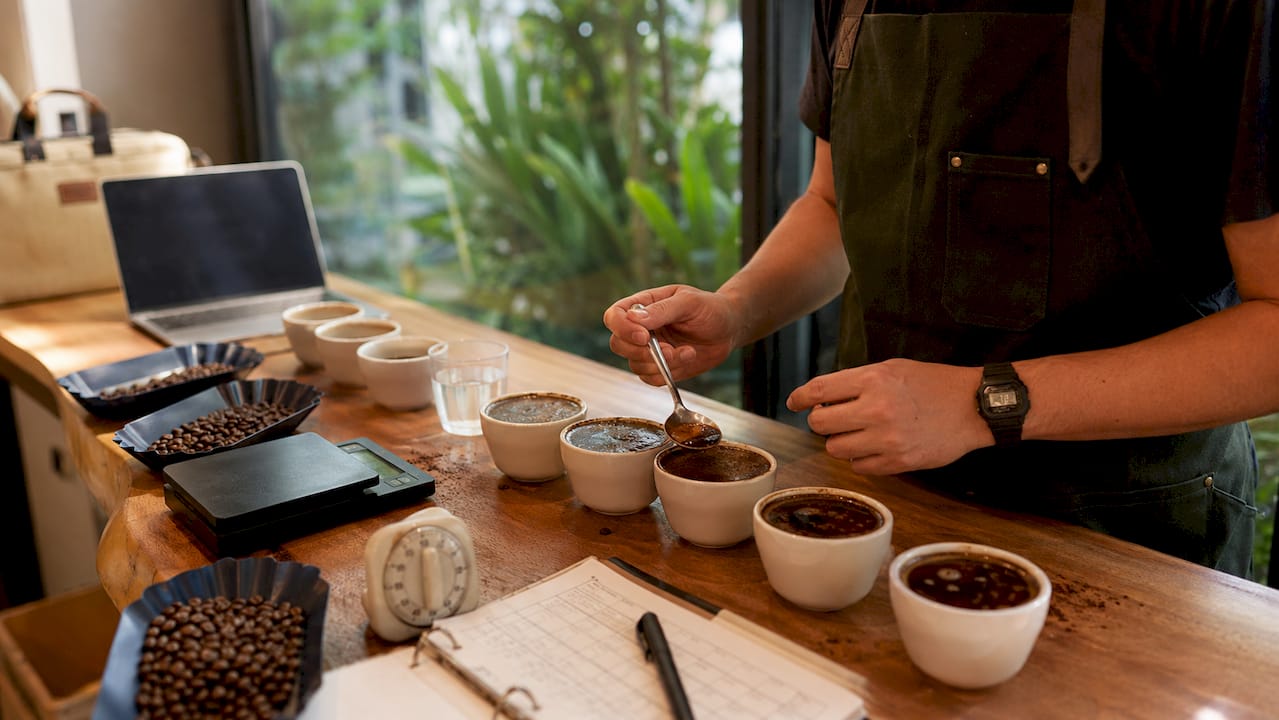
Quality in specialty coffee is not an outcome of good intentions. It is the product of engineered checkpoints across every stage of the supply chain, from cherry selection at the farm to arrival testing at the roastery.
Keffa Coffee’s approach illustrates this precisely. Their QC workflow includes cupping at origin, export, and arrival stages, with measurable thresholds for water activity and minimum cup scores determining whether a lot ships at all. Lots that fail any checkpoint are held or rejected, not blended down. This means buyers receive only lots that cleared every gate, which reduces disputes and protects long-term sourcing relationships.
Traceability systems built into partnerships serve two functions. First, they allow fast problem isolation when a defect appears. Second, they give buyers documented proof of origin, processing method, and quality scores, which is increasingly required for European and North American specialty market access. Partnerships that skip traceability infrastructure save money in year one and lose buyers in year three.
Standardized operating procedures in coffee processing reduce defects and improve product consistency, according to a 2026 study on SOP implementation in robusta coffee roasting. The finding applies equally to wet processing at the farm level. When every worker at a washing station follows the same fermentation and drying protocol, lot-to-lot variation drops and cup scores stabilize.
Pro Tip: Build your quality threshold into the partnership contract before the first harvest. Specifying minimum cup scores and water activity limits in writing removes ambiguity and gives both parties a shared standard to work toward.
| Quality checkpoint | Purpose |
|---|---|
| Origin cupping | Identifies processing defects before export preparation begins |
| Export QC test | Confirms lot meets buyer specifications and regulatory standards |
| Arrival cupping | Verifies quality survived transit and storage conditions |
| Water activity measurement | Detects moisture risk that causes mold during shipping |
3. What operational services support farmers within partnership frameworks
The most overlooked element in coffee partnership models is the financial infrastructure that allows farmers to maintain quality under seasonal cash pressure. Without it, even the best agronomy training produces inconsistent results because farmers cut corners when money runs short before harvest.
Kagumo’s cooperative model addresses this directly. The cooperative provides input credit and cash advances so farmers can purchase fertilizer, pay for labor, and maintain equipment without waiting for cherry payment. This financial support is not charity. It is a quality investment, because a farmer who cannot afford fertilizer in March will deliver lower-density cherries in October.
JR Farms’ Liberia project takes farmer support further by embedding it into the partnership’s legal and operational structure. The project includes:
- Nursery establishment providing improved seedlings to participating farmers
- Structured training programs covering agronomy and post-harvest processing
- Digital farmer registration enabling organized traceability and communication at scale
- Structured outgrower schemes with guaranteed market offtake removing price uncertainty
- Farmer representation committees ensuring community accountability
Digital registration deserves specific attention. When 200,000 farmers are enrolled in a single partnership, paper-based systems collapse under their own weight. Digital tools allow the partnership to track input delivery, training completion, and cherry volumes by individual farmer, which makes quality incentives and loyalty bonuses administrable at scale.
Cooperative management structures, like those at Kagumo, add a governance layer that protects farmers from being sidelined as partnerships grow. Farmer representation committees give producers a formal voice in decisions about pricing, processing standards, and infrastructure investment. Partnerships without this accountability layer tend to drift toward buyer interests over time, which erodes farmer trust and eventually quality.
4. Comparison of successful coffee farm partnerships examples
The four partnerships profiled in this article each solve the same core problem, connecting smallholder farmers to specialty markets, through different structural approaches. Understanding the differences helps producers and buyers choose the right model for their context.
| Partnership | Model type | Scale | Key strength | Primary challenge |
|---|---|---|---|---|
| Monteverde (Trabocca, Peru) | Hub-and-network | Regional, multi-cooperative | Diverse portfolio with unified quality governance | Requires dry mill infrastructure investment |
| Kagumo (Kirinyaga, Kenya) | Outgrower cooperative | 1,500+ farmers, 9 washing stations | Financial services integrated with quality processing | Cooperative governance complexity |
| JR Farms (Liberia) | Government-backed revitalization | 200,000 farmers, 250,000 hectares | Digital systems and guaranteed offtake at national scale | Long timeline before quality premiums materialize |
| WWF + Kyagalanyi (Uganda) | Sustainability-incentive | Regional, Rwenzori mountains | Premium and loyalty bonuses tied to measurable conservation | Requires third-party verification infrastructure |
Monteverde’s strength is its ability to manage quality across a diverse portfolio. By operating the dry mill as a central hub, the partnership controls the most quality-critical processing step and applies consistent standards across all cooperatives in its network. Buyers get traceability and variety from a single trusted source.
Kagumo’s model is the most replicable for mid-scale producers. The nine-washing-station network demonstrates that cooperative infrastructure can be built incrementally, adding stations as farmer membership and cherry volume grow. The financial services component, specifically input credit, is what separates Kagumo from cooperatives that focus only on processing.
The WWF and Kyagalanyi Coffee partnership in Uganda’s Rwenzori region represents the direction specialty coffee is heading. Aligning sustainability incentives with market premiums improves farmer income and product integrity simultaneously, which is the argument that converts skeptical farmers from conventional to climate-smart practices. Buyers in European specialty markets increasingly require this kind of documented sustainability performance, making the model commercially necessary rather than optional.
Successful specialty coffee partnerships build systems rather than single transactions, integrating training, processing, and quality governance to drive progress. That principle holds across all four models regardless of scale or geography.
Key takeaways
The most effective coffee farm partnerships combine processing infrastructure, multi-stage quality checkpoints, financial farmer support, and traceability systems to deliver consistent specialty coffee and sustainable farmer income.
| Point | Details |
|---|---|
| Choose the right model | Match your partnership structure to your existing infrastructure, scale, and funding source before committing. |
| Engineer quality checkpoints | Build cupping thresholds and water activity limits into the contract, not just the operating manual. |
| Include financial services | Input credit and cash advances are quality investments, not welfare. Farmers under financial pressure deliver lower-quality cherries. |
| Invest in traceability | Digital farmer registration and lot tracking protect buyer relationships and enable premium market access. |
| Tie sustainability to premiums | Conservation performance linked to loyalty bonuses converts farmer behavior more reliably than training alone. |
What I’ve learned about partnerships that actually last
After years of sourcing from cooperatives and small farms across Colombia, Ethiopia, Costa Rica, Mexico, and Sumatra, I’ve come to one conclusion that most sourcing guides avoid: the partnerships that fail are not the ones with bad intentions. They are the ones that treated quality as a downstream outcome rather than an upstream design decision.
The Kagumo model taught me something specific. Financial services are not a nice-to-have add-on. When a farmer in Kirinyaga can access input credit before the growing season, the quality of the cherry they deliver in October is structurally different from what a financially stressed farmer delivers. You cannot train your way out of a cash flow problem. You have to solve the cash flow problem first, then the training sticks.
I also think the industry underestimates how much processing infrastructure determines cup quality. Agronomy matters, but investing in washing stations and drying facilities is what separates a farm with potential from a farm with consistent scores. The Monteverde hub model works because it controls the dry mill. That is not a coincidence.
The sustainability-incentive model from WWF and Kyagalanyi is the one I watch most closely right now. Tying premiums to measurable conservation outcomes is the only approach I have seen that changes farmer behavior at scale without requiring constant external pressure. When the market pays more for documented forest-friendly practices, the incentive is self-sustaining. That is the kind of structure that survives beyond the grant cycle.
For any producer or buyer considering a new collaboration, my honest advice is this: align your business goals with the community’s economic goals from day one. Partnerships where the buyer captures all the premium upside while the farmer absorbs all the production risk do not last. The ones that last are the ones where quality improvement and income improvement move in the same direction at the same time.
— Stefan
Explore Adiracoffee’s farm-sourced specialty blends
Adiracoffee was built on exactly the kind of sourcing relationships this article describes. Stefan and Ekaterina founded the brand because they wanted coffee that came from farms with names, not anonymous commodity lots. Every bean Adiracoffee roasts traces back to a cooperative or small farm in Colombia, Ethiopia, Costa Rica, Mexico, or Sumatra, sourced through relationships that prioritize quality, traceability, and fair farmer compensation.

If you want to taste what a well-structured farm partnership produces in the cup, the Mushroom Coffee Medium Roast is a strong starting point. It combines specialty-grade sourcing with functional ingredients, roasted in small batches in California and shipped within days. For those who prefer exploring single-origin lots directly, Adiracoffee’s single-origin collection showcases the range that ethical farm collaborations make possible.
FAQ
What are the main types of coffee farm partnerships?
The four main coffee partnership models are hub-and-network, outgrower cooperative, government-backed revitalization, and sustainability-incentive. Each organizes farmers, processing infrastructure, and market access differently based on scale and funding.
How do coffee farm partnerships improve quality?
Partnerships improve quality by embedding multi-stage cupping checkpoints, standardized processing procedures, and measurable thresholds that determine whether a lot ships. Quality control across sourcing stages is engineered into the partnership structure, not left to individual farmer judgment.
What financial services do coffee partnerships provide to farmers?
Cooperatives like Kagumo provide input credit and seasonal cash advances so farmers can cover agronomic costs before cherry payment arrives. These financial tools directly improve cherry quality by removing the pressure to cut corners on fertilizer and labor.
How does digital registration help large-scale coffee partnerships?
Digital farmer registration enables partnerships like JR Farms in Liberia to track input delivery, training completion, and cherry volumes across hundreds of thousands of farmers. Without digital systems, quality incentives and loyalty bonuses cannot be administered accurately at scale.
What makes a coffee farm partnership sustainable long-term?
Partnerships that align buyer quality goals with farmer income goals from the start last longer. Models that tie premiums to measurable sustainability performance, like the WWF and Kyagalanyi Coffee collaboration, create self-sustaining incentives that outlast external funding.
Recommended
- How Coffee Farms Define Flavor: Practices That Impact Quality – Adira Coffee US
- Best Examples of Sustainable Coffee Farms Worldwide – Adira Coffee US
- Why Small Farm Coffee Delivers Better Taste and Bigger Impact – Adira Coffee US
- Top Coffee Farms in 2026: Rankings, Awards, and Trends – Adira Coffee US