
Use around 22 grams of coffee to about 350 grams of water, approximately a 1:16 ratio, ground medium-fine like coarse sand. Bloom with about double the coffee weight in water for around 30 to 45 seconds, then pour in two steps up to the total water amount, aiming for a total brew time near 3 minutes. Use water near 200°F for medium roasts. That’s the whole recipe. Everything below explains why it works and how to fix it when it doesn’t.
TL;DR:
- Using a scale and timer is essential to replicate the water volume and pour timing, which directly affect brew consistency and extraction quality.
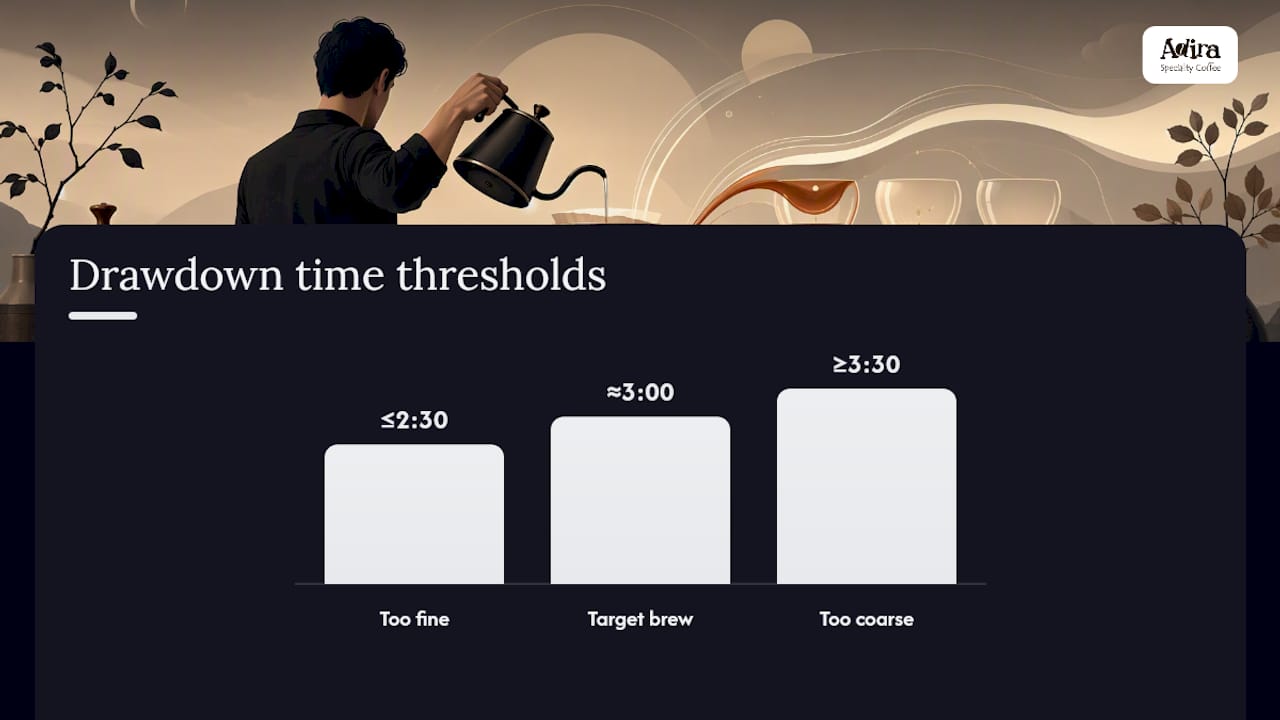
- Adjusting grind size based on drawdown time—under 2:30 indicates too fine, over 3:30 indicates too coarse—optimizes flavor and prevents over- or under-extraction.
- For a balanced cup, stick to a 1:16 coffee-to-water ratio; increase to 1:15 for stronger, 1:17 for lighter, depending on bean origin and desired clarity.
- Fresh beans roasted within five days need an extra 5 seconds in the bloom phase, as they release more gases, affecting flow and extraction.
- Regular cleaning of the V60 dripper, grinder, and kettle ensures optimal flow, flavor, and consistency, preventing rancid oil build-up that can spoil taste.
Table of Contents
- What You Need: Equipment, Filters, and Beans
- Step-by-Step Classic Single-Cup V60 Recipe
- Ratios and Scaling: Adjusting for 2 Cups or Different Strength
- Grind, Water Temperature, and Troubleshooting
- Adira Coffee Founder Tips and Real-World Troubleshooting
- Cleaning and Maintenance for Your V60
- Where to Go Next Once Your Basic Recipe Is Solid
- Beans Worth Brewing This Recipe With
- Sources
What You Need: Equipment, Filters, and Beans
A Hario V60 02 is the right size for a single cup. Beyond the dripper itself, you need a few things that actually change your results, not just gear that looks nice on a shelf.
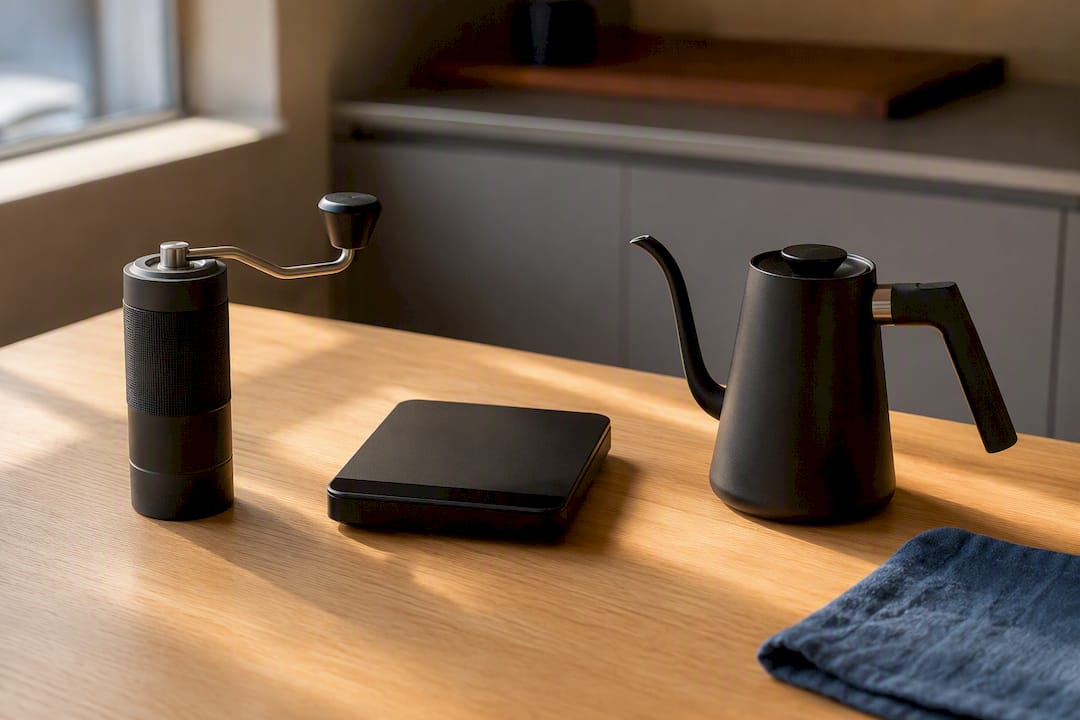
- Gooseneck kettle: controls pour rate far better than a standard spout, an essential item listed in all kitchen equipment beginners need
- Burr grinder: produces even particle sizes, which is the difference between a clean cup and a muddy one
- Scale with a timer: non-negotiable for repeating a recipe instead of guessing at it
- V60 paper filters: sized specifically for the 02 dripper
- Server or mug: whatever sits under the dripper without wobbling
Fold the filter, seat it in the dripper, and rinse it with hot water. This washes away papery taste and preheats the vessel so your coffee doesn’t lose heat the moment it hits glass. Weigh your dose, grind it, and level the bed with a light shake before you pour. Freshly roasted beans bloom more actively than stale ones, and that bloom is doing real work below.
Step-by-Step Classic Single-Cup V60 Recipe
This is the version worth memorizing. It scales cleanly and forgives small mistakes better than fussier methods.
- Weigh 22 grams of coffee and grind it medium-fine, similar to coarse sand or kosher salt. For a lighter cup, use 20 grams to 300 grams of water instead, which is closer to a 1:15 ratio.
- Rinse the filter, add grounds, and level the bed. Zero your scale with the dripper on top.
- Bloom with 44 grams of water (double your dose) poured in a slow spiral over the grounds. Start your timer.
- Let it sit for 30 to 45 seconds. You’ll see the grounds swell and bubble. That’s carbon dioxide escaping, and it’s a rough indicator of freshness. A very fresh roast blooms aggressively; give it the full 45 seconds.
- Pour to 200 grams in a steady, controlled stream, keeping the kettle spout close to the surface, maybe an inch above the bed. Move in slow circles, working from the center out and back.
- Pour to 350 grams in a second pass once the water level drops to expose the bed slightly. This is your final addition.
- Let it draw down completely. Total time from your first pour to the last drip should land between 2:30 and 3:30.
Flow rate matters more than most people assume. Pour too fast and water channels straight through the grounds without extracting evenly. Pour too slow and you risk over-extracting the coffee that stays in contact longest. Aim for a controlled, unbroken stream rather than a splashy dump or a hesitant trickle, and stop pouring the moment you hit your target weight rather than eyeballing “close enough.” This matches the pour weight method Hario itself recommends for the 02 dripper, and it lines up with the step sequence most specialty guides teach for a reason: it’s repeatable.
Pro Tip: If your beans were roasted within the past five days, add five extra seconds to your bloom. Very fresh coffee releases more gas, and it needs a beat longer to settle before it can absorb water evenly.
Ratios and Scaling: Adjusting for 2 Cups or Different Strength
The right ratio depends on what you want in the cup, not on some fixed rule. A 1:15 ratio gives you a fuller, stronger cup with more body. A 1:16 ratio is the most balanced starting point and the one worth defaulting to. A 1:17 ratio produces a lighter, more tea-like cup that highlights clarity over weight, which works well with brighter single-origin beans.
Scaling up for two cups just means doubling your numbers while keeping the same technique:
- 1 cup, 1:16: 22 grams coffee, 350 grams water
- 2 cups, 1:16: 40 grams coffee, 640 grams water
- 1 cup, lighter, 1:17: 20 grams coffee, 340 grams water
When you scale up, split your main pour into two or three smaller additions instead of one long pour. A single V60 02 can only hold so much water at once before it overflows, and shorter pours help you maintain the same pacing you’d use for one cup. The exact scaling ratios Adira recommends follow this same logic for both single servings and larger batches.
Grind, Water Temperature, and Troubleshooting
Your drawdown time tells you almost everything you need to know. If your total brew finishes well under 2:30, your grind is too fine. If it drags past 3:30, it’s too coarse. This single time-based cue solves more V60 problems than any other adjustment.
Texture matters as much as the clock. Medium-fine should feel like table salt, maybe fine polenta if you want a rougher comparison. Water temperature should shift with roast level: light roasts want 94 to 96°C (201 to 205°F), medium roasts do well at 92 to 95°C (198 to 203°F), and dark roasts extract cleanly at 90 to 93°C (194 to 199°F), since darker beans are already more porous and extract faster. No thermometer? Boil your water, then let it rest for 30 to 45 seconds off the heat before pouring.
When something goes wrong, match the symptom to the fix:
- Fast drawdown, thin or sour cup: grind coarser next time, and slow your pour rate on the next attempt
- Slow drawdown, bitter cup: grind finer isn’t the fix here. Grind coarser and shorten your bloom slightly, since over-contact is usually the real culprit
- Sourness with normal timing: raise your water temperature a few degrees
- Bitterness with normal timing: lower your water temperature slightly, or grind a touch coarser
Adira’s 4 Step Test to Fix V60 Fast Drawdown walks through this exact diagnostic process in more detail, and it’s worth bookmarking if fast drawdown keeps showing up on grinders with limited settings.
Adira Coffee Founder Tips and Real-World Troubleshooting
Stefan, co-founder of Adira Coffee, has watched the same handful of mistakes trip up home brewers for years, and freshness is the one people underestimate most. A bean roasted ten days ago blooms differently than one roasted that morning, and that difference changes how much CO2 escapes during your first pour.
A few things worth knowing before your next brew:
- Beans roasted within a week bloom faster and need a slightly longer rest before your first pour
- Small-batch roasting means less time sitting in a warehouse, which keeps that bloom activity consistent bag to bag
- If your grinder only has a few settings, agitation becomes your backup dial
Pro Tip: Can’t dial in a finer grind setting? Swirl the V60 gently right after your final pour. That extra agitation pulls more flavor from the grounds without touching your grinder at all.
Cleaning and Maintenance for Your V60
A dirty dripper ruins good technique before the water even touches the grounds. Coffee oils build up on the plastic or ceramic surface over time, and those oils turn rancid, adding a faint bitterness to every cup that follows, even when your recipe is perfect.
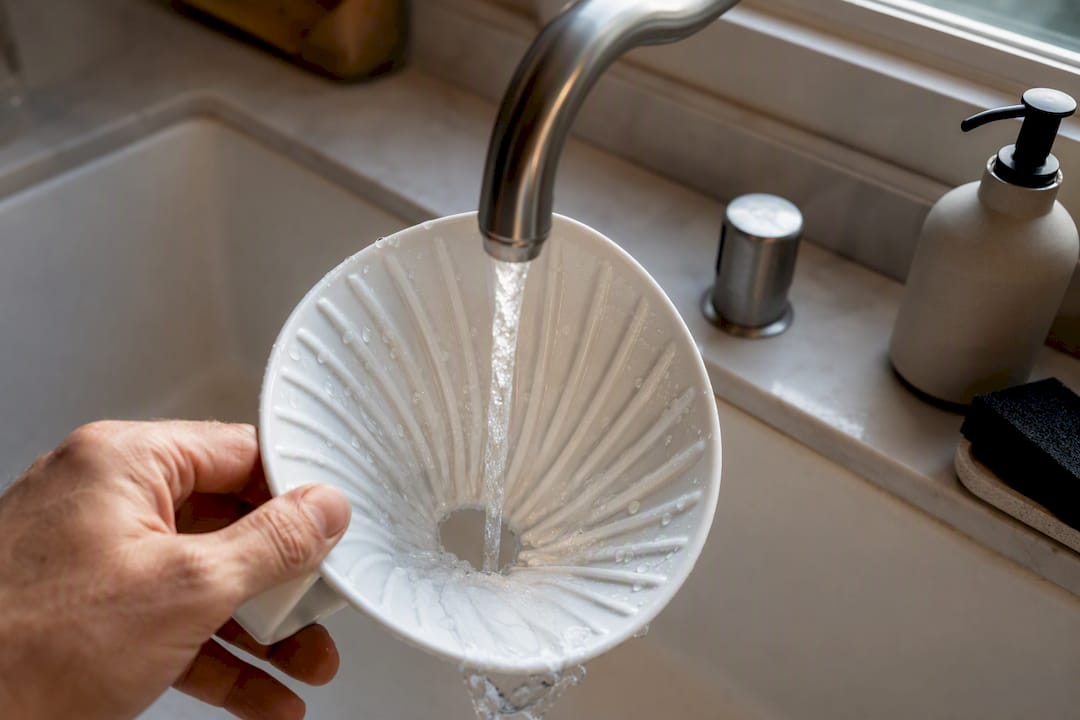
Rinse your V60 with hot water after every brew, and give it a real wash with mild dish soap at least once a week. Pay attention to the ridges on the inside walls; they’re where oil residue collects and where a quick rinse tends to miss. A soft sponge works fine. Skip anything abrasive, since scratches give oils even more surface area to cling to.
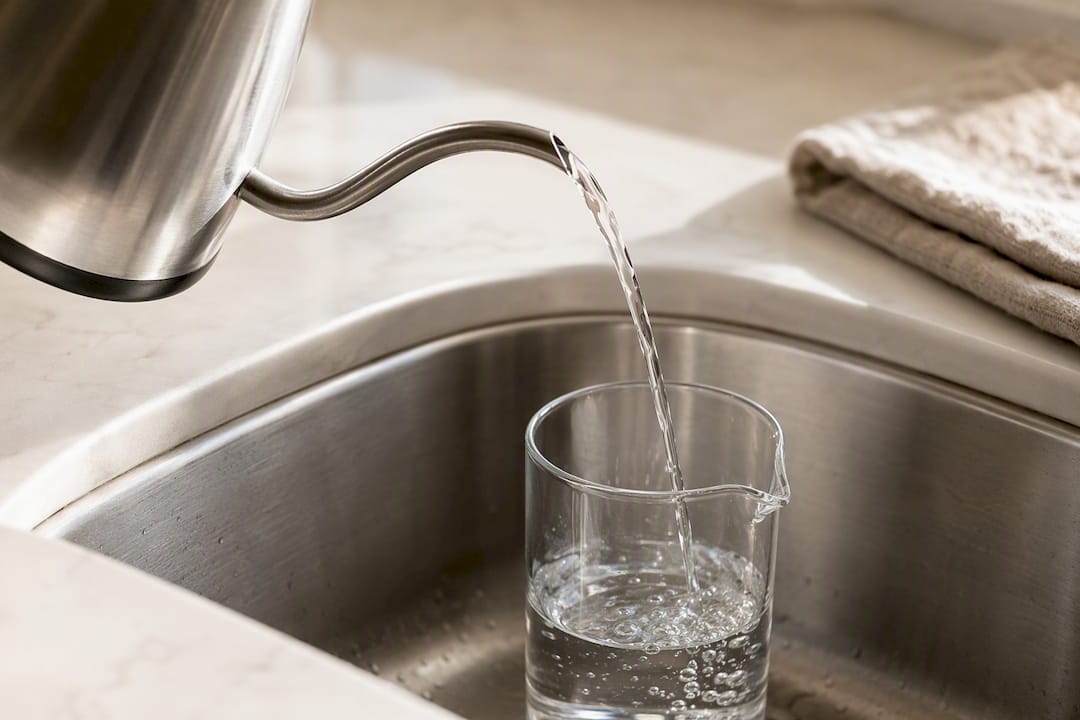
Your kettle needs occasional attention too. Mineral buildup from hard water can clog the spout and throw off your pour control, which matters more on a V60 than almost any other brew method since your pour rate is half the technique. A monthly soak in equal parts water and white vinegar, followed by a thorough rinse, keeps the spout flowing evenly.
Filters are single-use, obviously, but check your grinder burrs every few months for stray grounds buildup. Old grounds trapped in the burrs go stale and mix into fresh coffee, introducing flat, cardboard-like notes you’ll blame on the beans when the real problem is a dirty grinder. A small brush, the kind that comes with most grinders, clears this out in under a minute. None of this takes more than five minutes a week, and it’s the difference between a recipe that works consistently and one that mysteriously tastes different every third cup.
Where to Go Next Once Your Basic Recipe Is Solid
Once you can hit the same drawdown time three brews in a row, stop tweaking and start repeating. Consistency is the actual skill here, not chasing a “perfect” grind setting that changes every time you touch the dial.
Change one variable at a time: grind, then temperature, then pour pace, never all three in the same brew. That’s the only way to know what actually caused a shift in flavor.
If you’re buying gear, prioritize in this order: burr grinder first, scale second, kettle upgrades last. A cheap gooseneck kettle with a good grinder outperforms an expensive kettle paired with a blade grinder every time. Once your baseline is boring and repeatable, try the 4:6 method or a five-pour routine to see how splitting pours differently changes sweetness versus strength. Those variations only make sense once your basic technique stops being the wild card.
Beans Worth Brewing This Recipe With
The recipe only gets you halfway. The beans do the rest, and roast date matters as much as roast level once you’re brewing on purpose instead of by accident.
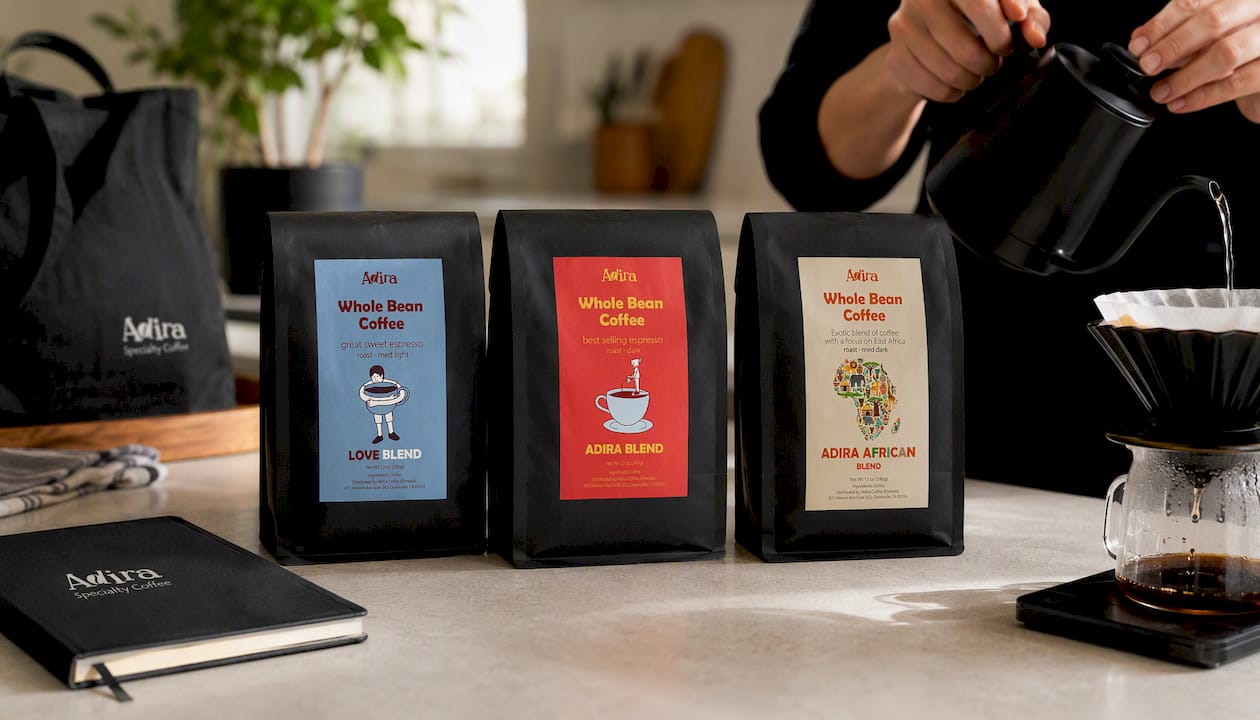
Specialty coffee roasts done in small batches and shipped quickly tend to produce a bloom reflecting fresh coffee, rather than the flat, quiet bloom of a bag that sat on a shelf for two months. For a balanced, everyday cup that suits the 1:16 recipe above without any adjustment, the Love Blend is the easiest starting point. If you want something built for a slightly darker roast profile with more body, the Adira Blend holds up well at the lower end of the temperature range. For readers chasing clarity and brighter acidity, closer to what a 1:17 ratio is meant to showcase, the African Blend leans into those single-origin notes directly. Order a bag and put tonight’s recipe to work on beans roasted for it.
Sources
The parameters in this recipe come from a mix of official specs and industry-tested guides, not guesswork.
- V60 Pour-Over Guide: Ratios, Technique, Step by Step — Coffee Studies
- Official Recipe — Recipe for V60 02 by Hario — Gota
- V60 coffee revisited: Brew guide — Perfect Daily Grind
- Hario V60 Brewing Guide: Complete Recipe and Step-by-Step Technique | BrewMark