
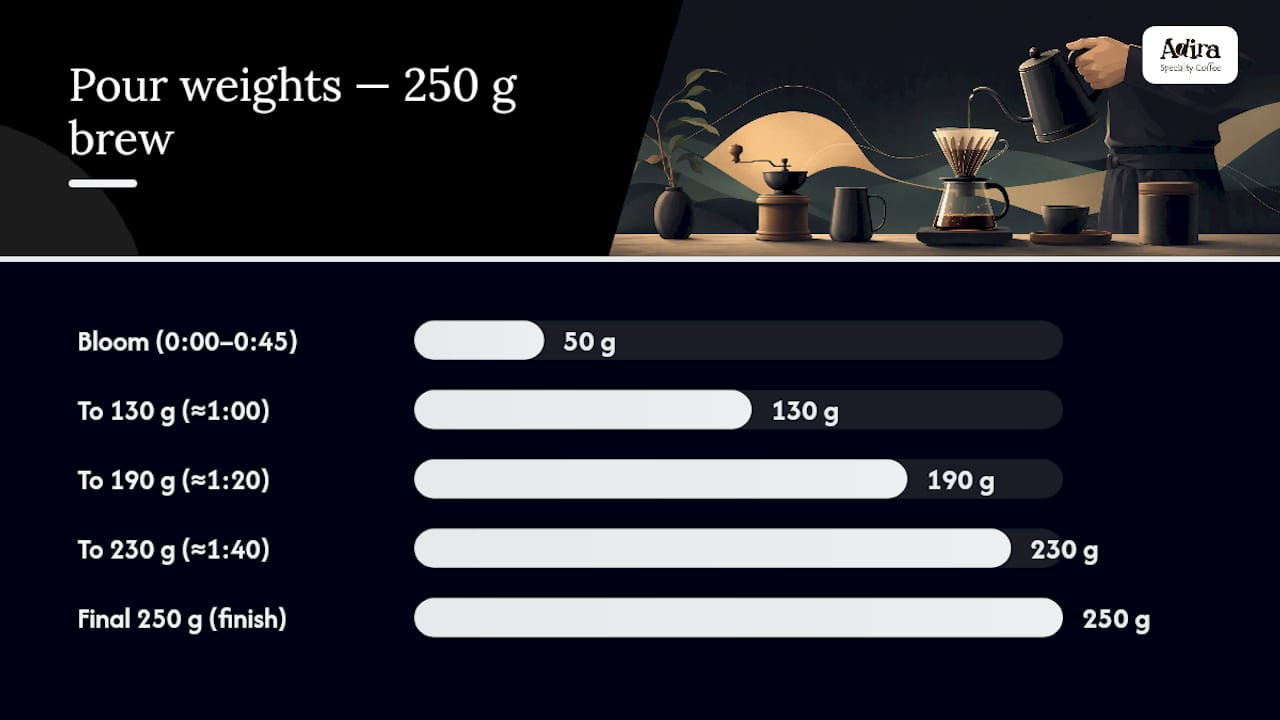
Brew a single, repeatable cup with 15 g coffee and 250 g water using a timed V60 recipe with roughly a 3:00 drawdown. Grind medium-fine, heat water to 95°C (203°F), and pour in four pulses after a 50 g bloom. That’s the Hoffmann-style ratio, and it’s the most reliable starting point for a single mug.
If you want something even faster, scale down to 12 g coffee and 192 g water, a 1:16 ratio, using a two-pour method instead of four. That version runs closer to 2:30 total.
- Primary recipe: 15 g coffee, 250 g water, 95°C, medium-fine grind, 50 g bloom, four pulses, ~3:00–3:30 drawdown
- Compact alternative: 12 g coffee, 192 g water (1:16), large bloom, two pours, ~2:30 drawdown
Pro Tip: Weigh everything. A kitchen scale removes more guesswork from a single cup than any other single change you can make.
Key Takeaways
A single-cup V60 becomes reproducible once you weigh both coffee and water, hold a 1:16 ratio, and time your pours against a fixed drawdown target.
| Point | Details |
|---|---|
| Use a weight-based ratio | Stick to 15 g coffee to 250 g water, or scale to 12 g to 192 g for a faster brew. |
| Target the right drawdown | Aim for 3:00 to 3:30 with four pulses, or about 2:30 with the two-pour method. |
| Tune by time, not guesswork | Adjust grind by one or two clicks for every 15 to 30 seconds your drawdown misses target. |
| Respect pour height limits | Keep pours under about 50 cm and use a gooseneck kettle to maintain a steady stream. |
| Start with fresh, matched beans | Adira Coffee’s roasted-to-order Colombia, Sumatra, and Love Blend all suit precise V60 brewing. |
Table of Contents
- Equipment and Ingredients for a V60 Single-Cup Recipe
- How Do You Brew a V60 for One Cup Step by Step?
- Why Is My V60 Draining Too Fast or Too Slow?
- Does Pour Height Actually Change How Your Coffee Tastes?
- What Makes Adira Coffee a Reliable Base for This Recipe
- What the Research Actually Tells You to Prioritize
- Which Adira Roasts Work Best for This V60 Recipe
- Frequently Asked Questions
- Sources
Equipment and Ingredients for a V60 Single-Cup Recipe
The Hario V60 comes in a couple of sizes, and for one cup, the 01 size is the right call. A larger dripper spreads 15 grams of grounds too thin across the cone, which thins out the coffee bed and lets water rush past the grounds instead of through them.
Beyond the dripper itself, here’s what belongs on your counter:
- V60 01 dripper — matched to bed depth for single-cup doses
- Paper filters, rinsed with hot water before brewing to clear papery taste and preheat the cone
- A digital scale accurate to 0.1 g, since single-cup recipes have zero margin for volume-based guessing
- A gooseneck kettle, which gives you the controlled, steady stream that pulse pours depend on
- A burr grinder set to medium-fine, roughly the texture of coarse sand
Adira’s single-origin lots hold up well to this kind of precision brewing, and Adira’s own Hario V60 starting recipe is a good reference point if you want a second recipe to cross-check your results against.
How Do You Brew a V60 for One Cup Step by Step?
Here’s the full timed sequence for the 15 g / 250 g recipe, plus the shorter method if you’re in a hurry.
- Preheat and rinse. Pour hot water through the paper filter to warm the dripper and your cup, then discard that water.
- Add coffee and tare. Place 15 g of medium-fine ground coffee in the filter and zero your scale.
- Bloom at 0:00. Pour 50 g of water directly onto the grounds, give the slurry a gentle swirl, and let it sit until 0:45.
- First pulse pour. Pour up to 130 g total, finishing around 1:00.
- Second pulse pour. Pour up to 190 g total, finishing around 1:20.
- Third pulse pour. Pour up to 230 g total, finishing around 1:40.
- Final pulse pour. Pour to 250 g total, then give the dripper a light swirl to settle the bed and encourage even drawdown.
- Let it finish. Total drawdown should land between 3:00 and 3:30, measured from the moment you started the bloom.
That’s the pulse-pour structure James Hoffmann popularized, and it works because it doesn’t demand a perfectly steady hand. Each pulse gives the bed a chance to drain partway before the next pour lands, which keeps extraction even without requiring you to maintain one continuous stream for three minutes straight.
If you’d rather skip counting four separate pours, Lance Hedrick’s two-pour method is worth trying. Scale to 12 g coffee and 192 g water, a clean 1:16 ratio, and bloom with roughly three times the dose in water, so about 36 g. Swirl, wait until 0:45, then pour the rest of the water in one continuous motion to 192 g total. Drawdown should finish around 2:30. The oversized bloom does a lot of the work here, fully saturating a small coffee bed so channeling is less likely even if your pour technique isn’t dialed in yet.
Start your timer the instant water touches coffee, not when you start pouring the bloom. And watch the bed while you pour: it should rise and fall evenly, with no dry patches or cratering. If one side drains visibly faster than the other, your next pour should target that dry spot directly.
Statistic: A 1:16 coffee-to-water ratio is the most commonly cited baseline for pour-over reproducibility, and both recipes above are built on it.
For fine-tuning, treat drawdown time as your dial. If your brew finishes 15 to 30 seconds off your target window, adjust your grinder by one or two steps in the corresponding direction before your next cup, rather than overhauling the whole recipe.
Why Is My V60 Draining Too Fast or Too Slow?
Drawdown speed and taste are the two signals that tell you what to fix. Here’s how to read them.
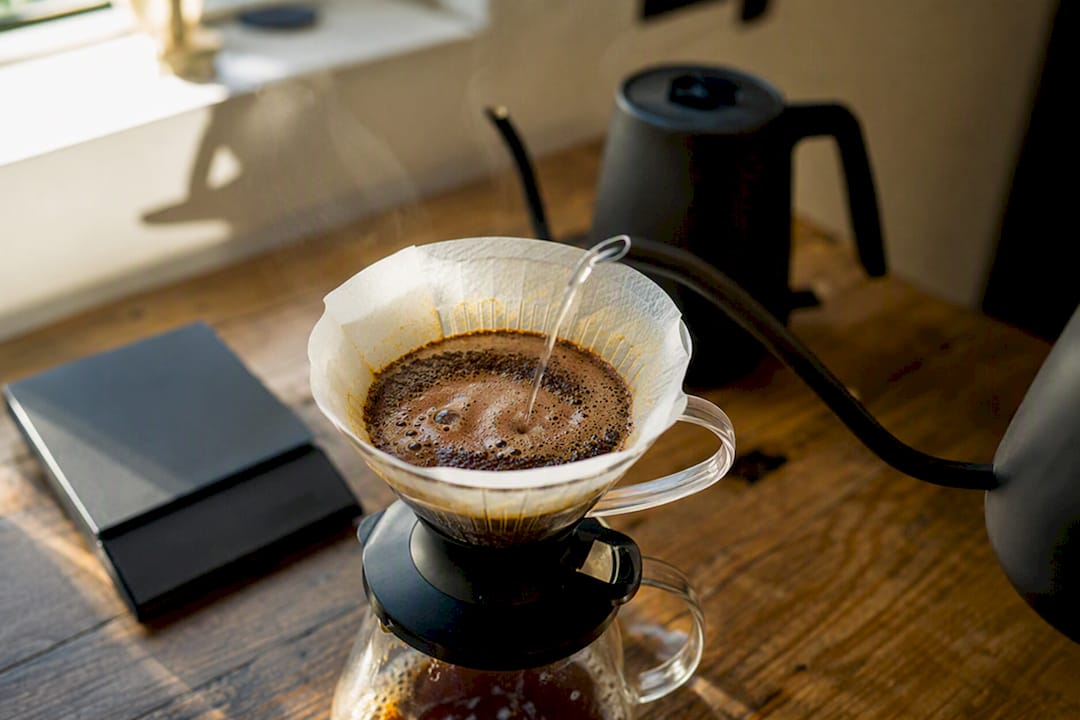
Brew finishes under 2:45. Your grind is likely too coarse. Tighten your grinder by one or two clicks, slow your pour rate slightly, and consider bumping your dose up half a gram if the cup tastes thin.
Brew finishes past 3:45. Go coarser by one or two clicks. Also check whether you’re using a thicker filter than usual, since some papers restrict flow more than others, and confirm you actually rinsed the filter before brewing.
Cup tastes sour or flat. That’s under-extraction, usually paired with a fast drawdown. Grind finer and consider a slightly higher water temperature, up to 96°C for lighter roasts.
Cup tastes bitter or astringent. That’s over-extraction, often paired with a slow drawdown or too many aggressive pours. Grind coarser, pour a bit faster during pulses, and drop your water temperature slightly for darker roasts.
Bloom looks patchy or uneven. That usually points to an inconsistent grind, with some particles far finer or coarser than the rest. A quick swirl during the bloom fixes minor unevenness; if it happens every brew, your grinder may need a burr cleaning or a full regrind test.
Pro Tip: Change one variable at a time. If you adjust grind size and pour speed in the same brew, you won’t know which fix actually solved the problem.
Does Pour Height Actually Change How Your Coffee Tastes?
Raising the pour height increases turbulence in the water stream, which mixes grounds and water more thoroughly and can improve extraction efficiency, but only up to a point. Pour too high and the stream breaks into droplets before it hits the bed, and that mixing benefit disappears.
That’s the core finding from fluid-dynamics research on pour-over coffee, and it gives a physical explanation for something baristas have argued about for years. The useful range tops out around 50 cm, or about 20 inches, and going higher than that risks the stream falling apart before it reaches the grounds.
This is also the practical case for a gooseneck kettle. A steady, narrow stream is what keeps that flow laminar instead of turbulent in the wrong way, and it’s a big part of why the weigh-and-pace approach in Serious Eats’ pour-over guide keeps showing up across serious brewing advice. If you want to test your own pour height, practice with plain water over a sink first. If you see droplets forming instead of a continuous stream, lower your kettle or slow your pour.
What Makes Adira Coffee a Reliable Base for This Recipe
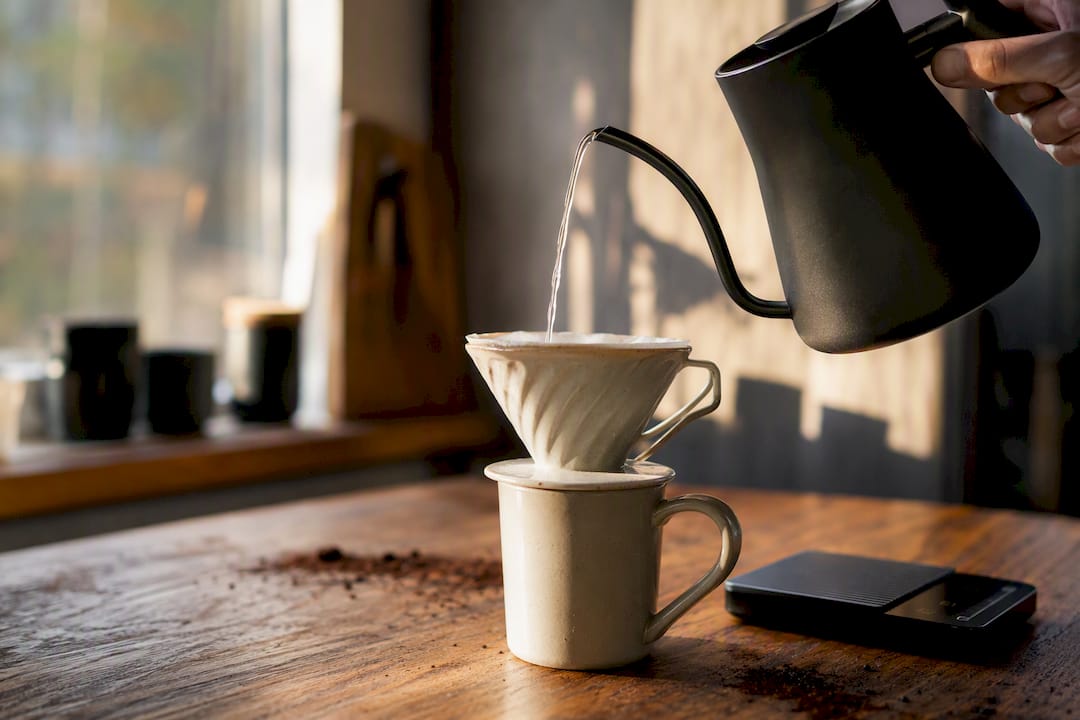
A V60 recipe is only as good as the beans behind it, and stale coffee will undercut even a perfectly timed pour. Adira Coffee roasts every bag to order in small batches in California and ships it within days, which matters more for pour-over than almost any other brew method, since a V60 exposes flat, tired coffee immediately.
A few things worth knowing about Adira’s sourcing and process:
- Beans come from cooperatives and small farms in Colombia, Ethiopia, Costa Rica, Mexico, and Sumatra
- Every batch is roasted to order rather than sitting on a shelf
- Subscriptions save 10% and ship free on US orders over $35
- Adira’s own Hario V60 starting recipe offers a second reference point if you want to compare notes against the recipes above
For more on dialing in grind and technique, Adira’s guide on grind size and how it affects your brew walks through the mechanics in more detail than a single recipe article can cover.
What the Research Actually Tells You to Prioritize
Most advice about pour-over technique treats every variable as equally important, and that’s where a lot of home brewers waste effort. Pour height, water temperature, and pulse count matter, but not equally. The fluid-dynamics research on pour height is genuinely interesting, but it’s a refinement, not a foundation. Get your ratio and grind wrong, and no amount of kettle technique will save the cup.
If I had to rank what matters, weight and grind come first, drawdown time second, and pour height a distant third. Home brewers obsess over kettle technique because it’s visible and satisfying to practice, while grind consistency happens inside a machine you can’t watch. That’s backward. A cheap burr grinder set correctly will outperform a beautiful pour poured onto badly ground coffee every time.
The other thing conventional advice underplays: the Hedrick two-pour method isn’t a lesser version of the four-pulse recipe. It’s a genuinely different tool, better suited to smaller doses where a big bloom does more of the extraction work than careful pour timing ever could. Start with whichever recipe matches your patience level, not whichever one sounds more advanced.
Which Adira Roasts Work Best for This V60 Recipe
Not every bag of coffee rewards this kind of precision, but a few of Adira’s roasts are built for it. Colombia brews bright and clean through a V60, with the kind of clarity that makes small pour-height and timing adjustments actually noticeable in the cup. Sumatra leans fuller-bodied and earthy, a good match if you tend to prefer a heavier mouthfeel from your pour-over.
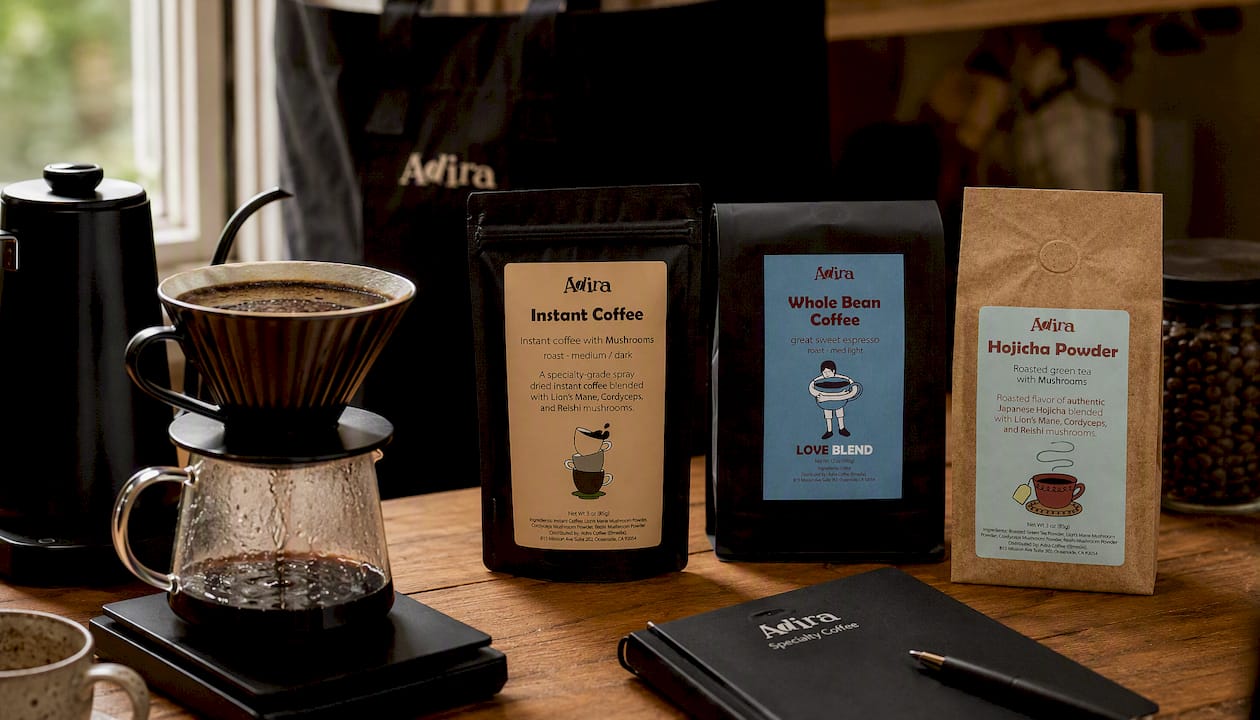
If you want something more versatile while you’re still dialing in your technique, the Love Blend is a forgiving, well-balanced option that holds up whether your drawdown lands at 2:45 or 3:15. Every bag ships roasted to order, so what lands on your counter is only days off the roaster, not weeks off a warehouse shelf. Head to Adira’s coffee plan page to pick a roast and set up a subscription that matches how often you actually brew.
Frequently Asked Questions
What is the best coffee-to-water ratio for a V60 1 cup recipe? A 1:16 ratio is the standard starting point, meaning 15 g of coffee to 250 g of water, or 12 g to 192 g for a smaller cup. Adjust slightly stronger or weaker from there based on taste.
How long should a V60 take to brew for one cup? The four-pulse method should finish its drawdown between 3:00 and 3:30. The two-pour method typically finishes closer to 2:30. If your brew runs well outside either window, adjust your grind size before changing anything else.
What grind size should I use for a V60 single cup recipe? Medium-fine is the standard starting point, roughly the texture of coarse sand. If your drawdown runs long, go slightly coarser; if it runs short, go slightly finer.
Why does my V60 bloom look uneven? Uneven blooming usually points to inconsistent grind size or an uneven coffee bed. Give the slurry a gentle swirl right after pouring the bloom water, and check your grinder’s consistency if the problem repeats across multiple brews.
Does pour height really matter for a single cup of V60 coffee? Yes, within limits. Raising your kettle up to about 50 cm can improve mixing and extraction, but pouring from too high breaks the water stream into droplets and reduces that benefit. A steady stream from a gooseneck kettle matters more than extreme height.
Sources
- The trick to making great pour-over coffee with fewer beans
- How to Make the Best Pour-Over Coffee at Home
- James Hoffmann’s V60 technique (the best one-cup method)
- Lance Hedrick One Cup V60 — 1:16, 3min