
Start here: 14 grams of coffee in, 28 grams of espresso out, in 25 to 30 seconds, with the Dedica’s temperature dial set to medium or high. That’s the ratio that gets a reliable double from the Dedica’s double-shot basket. If you’re pulling a single, cut it to 7 grams in and 14 grams out. Everything else in this article builds on that one number.
Before you pull anything, run the machine through a real warm-up: power it on, let the group head come to temperature, then run a flush with no coffee in the basket. Preheat the portafilter under that same flush water, and warm your cup while you’re at it. A cold portafilter on the Dedica drops your brew temperature fast enough to ruin an otherwise good shot.
- Dose: 14 g double / 7 g single
- Yield: 28 g double / 14 g single
- Time: 25 to 30 seconds
- Temperature: medium to high setting
- Prep: flush, preheat portafilter, preheat cup
For your first bag, grab something forgiving and consistent. Adira’s Colombia roast works well as a starter because it’s balanced enough to taste right even before you’ve fully dialed in your grind.
Key Takeaways
The Dedica pulls its most reliable shot from a 14 gram dose, a 28 gram yield, and a 25 to 30 second extraction window, adjusted by grind rather than time.
| Point | Details |
|---|---|
| Starting recipe | Use 14 g in, 28 g out, 25 to 30 seconds, medium to high temperature setting. |
| Dose matches basket size | Stick to about 7 g single and 14 g double to avoid overfilling the small baskets. |
| Adjust grind before dose | Sour shots need a finer grind, bitter shots need a coarser grind, changed one at a time. |
| Milk targets for texture | Steam to about 140 to 150°F, using 4 to 5 oz for cappuccino and 6 to 7 oz for latte. |
| Fresh roast, better results | Adira roasts to order and recommends its Dedica starting recipe alongside roasts like Mushroom Coffee Medium Roast for a stable baseline. |
Table of Contents
- Six De’Longhi Dedica Recipes Worth Mastering
- How Do You Dial In the Dedica’s Small Baskets?
- Getting Microfoam Right on the Dedica’s Steam Wand
- Quick Fixes for Common Dedica Problems
- Adira Coffee’s Dedica Starting Recipes and Roast Pairings
- Sources
Six De’Longhi Dedica Recipes Worth Mastering
The Dedica ships with pressurized baskets sized for small doses, so precision matters more here than on a full-size machine. These six recipes cover the drinks you’ll actually make on repeat.
- Ristretto. Dose 14 g, yield 18 to 20 g, pull time 20 to 25 seconds, temperature setting high. Use the double basket, distribute grounds evenly before tamping, and expect a syrupy, concentrated shot. Pro Tip: Ristretto punishes uneven distribution more than any other shot on this list. Give the basket a light tap and a swirl before you tamp.
- Standard espresso. Dose 14 g, yield 28 g, time 25 to 30 seconds, medium to high setting. This is your baseline shot and the one to log every time you adjust grind. Pro Tip: Preheat your cup for this one specifically. A cold demitasse pulls heat out of a 1 to 1.5 ounce pour surprisingly fast.
- Lungo. Dose 14 g, yield 40 to 45 g, time 35 to 40 seconds, medium setting. Don’t just let the shot run longer on the same grind. Go slightly coarser or the extra water pulls harsh, bitter compounds. Pro Tip: If your lungo tastes hollow, it’s often a sign to size up your dose slightly rather than fight the grind alone.
- Cappuccino. Pull a standard 14 g / 28 g espresso into a preheated 6-ounce cup, then steam 4 to 5 ounces of cold milk to about 150°F for a dense, dry microfoam. Pro Tip: Steam the milk while the shot is still extracting. Cappuccino foam holds up better fresh than rested.
- Latte. Pull the same standard shot into an 8 to 10 ounce cup, steam 6 to 7 ounces of milk to roughly 140 to 150°F with a looser, wetter texture than the cappuccino. Pro Tip: Let steamed milk rest 20 to 30 seconds before pouring. It lets the foam and liquid separate slightly, which makes pour art far easier.
- Iced espresso. Pull a standard double directly over ice in a glass with 4 to 6 ounces of cold water or milk already added, so the shot doesn’t shock and go sour on contact. Pro Tip: Pull this shot slightly stronger, closer to a ristretto ratio, since the ice dilutes it the moment it lands.
Tamp pressure matters less than distribution in the Dedica’s small 51mm basket. A firm, level tamp beats a hard one every time. For a deeper look at how each of these drinks actually differs in structure, see Adira’s guide to types of espresso drinks.
How Do You Dial In the Dedica’s Small Baskets?
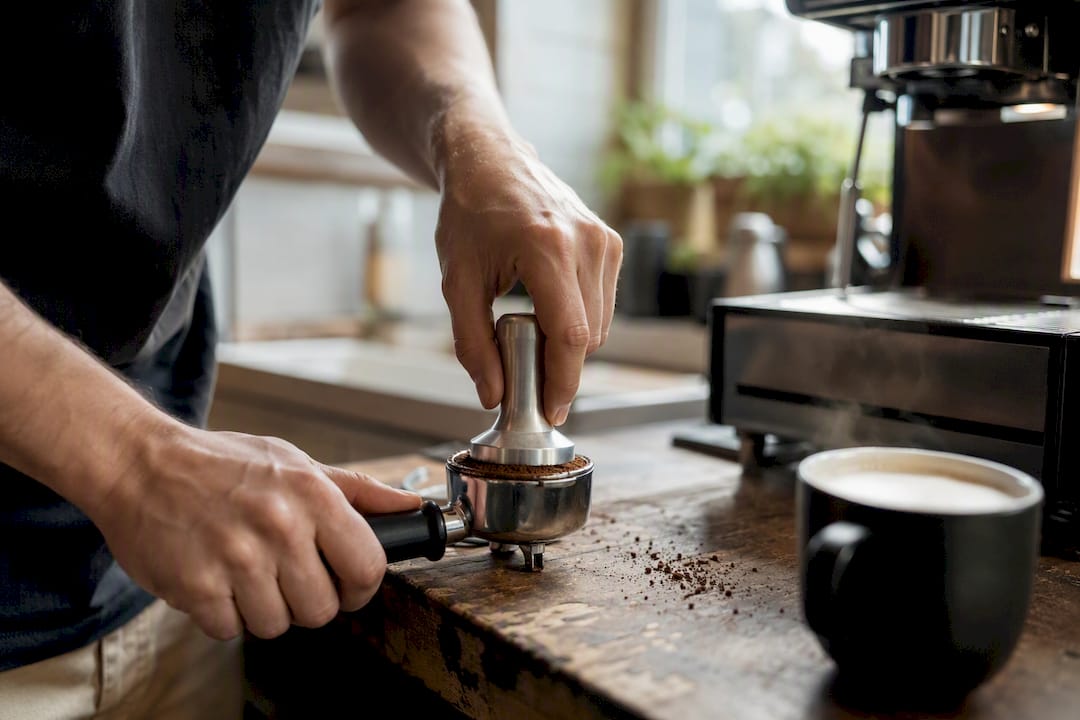
The Dedica’s baskets are genuinely small. The single takes about 7 grams, the double about 14, and the manual is specific about these figures because overfilling either basket pushes grounds up into the shower screen and chokes your flow. That 51mm portafilter also means a half-gram dosing error moves your ratio more than it would on a 58mm commercial group, so weighing your dose matters more here than on bigger machines.
Start with the 1:2 ratio: 14 grams in, 28 grams out, landing somewhere in that 25 to 30 second window. This isn’t a rigid law. It’s a starting point that most dialing-in guides converge on, and it gives you a stable baseline to adjust from rather than a moving target.
A widely used starting point among home baristas is a 1:2 input to output ratio landing in a 25 to 30 second window, adjusting grind size from there rather than time or dose.
Once you’ve pulled that first shot, taste it and diagnose:
- Sour or thin? Your grind is too coarse. Go finer and pull again at the same dose and time target.
- Bitter or harsh? Your grind is too fine, or your dose is too high for the basket. Go coarser first, then reconsider dose.
- Runs too fast, under 20 seconds? Grind finer. The water is finding too much open space between grounds.
- Barely drips or stalls out? Grind coarser, and check you haven’t overfilled the basket past its fill line.
Change one variable at a time. If you adjust grind and dose in the same pull, you won’t know which fix actually worked. Once you’re comfortable reading these cues, non-pressurized baskets can give you more control and a cleaner flavor, but only if your grinder can hold a stable, fine setting. On a grinder that drifts, the pressurized basket that came with your Dedica is more forgiving and honestly the better long-term choice for most home setups.
Getting Microfoam Right on the Dedica’s Steam Wand
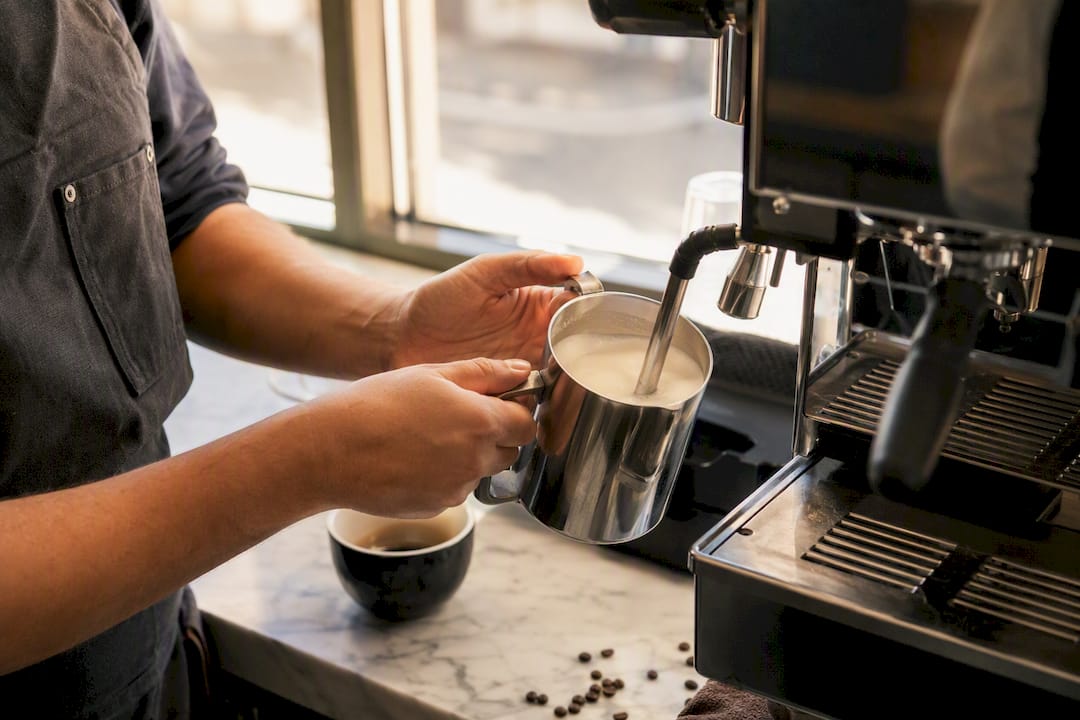
Cappuccino needs 4 to 5 ounces of cold milk in a small pitcher; latte needs 6 to 7 ounces in a slightly larger one. Target a finished temperature around 140 to 150°F, which feels hot to the touch but not scalding. If you don’t have a thermometer, stop steaming the moment the pitcher goes from comfortable to too hot to hold bare handed for more than a second.
- Purge the wand briefly to clear condensation before you start.
- Submerge the tip just under the surface and turn on the steam.
- Angle the pitcher to create a steady vortex as the milk begins to spin.
- Lower the pitcher slightly as volume increases, then hold position to texture rather than stretch further.
- Wipe the wand immediately and purge again after every use.
Pro Tip: Big, soapy bubbles almost always mean the tip was too close to the surface. Big bubbles mean you can’t fix them after the fact, so submerge slightly deeper and restart rather than trying to steam them smooth.
Weak, flat foam usually means you stopped too early or the milk was too cold to begin with. Overheated milk, the kind that tastes scorched, means you held the wand in too long after the vortex already looked right.
Quick Fixes for Common Dedica Problems
Run this check before you touch the grinder: fresh water in the tank, clean filter, portafilter warmed, and the basket free of old grounds stuck around the rim. A surprising number of “bad shot” complaints are actually a dirty shower screen or a portafilter that never got preheated.
- Slow or no flow: grind coarser first; if that doesn’t help, the basket may be overfilled or the group head clogged with old coffee oils.
- Gushing or fast flow with pale color: grind finer and check your dose against the basket’s fill line.
- Sour taste: classic under extraction, go finer on the grind before touching anything else.
- Bitter taste: over extraction, go coarser, and check your dose isn’t packed too tight into a small basket.
- Weak, watery shots despite correct time: dose is likely too low for the basket size, add half a gram and retest.
If the same problem persists across multiple grind settings, the issue usually sits with the grinder’s consistency rather than the Dedica itself. A grinder that purges and adjusts cleanly removes most of the guesswork described above.
Adira Coffee’s Dedica Starting Recipes and Roast Pairings
Adira built a dedicated starting recipe page for the Dedica because manufacturer numbers are a safe baseline, not the final word for every grinder and roast combination. The De’Longhi recipe hub gives you the machine’s own suggested settings; Adira’s page tells you how those numbers shift once real, fresh beans are in the hopper.
Fresh roast dates matter more on a small-dose machine like the Dedica, where a stale bag needs a bigger grind correction just to hit the same extraction window a fresh bag reaches with almost no adjustment.
- Best window to dial in: roughly 7 to 21 days after the roast date.
- Adira roasts to order in small batches out of California and ships within days, so that window starts closer to your delivery date than a grocery store bag ever could.
- Founders Stefan and Ekaterina Nedelchev built the company specifically around beans worth a second cup, sourced from cooperatives in Colombia, Ethiopia, Costa Rica, Mexico, and Sumatra.
- A subscription saves 10% and unlocks free US shipping over $35, which matters if you’re going through a bag every week or two while dialing in.
Why one recipe beats chasing five
Home baristas waste more shots switching recipes than dialing in one properly. Pick your 14 g in, 28 g out, 25 to 30 second target, log three shots back to back on one Adira roast, and adjust grind only. You’ll get a repeatable espresso faster than anyone jumping between five different starting points.
— Stefan
Try Adira: Where to Start With Your Dedica
If you’re pulling standard espresso and milk drinks on the Dedica, Mushroom Coffee (Medium Roast) is a solid first bag. It’s balanced enough to taste right at the 14 g in, 28 g out baseline before you’ve fine-tuned your grind, and it holds up well under milk in a cappuccino or latte.
If you lean toward a heavier, more traditional espresso profile, Mushroom Coffee (Dark Roast) pairs especially well with milk drinks since its bolder flavor cuts through steamed milk instead of getting lost in it. Every bag is roasted to order in small batches in California and shipped within days, landing well inside that 7 to 21 day dial in window instead of sitting on a store shelf for weeks before you ever open it.
Start with Adira’s Dedica starting recipe page for the exact settings paired to each roast, then order a bag.
Sources
- Recipes - De’Longhi Coffee Lounge
- De’Longhi Dedica Espresso Dial-In Settings (From the Manual) – Barista Life
- How to Dial In Espresso at Home: 2026 Step-by-Step Guide