
For home baristas who want genuinely fresh coffee, Adiracoffee is the top pick in this comparison: it roasts single-origin and signature blends to order in small batches in California and ships within days of roasting, which is exactly what the Specialty Coffee Association identifies as the standard for peak-quality specialty coffee. If you want a bag that arrives at its flavor peak rather than weeks past it, that matters more than any intro discount.
Quick picks by use case:
- Best overall (freshness + personalization): Adiracoffee subscription, roast-to-order with grind customization and personalized brewing recipes
- Best for discovery: A multi-roaster marketplace plan, where a rotating catalog and deep quiz expose you to micro-lots from multiple origins
- Best single-roaster consistency: A dedicated single-roaster plan, ideal when you have dialed in a recipe and want the same profile every shipment
- Best for espresso: Adiracoffee Mushroom Coffee Dark Roast, grind-dialed for your specific machine
- Best for decaf: A specialty decaf-focused single-origin plan from a roaster that publishes roast dates
The lowest-risk way to start is a single sample bag before committing to a recurring cadence. Adiracoffee’s Coffee Plan offers 10% savings and free US shipping over $35 on subscription orders.
Table of Contents
- How does this coffee subscription box comparison stack up at a glance?
- What do the top subscriptions actually deliver?
- How do you choose the right coffee subscription for your taste and routine?
- What subscription model actually fits your goals?
- How fresh is your coffee, and how long should a bag last?
- How we picked and evaluated these subscriptions
- Why Adiracoffee: what the subscription actually delivers
- Key Takeaways
- The thing most subscription comparisons get wrong
- Sources and further reading
How does this coffee subscription box comparison stack up at a glance?
The table below covers the dimensions that actually change your decision: what you pay per bag after intro deals expire, how fresh the coffee arrives, and how much control you have over your account.
How to read this table: “Roast-to-ship” is the gap between when the beans are roasted and when they leave the warehouse. “Grind options” tells you whether the service will grind for your specific brew method. “Trial” means a low-commitment entry point exists before a full subscription.
| Service | Best for | Price per 12 oz (typical) | Bag sizes | Grind options | Customization depth | Roast-to-ship | Frequency / flexibility | Single vs multi-roaster | Trial available | Shipping | Sustainability / origin info |
|---|---|---|---|---|---|---|---|---|---|---|---|
| Adiracoffee Mushroom Coffee Medium Roast 🏅 Roast-to-order | Daily filter drinkers, functional coffee fans | Subscription pricing with 10% off | 12 oz | Whole bean, drip, espresso, and more | Personalized brewing recipe per machine | Ships within days of roast | Flexible cadence; skip/pause available | Single-roaster | Sample bag available | Free over $35 | Colombia, Ethiopia, Costa Rica, Mexico, Sumatra; small-farm sourcing |
| Adiracoffee Mushroom Coffee Dark Roast 🏅 Roast-to-order | Espresso drinkers, bold cup fans | Subscription pricing with 10% off | 12 oz | Whole bean, drip, espresso, and more | Grind dialed to your machine; personalized recipe | Ships within days of roast | Flexible cadence; skip/pause available | Single-roaster | Sample bag available | Free over $35 | Same origin network; traceable small-batch |
| Top pick — multi-roaster marketplace | Discovery seekers, gift buyers | $15–22 per 12 oz (post-intro) | 12 oz typical | Whole bean standard; grind varies | Deep quiz (roast level, brew method, flavor notes) | Varies by roaster; 1–5 days common | 7–60 day ranges on leading platforms | Multi-roaster | Often yes | Varies; sometimes free over threshold | Varies by roaster; origin notes common |
| Single-roaster consistency plan | Daily driver, espresso dialer | $14–20 per 12 oz | — | Whole bean; grind sometimes available | Roast level + brew method | 1–2 days typical | Bi-weekly or monthly; skip/pause varies | Single-roaster | Sometimes | Often free over threshold | Depends on roaster; best ones publish lot info |
| Discovery sampler plan | Curious drinkers, new-to-specialty | — | 2–4 oz sample packs | Whole bean typical | Light quiz or curated | Varies | Monthly typical | Multi-roaster | Yes, by design | Often included | Tasting cards common |
Pro Tip: Ignore the intro-offer price entirely. Calculate the true cost per 12 oz bag including shipping after the first shipment — that is the number that tells you whether a subscription is actually worth it long-term.
What do the top subscriptions actually deliver?
Adiracoffee Mushroom Coffee Medium Roast
The Mushroom Coffee Medium Roast is a California-roasted blend built for filter brewing, with functional mushroom ingredients layered into a clean, balanced cup. Sourced from cooperatives in Colombia, Ethiopia, Costa Rica, Mexico, and Sumatra, each bag is roasted to order in small batches and ships within days. That roast-to-ship window is the single biggest quality variable in any coffee subscription comparison, and Adiracoffee treats it as a non-negotiable.
Grind options cover whole bean through espresso-specific settings, and every subscriber gets a personalized digital brewing recipe calibrated to their machine. That last detail separates Adiracoffee from most services: you are not just getting fresh beans, you are getting a dial-in guide for your specific setup. The subscription runs with a 10% discount and free US shipping over $35, with skip and pause controls available.
Ideal for: The home barista who brews filter coffee daily and wants functional benefits without sacrificing origin transparency or freshness.
Adiracoffee Mushroom Coffee Dark Roast
The Mushroom Coffee Dark Roast targets espresso drinkers and anyone who wants a bold, full-bodied cup. Same roast-to-order practice, same origin network, but the roast profile is pushed darker to hold up under pressure extraction. Grind options include espresso-specific settings, and the personalized recipe accounts for your machine’s pressure and temperature range.
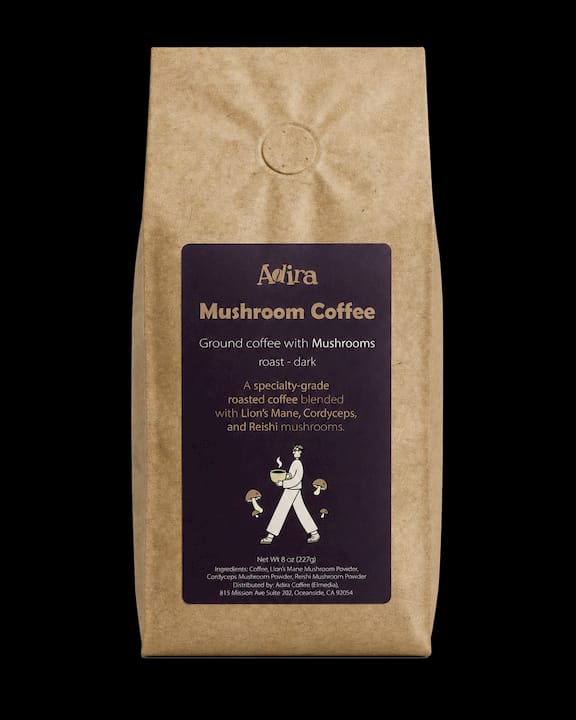
For espresso drinkers, this matters. A dark roast that arrives two weeks post-roast and was ground for a generic “espresso” setting is not the same as one ground for your specific portafilter basket and shipped four days after roasting. The subscription terms mirror the Medium Roast: 10% off, free shipping over $35, flexible cadence.
Ideal for: Espresso drinkers who have a machine at home and want a subscription that actually accounts for how they brew.
Multi-roaster marketplace plan
Multi-roaster platforms pull from a rotating network of specialty roasters, often with catalogs of dozens of coffees at any given time. The best ones run deep signup quizzes covering roast level, brew method, flavor preferences, and even how adventurous you want to be, then match you to a different roaster each cycle. Serious Eats’ tested roundup found that leading platforms offer up to five roast-level settings and frequency windows ranging from 7 to 60 days, which gives real control over cadence.
The tradeoff is consistency. You might love one shipment and find the next one too light or too fruity. That is the point for discovery-oriented drinkers, but it is frustrating if you have a dialed-in espresso recipe and need the same profile every time. Pricing typically runs $14–22 per 12 oz after intro deals expire, and shipping costs vary by platform.
Ideal for: Enthusiasts who want to explore micro-lots and new origins, or anyone buying a coffee subscription as a gift.
Single-roaster consistency plan
A single-roaster subscription means you are buying directly from one roaster’s lineup, usually with a choice of two to five coffees that rotate seasonally. The upside is predictability: once you find a profile you love, you can reorder it reliably. The downside is that the catalog is small, and if the roaster’s seasonal offering changes, your go-to might disappear.
CNET’s tested list highlights roast-date transparency and easy account management as the two factors that separate good single-roaster plans from mediocre ones. Look for a roaster that prints the roast date on the bag and lets you skip or pause without a phone call.
Ideal for: Daily espresso drinkers who have found a profile they trust and want it delivered on a reliable schedule.
Discovery sampler plan
Sampler subscriptions send small 2–4 oz packs from multiple roasters in a single shipment, usually with tasting cards explaining origin, processing method, and flavor notes. They cost more per ounce than full-bag subscriptions, but the educational value is real: you learn what you like before committing to a full bag of anything.
Coffee Lovers Hut’s practical guide recommends starting with a sample or gift plan as the lowest-risk way to evaluate a service. The format works well for new-to-specialty drinkers or as a gift for someone whose preferences you do not know.
Ideal for: Anyone new to specialty coffee, or a gift buyer who wants to send something interesting without guessing the recipient’s roast preference.
Pro Tip: Before committing to any subscription, take the Adiracoffee coffee quiz to identify your roast preference and brew method. It takes two minutes and gives you a concrete starting point for any service you evaluate.
How do you choose the right coffee subscription for your taste and routine?
The decision comes down to four variables: how you brew, how much you drink, whether you want consistency or discovery, and what you are actually willing to pay per bag after the intro deal is gone.
Step 1: Define your brew method and daily cups
Your brew method determines which grind options you need and how quickly you will go through a bag. A 12 oz bag yields roughly 22–24 cups of drip coffee. If you drink two cups a day, that is about 11 days per bag. If you drink one cup a day, you need a monthly cadence or a smaller bag size to avoid stale coffee sitting on your shelf.
Espresso is different. A 12 oz bag at a standard dose of 18–20 grams per double shot gives you roughly 17–19 shots. A two-shot-a-day drinker burns through a bag in under two weeks.
Step 2: Pick single-roaster vs multi-roaster
Single-roaster plans suit you if you have a recipe dialed in and want the same result every morning. Multi-roaster plans suit you if you are still exploring and want to taste coffees from different origins and processing methods. Mismatching your personality to the model is the most common reason people cancel subscriptions after two or three shipments.
Step 4: Map your profile to a bag size and cadence
| Daily cups | Brew method | Recommended bag size | Suggested cadence |
|---|---|---|---|
| 1 cup | Pour-over / drip | — | Every 3–4 weeks |
| 2 cups | Pour-over / drip | 12 oz | Every 2–3 weeks |
| 2 shots | Espresso | 12 oz | Every 2 weeks |
| 3+ cups | Drip / batch brew | 12 oz | Every 2 weeks |
Pro Tip: Order a single sample bag first, then commit to three consecutive shipments before judging a service. One shipment tells you almost nothing about consistency. Three tells you whether the roast profile, grind accuracy, and delivery timing are reliable.
What subscription model actually fits your goals?
Every coffee subscription falls into one of five formats. The model you pick shapes your experience more than the specific roaster does.
Single-roaster direct
You subscribe directly to one roaster’s lineup. The roaster controls the entire chain from green-bean sourcing to roasting to shipping, which means the best ones can offer genuine roast-to-order freshness and detailed lot information. The catalog is small, usually 5–15 coffees at a time, but the traceability is high. Best for: the daily espresso drinker who has found a profile they love and wants it reliably.
Multi-roaster marketplace
A platform aggregates coffees from dozens of roasters and uses a quiz to match you. BrewFYI’s subscription guide notes that the best multi-roaster services ask about roast level, brew method, and flavor preferences during signup to improve match accuracy. The catalog is large, the variety is real, but roast-to-ship timing varies by roaster. Best for: enthusiasts chasing micro-lots and origin variety.
Sampler / discovery box
Small-format packs from multiple roasters, usually with tasting cards. Higher cost per ounce, but the educational value is genuine. A well-designed sampler includes origin, altitude, variety, and processing details so you can develop your palate systematically. Best for: new-to-specialty drinkers and gift buyers.
Pods and instant
Convenient but limited. Specialty-grade instant has improved, and some roasters now offer single-serve pods with traceable origins. The tradeoff is that you lose control over grind size, dose, and extraction, which matters if you are trying to dial in a specific flavor. Best for: travel, office use, or a secondary option alongside a primary subscription.
Green-bean clubs
You receive unroasted green beans and home-roast them yourself. Maximum control, maximum effort. The audience is narrow: home roasters with a drum or fluid-bed roaster who want to source specific lots. Best for: the enthusiast chasing micro-lots who has already invested in home-roasting equipment.
Pro Tip: If you are buying a subscription as a gift, a sampler or discovery box is almost always the right call. You avoid guessing the recipient’s roast preference, and the tasting cards make the gift feel curated rather than generic. Adiracoffee’s functional coffee collection is a strong option for a gift buyer who wants something genuinely different.
How fresh is your coffee, and how long should a bag last?
Freshness is the single variable that most subscription marketing talks about and most buyers underestimate. Coffee is not wine. It does not improve with age. Specialty coffee’s flavor peaks within roughly 5–21 days after roast for filter brewing; espresso often benefits from a longer rest, typically 10–30 days, to let CO2 off-gas and allow the extraction to stabilize. Those windows come from BrewFYI’s freshness guidance, and they are the reason roast-to-ship timing matters so much.
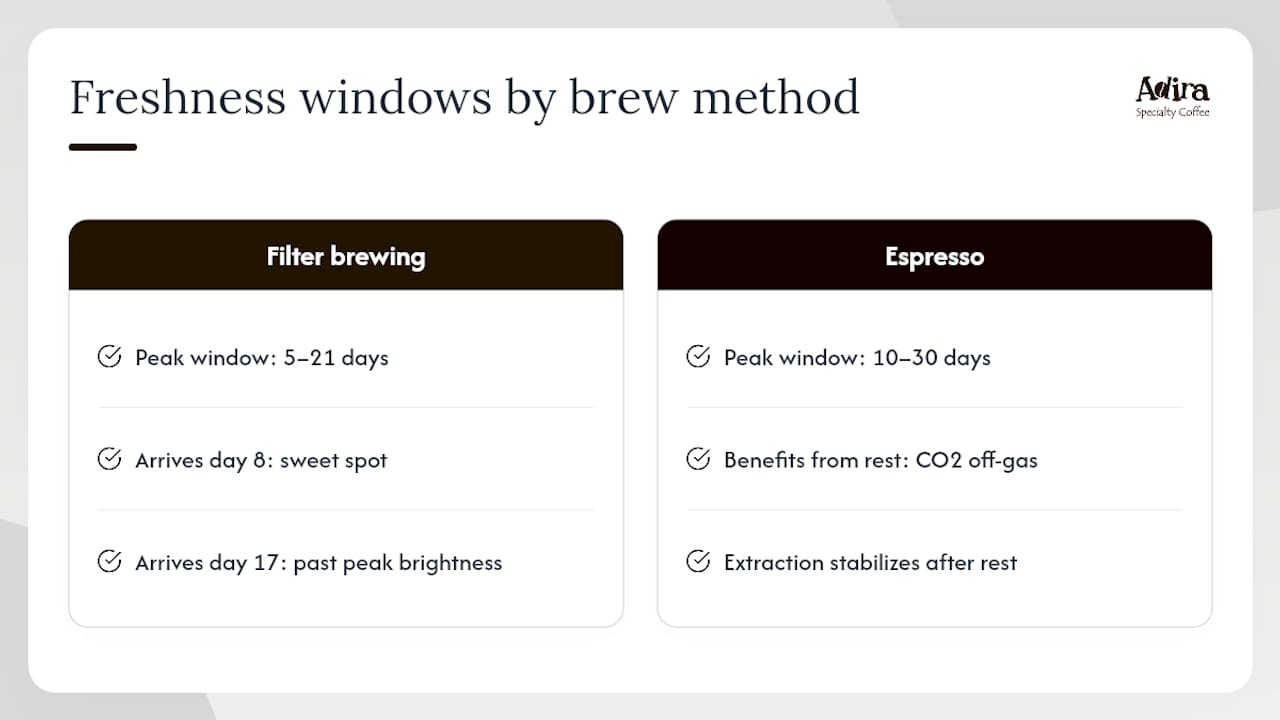
A bag that ships five days after roasting and takes three days in transit arrives at day eight. For filter coffee, you are right in the sweet spot. A bag that ships fourteen days after roasting and takes three days in transit arrives at day seventeen, which is still drinkable but past peak brightness for most light roasts.
Recommended brew windows and cadence by consumption
| Brew method | Peak flavor window (post-roast) | Rest before first brew | Suggested cadence for 12 oz bag |
|---|---|---|---|
| Pour-over / drip | 5–21 days | 1–2 days | Every 2–3 weeks (2 cups/day) |
| AeroPress | 5–21 days | 1–2 days | Every 2–3 weeks |
| Espresso | 10–30 days | 7–10 days minimum | Every 2 weeks (2 shots/day) |
| Cold brew | 7–21 days | 1–2 days | Every 3–4 weeks (batch brewing) |
How to calculate the true cost per bag
The price listed on a subscription page is almost never the real number. My Coffee Explorer’s honest breakdown recommends this calculation: take the bag price on shipment three (after any intro discount expires), add the shipping cost if the order falls below the free-shipping threshold, and divide by the bag weight in ounces. That gives you a cost per ounce you can compare across services. Subscriptions typically run $14–22 per 12 oz bag at realistic post-intro pricing, with some savings versus retail.
Teaser rates of $9 or $10 for the first bag are marketing, not pricing. They tell you nothing about long-term value.
Pro Tip: Espresso drinkers should let a freshly roasted bag rest for at least seven days before pulling shots. A bag that arrives two days post-roast will taste sour and underdeveloped under pressure. Build that rest time into your cadence calculation so you are not caught without coffee while you wait.
How we picked and evaluated these subscriptions
Selection criteria for this comparison covered six dimensions: freshness promise (roast-to-ship timing and roast-date transparency), customization depth (quiz quality, grind options, roast-level choices), price versus value (post-intro cost per 12 oz including shipping), account flexibility (skip, pause, and cancel controls), origin transparency (lot information, farm or cooperative sourcing), and overall consistency across multiple shipments.
Where possible, evaluation included at least three shipments to assess whether roast profiles, grind accuracy, and delivery timing held up over time. Account management was tested directly: skip and pause flows, cancellation paths, and customer service response times. Wirecutter’s tested shortlist and CNET’s barista-tested roundup were used as cross-checks on common winner attributes: consistency, transparency, and account ease.
Tasting notes were evaluated using standard cupping vocabulary. Scores were not assigned on a numerical scale because cup quality is too dependent on grind setting, water temperature, and brew ratio to be meaningful without controlling those variables across services.
On methodology transparency: Adiracoffee is the publisher of this article and is presented as a recommended option throughout. That relationship is disclosed here plainly. The comparison criteria were chosen to reflect what matters to home baristas evaluating real subscriptions, not to engineer a result. Services that do not publish roast dates, do not offer grind customization, or make it difficult to skip or cancel are flagged as weaknesses regardless of brand.
Why Adiracoffee: what the subscription actually delivers
Adiracoffee was founded by Stefan and Ekaterina Nedelchev, two Bulgarians who moved to the US and found that supermarket coffee was not worth a second cup. That frustration drove a specific set of commitments: source from cooperatives and small farms in Colombia, Ethiopia, Costa Rica, Mexico, and Sumatra; roast in small batches in California; ship within days of roasting; and give every customer a personalized brewing recipe for their specific machine.
The subscription delivers on those commitments in concrete terms:
- Origin transparency: Every coffee is traceable to a specific country and sourcing partner. The single-origin collection lists origin details for each coffee.
- Roast-to-order: — Bags are roasted after the order is placed, not pulled from warehouse inventory. That is the difference between coffee that arrives at peak flavor and coffee that has been sitting in a fulfillment center.
- Personalized brewing recipes: Subscribers receive digital brewing guides calibrated to their machine, including dose, ratio, and temperature guidance. The Adira blend funnel helps match you to the right coffee before you subscribe.
- Mushroom Coffee line: Both the Medium Roast and Dark Roast add functional mushroom ingredients to traceable specialty coffee, a combination that is genuinely rare in the roast-to-order space.
Pro Tip: Use Adiracoffee’s personalization quiz before your first order. It takes the guesswork out of roast selection and gives the roasting team the information they need to dial in your grind correctly from shipment one.
Research consistently shows that roast-to-order coffee, shipped within days of roasting, arrives at a meaningfully different flavor stage than pre-roasted warehouse stock. That gap is most noticeable in light and medium roasts, where brightness and complexity fade fastest after the peak window closes.
Key Takeaways
The most important factor in any coffee subscription comparison is roast-to-ship timing: a bag that arrives within the 5–21 day peak window for filter coffee, or the 10–30 day window for espresso, will taste fundamentally different from one that has been sitting in a warehouse.
| Point | Details |
|---|---|
| Roast-to-ship timing is decisive | Coffee peaks at 5–21 days post-roast for filter; 10–30 days for espresso. Prioritize services that ship within days of roasting. |
| Calculate true cost per bag | Add shipping to the post-intro bag price and divide by ounces. Realistic post-intro pricing runs $14–22 per 12 oz across leading services. |
| Match the model to your personality | Single-roaster plans suit consistency seekers; multi-roaster marketplaces suit discovery-oriented drinkers. Mismatching causes cancellations. |
| Test before committing | Order a sample bag, then run three consecutive shipments before judging consistency of roast profile, grind accuracy, and delivery timing. |
| Adiracoffee subscription | Roast-to-order in California, 10% subscription savings, free US shipping over $35, grind customization, and personalized brewing recipes per machine. |
The thing most subscription comparisons get wrong
Most coffee subscription roundups treat freshness as a marketing claim rather than a measurable variable. They rank services by catalog size, quiz depth, and price, which are all real factors, but they rarely ask the one question that determines whether the coffee in the bag is actually good: how many days after roasting did this ship?
A multi-roaster marketplace with a beautiful quiz and a 60-day frequency option is useless if the roasters in its network are shipping bags that were roasted three weeks before dispatch. You will receive coffee that is technically specialty grade but past its peak, and you will wonder why your pour-over tastes flat.
The other thing buyers consistently underestimate is the personalization gap. Most services ask about roast level and brew method during signup, which is a start. But a grind setting labeled “espresso” covers an enormous range. A 9-bar pump machine pulling a 25-second shot needs a different grind than a Moka pot or an AeroPress set to espresso-style. Services that ask about your specific machine and then calibrate the grind to it are doing something genuinely different from services that offer three generic grind buckets.
That is the gap Adiracoffee is built to close. The personalized brewing recipe is not a marketing feature; it is the practical output of knowing your machine, your dose, and your target extraction. For home baristas who have invested in decent equipment, that specificity is worth more than a larger catalog or a lower teaser price.
Sources and further reading
The claims in this article are grounded in tested roundups, specialty coffee guidance, and independent consumer research. The sources below are the most authoritative references used.
- The 4 Best Coffee Subscriptions 2026, Tested & Reviewed | Serious Eats
- How to Choose the Best Coffee Subscription in 2026 | BrewFYI
- Are Coffee Subscriptions Worth It in 2026? An Honest Breakdown | My Coffee Explorer
- 15 Best Coffee Subscriptions, Tested & Reviewed (2025) — Bon Appétit
- How A Coffee Subscription Works — Coffee Lovers Hut
- Best Coffee Subscriptions in 2025, Tested by a Trained Barista and … | CNET
- Our Favorite Coffee Subscriptions | Reviews by Wirecutter