
TL;DR:
- Following a simple sequence of temperature, size, modifications, and drink name helps you order coffee confidently. Starting with a latte is best for beginners, as it is forgiving and easy to enjoy. Borrowing flavor words and asking questions makes selecting and describing drinks more effective.
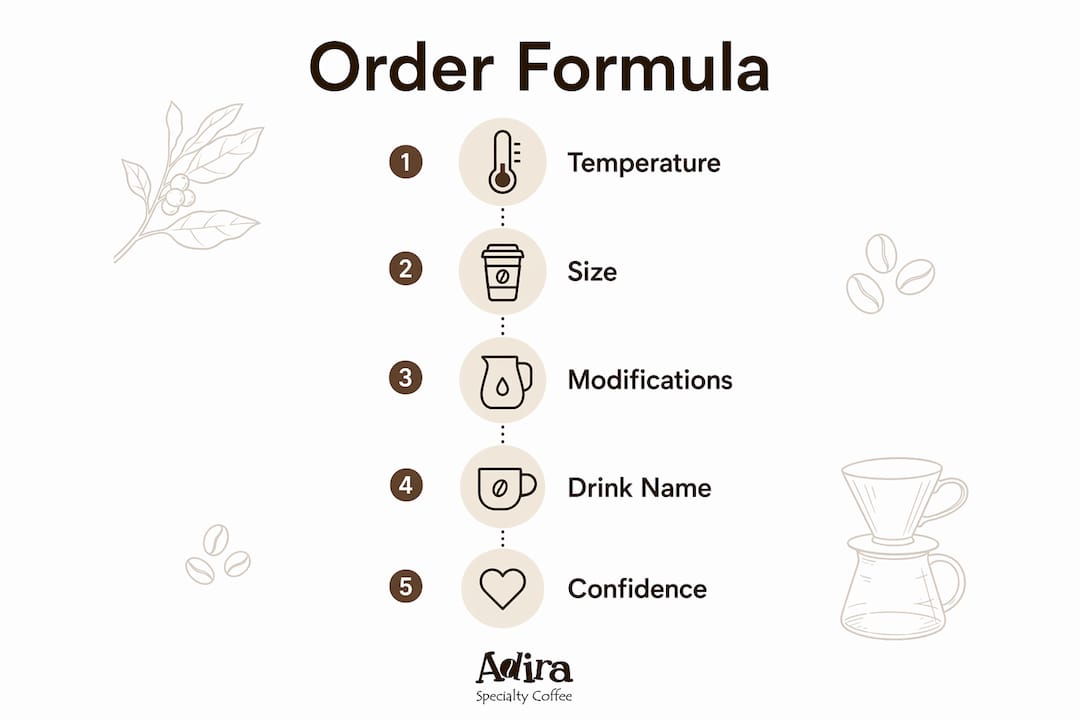
The fastest way to place a confident coffee order is to follow one simple sequence: temperature, then size, then any modifications, then the drink name. So instead of freezing at the counter, you say something like “iced, medium, oat milk, vanilla latte” and you’re done. That formula works at every café in the country, from a local specialty shop to a national chain, because it mirrors how most point-of-sale systems actually process orders.
If you’re brand new to espresso drinks, start with a latte. It’s the most forgiving option: steamed milk softens the espresso’s intensity, and the drink is large enough to sip slowly. Once you’re comfortable, a flat white or cappuccino is the natural next step. Cold brew is a great choice if you want something iced without much bitterness.
Quick-start checklist for your first order:
- Decide: hot or iced?
- Pick a size: small, medium, or large
- Choose a milk: whole, oat, almond, or soy
- Name the drink: latte, cappuccino, flat white, Americano, cold brew
- Add one modifier if you want: a flavor syrup, an extra shot, or less foam
Baristas expect incomplete orders. If you forget the size, they’ll ask. The formula just helps you feel prepared before you reach the counter.
The 5 most popular coffee orders explained
Understanding what’s actually in each drink makes ordering much easier. These five show up on nearly every menu in the U.S.
- Latte: Espresso with a generous pour of steamed milk and a thin layer of foam on top. Typically a moderate size suitable for sipping. Espresso-based drinks with milk like the latte are the most beginner-friendly because the milk rounds out any bitterness. Best if you want something mild and creamy.
- Cappuccino: Equal parts espresso, steamed milk, and thick foam, usually a smaller size to concentrate flavor. Foamier and slightly stronger in coffee character than a latte. Often finished with a dusting of cocoa or cinnamon.
- Flat white: A smaller serving with thin silky microfoam instead of a thick cap. The strongest of the three milk drinks because the espresso-to-milk ratio is higher. Good when you want real coffee flavor without going fully black.
- Americano: Espresso shots diluted with hot water. No milk, no foam. Clean and straightforward, closer to drip coffee in volume but with a different flavor character.
- Cold brew: Coffee steeped in cold water for many hours, then strained. Naturally smooth and low in acidity. A solid pick if you’re sensitive to the sharpness of hot-brewed coffee.
Specialty shops often use small, medium, and large rather than chain-specific names. Some drinks, like a cappuccino, may only come in one size because stretching it to 16 ounces would drown the espresso.
How to describe what you want to a barista
Plain language works better than coffee jargon. Specialty coffee menus function as tasting roadmaps, and baristas use flavor descriptors every day to match customers with drinks. Saying “I want something nutty and smooth” gives a barista far more to work with than “strong coffee.”

Useful flavor words to borrow: nutty, chocolatey, fruit-forward, bright, smooth, creamy, sweet, or earthy. If you’ve had a drink you liked before, describe what made it good. “The last latte I had tasted kind of caramel-y and wasn’t too bitter” is a perfect brief. Baristas respond better to preferences than to performance, so there’s no need to fake expertise.
Pro Tip: Ask “What’s your most chocolatey drink?” or “Do you have anything smooth and not too acidic?” One targeted question gets you a better recommendation faster than scanning the whole menu.
If you know what you didn’t like about a previous drink, say that too. “My last latte was too bitter” tells a barista to pull a shorter shot or suggest a medium roast. That kind of feedback is genuinely useful.
Common coffee terms you’ll actually encounter
A few words come up constantly at coffee shops. Here’s what they mean in plain English.
- Solo / doppio: Single or double espresso shot. Most drinks default to a double (doppio). Ask for a solo if you want less caffeine.
- Wet / dry cappuccino: Wet means more steamed milk, less foam. Dry means more foam, less milk. If you like a foamy texture, ask for dry.
- Whole, skim, oat, almond, soy: The milk options. Oat milk steams well and tastes naturally sweet, making it the most popular alternative. Soy milk has more protein but can curdle with high-acid coffees. Almond milk is lighter and nuttier but doesn’t steam as smoothly for hot drinks.
- Tall, Grande, Venti: Chain-specific size names at one major national chain. At most independent shops, small, medium, and large work perfectly fine.
- Single origin vs. blend: Single origin means beans from one farm or region, often with distinct flavor notes. A blend combines beans from multiple sources for a consistent, balanced cup.
- For here / to go: Affects the cup. “For here” usually means ceramic; “to go” means paper with a lid.
Specialty cafés generally don’t pre-sweeten drinks. If you want sugar or syrup, ask for it separately. That’s not a quirk; it’s how quality shops let you control the sweetness yourself.
How Adiracoffee helps you enjoy better coffee at home
Ordering well at a café is one thing. Knowing what you actually like, and having it ready at home, is another. Adiracoffee was founded by Stefan and Ekaterina Nedelchev, two Bulgarians who moved to California and couldn’t find a supermarket bag worth finishing. That frustration became a mission: source better beans, roast them in small batches, and ship them while they’re still fresh.
Adiracoffee sources single-origin beans from cooperatives and small farms in Colombia, Ethiopia, Costa Rica, Mexico, and Sumatra. Every bag is roasted to order in California and ships within days of roasting. If you’ve been building a sense of what you like at the café counter, that freshness is what makes the difference when you brew at home.
Key trust signals and benefits:
- Beans sourced directly from farms and cooperatives across five origins
- Small-batch roasting in California, shipped within days of the roast date
- Subscription option with 10% savings and free U.S. shipping over $35
- Single-origin and signature blends available to match different flavor preferences
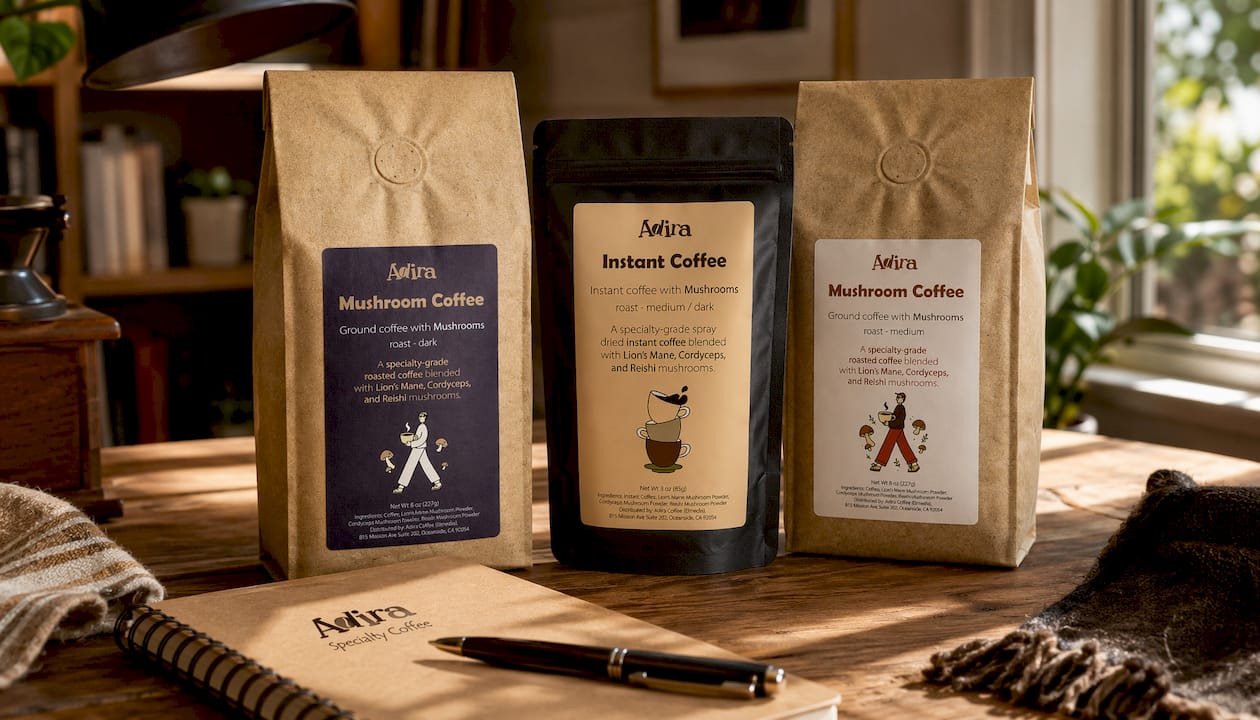
If you’re drawn to bold, earthy flavors, Adiracoffee’s dark roast mushroom coffee is worth trying. For a more balanced cup, the medium roast mushroom coffee hits that sweet spot between brightness and body. And if convenience matters, the instant mushroom coffee delivers a clean cup without any brewing equipment.
What roast level actually means for flavor
Roast level is one of the most practical things to understand when ordering or buying coffee. Light roasts preserve the bean’s original character, so you get brighter, more acidic cups with floral or fruity notes. Ethiopian light roasts, for example, often taste like blueberry or jasmine. Medium roasts balance sweetness, acidity, and body, making them the most forgiving choice for beginners and the easiest to drink with or without milk. Dark roasts develop deep, roasty flavors: think dark chocolate, caramel, and a heavier body, with less of the origin’s natural brightness.
A practical rule: if a menu lists origin details alongside the roast, the shop takes quality seriously. That transparency is a signal worth paying attention to when you’re trying somewhere new.
Ordering etiquette that actually speeds things up
A few habits make the whole experience smoother for you and the people behind you in line.
Know your temperature before you reach the counter. Hot is the default at most shops; if you want iced, say it first. Have a general idea of what you want, even if it’s just “something creamy and sweet.” That one detail lets a barista guide you in seconds rather than minutes.

Asking for a recommendation is completely normal. “I’m new to this, what would you suggest for someone who likes sweet drinks?” is a question baristas hear every day and are happy to answer. Keep your question specific to one preference and you’ll get a useful answer fast.
Skip the apology for not knowing the menu. Good baristas don’t expect customers to arrive fluent in coffee. A clear, short order, even an imperfect one, is always easier to work with than a long, uncertain one.
Drip, pour-over, and French press: what’s the difference?
These three brewing methods show up on menus and in home kitchens constantly. Drip coffee, also called batch brew, is brewed in large quantities and served by the cup. It’s the fastest and usually the cheapest option at any café.
Pour-over is brewed one cup at a time, typically using a V60, Chemex, or Kalita Wave dripper. It takes 3–5 minutes and costs more, but it highlights a single coffee’s specific flavor notes in a way batch brewing can’t. If a shop offers pour-overs, they’re usually featuring a particularly interesting single-origin coffee worth tasting.
French press steeps coarsely ground coffee in hot water for about four minutes before pressing. The result is a full-bodied, textured cup with more oils than filtered methods. It’s less common on café menus but widely used at home. If you like a heavier, richer mouthfeel, French press is worth exploring.
Key Takeaways
Ordering coffee confidently comes down to one formula: temperature, size, modifications, drink name, and a willingness to describe what you like.
| Point | Details |
|---|---|
| Use the ordering formula | Say temperature, size, modifications, then drink name for any café in the U.S. |
| Start with a latte | Milk softens espresso’s intensity, making lattes the most beginner-friendly drink. |
| Use flavor words | Terms like “nutty,” “chocolatey,” or “smooth” help baristas recommend the right drink. |
| Ask questions freely | Baristas expect and welcome questions, especially from first-time customers. |
| Roast level shapes flavor | Light roasts taste brighter and fruitier; dark roasts lean chocolatey and bold. |
The part most beginner guides get wrong
Most ordering guides treat the café counter like a test you need to pass. Get the size name right, know the Italian terms, don’t slow down the line. That framing misses the point entirely.
The best coffee experiences I’ve seen come from people who just say what they want in plain words. “I like sweet things, not too bitter” is a complete brief. A barista who cares about their craft will take that and run with it. The ones who don’t weren’t going to give you a great drink anyway, regardless of how perfectly you ordered.
What actually builds confidence over time isn’t memorizing terminology. It’s trying one new thing per visit and paying attention to what you liked about it. Order a latte this week. Next time, ask for a flat white and notice how much more espresso comes through. The third time, try a pour-over black. That progression teaches you more about your own palate than any guide can, and it makes every future coffee order, at a café or at home, feel like a choice rather than a guess.