
Start with 68 grams of coffee to 1,088 grams of water, a 1:16 ratio, ground medium for drip. Heat to within the 195°–205°F range, which Bonavita machines are engineered to reach, and brew for about the time recommended by the manufacturer. If your beans were roasted within the last two weeks, hold the power button for 5 seconds to trigger Bloom mode before you start.
TL;DR:
- Using the 1:16 coffee-to-water ratio with medium grind and brewing between 195° and 205°F is optimal for balanced flavor in a Bonavita coffee maker.
- Enabling the Bloom mode is crucial for fresh beans, with longer bloom times for lighter roasts and shorter for dark roasts, to improve extraction and aroma.
- Final coffee temperature after brewing typically drops to 175°–185°F due to heat loss, especially with smaller batches and higher elevations.
- Descale the machine at least every 100 brew cycles using a phosphate-free descaling solution to maintain consistent temperature and brewing performance.
- Filter tap water or use bottled water with moderate mineral content to prevent flavor mutedness caused by hard water, especially at high altitudes.
Table of Contents
- Bonavita Coffee Ratio Chart for Every Batch Size
- How Do You Brew Coffee in a Bonavita Step by Step?
- Why Does Bloom Matter on a Bonavita?
- Why Is My Bonavita Running Cold or Slow?
- Adira Coffee’s Dialing Tips for Bonavita Brews
- How Does Water and Altitude Change a Bonavita Recipe?
- How Does a Bonavita Recipe Compare to Pour-Over or French Press?
- What Actually Moves the Needle on a Bonavita
- Which Adira Beans Work Best in a Bonavita
Bonavita Coffee Ratio Chart for Every Batch Size
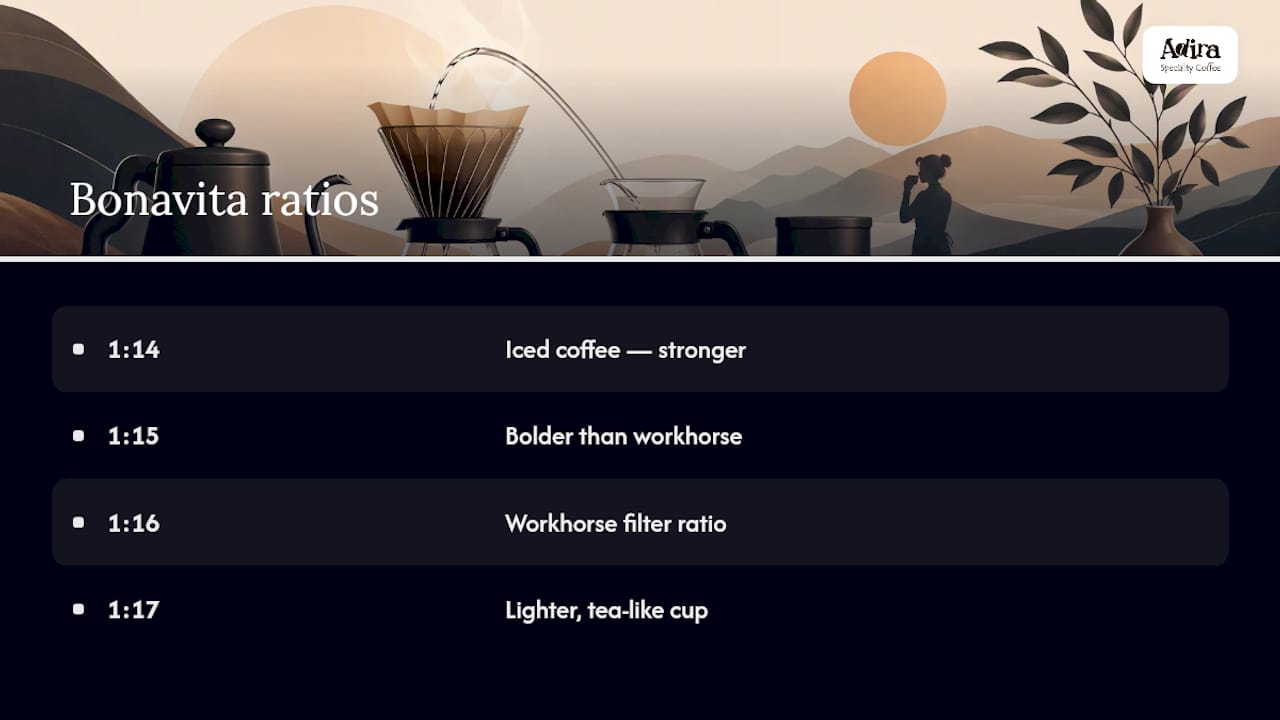
Ratios don’t change with batch size, but the numbers you weigh out do, and that trips up more people than it should. A 1:16 Bonavita coffee ratio is the workhorse setting for filter coffee: strong enough to taste like something, dilute enough to avoid bitterness. Drop to 1:15 if you like it bolder, or stretch to 1:17 for a lighter, tea-like cup.
Grind medium, similar to coarse sand, somewhere in the middle of a Baratza’s dial. Water temperature should sit in the 195°–205°F range that Bonavita engineers its machines to hit. Total brew time runs 5 to 6.5 minutes depending on batch size.
For Japanese-style iced coffee, brew slightly stronger, closer to a 1:14 ratio, then pour the hot coffee directly over a bed of ice sized to a portion of your total water weight. Bonavita’s own iced recipe uses measured ice in the server before brewing, so the ice melts as the coffee lands and locks in aroma instead of letting it cook down first.
How Do You Brew Coffee in a Bonavita Step by Step?
Before your first brew ever, run two water-only cycles through the machine with no coffee or filter. This clears manufacturing residue and gets the internal heater primed. Bonavita’s own manual calls for this, along with filling the reservoir to the MAX line and avoiding batches smaller than what the model recommends, since underbilling throws off both temperature and timing.
Once that’s done, here’s the sequence for a real brew:
- Weigh your water and pour it into the reservoir. For an 8-cup carafe, use the amount to the maximum fill line recommended by the manufacturer.
- Insert a paper filter into the basket and rinse it with hot water to kill any papery taste, then dump that rinse water.
- Weigh 68 grams of medium-ground coffee directly into the filter.
- If the beans are fresh, press and hold the power button for 5 seconds. The light will flash and you’ll hear a beep confirming pre-infusion is active.
- Start the brew. During Bloom, the machine pauses briefly after wetting the grounds, letting gas escape before the main pour begins.
- Let the cycle finish, then remove the carafe promptly and give it a gentle swirl to even out extraction between the top and bottom of the bed.
Pro Tip: Taste the coffee at the two-minute mark of drinking it, not right off the plate. Flavors round out slightly as coffee cools from scalding to drinkable, and what tastes sharp at 190°F often mellows by 160°F.
Post-brew, it’s recommended to keep the lid on the thermal carafe between pours. It’s not just about heat retention. An open carafe lets aroma compounds escape fast, and that’s half of what you’re tasting anyway.
Why Does Bloom Matter on a Bonavita?
Fresh-roasted beans are full of trapped carbon dioxide, and when hot water hits them, that gas has to go somewhere. If it escapes chaotically during a full, uninterrupted pour, it disrupts even saturation and can choke off proper extraction. Pre-infusion solves this by giving the CO2 a head start, a brief pause where the grounds just sit and puff up before the real brew cycle begins.
Enabling it is simple: hold the power button for 5 seconds until you see the flash and hear the beep. Hold it again to switch it back off.
Bloom duration should flex with roast level:
- Light roasts: 30 to 45 seconds, since denser beans degas slower and need more time to settle.
- Medium roasts: around 30 seconds, a safe middle ground for most bags.
- Dark roasts: 20 to 25 seconds, because dark beans are already more porous and over-blooming can strip out flavor along with the gas.
Beans older than a few weeks have already released most of their CO2, so Bloom becomes optional rather than essential.
Why Is My Bonavita Running Cold or Slow?
A carafe that feels lukewarm right after brewing usually isn’t broken. Bonavita’s own testing shows final carafe temperature typically lands around 175°–185°F, noticeably cooler than the 195°–205°F water hitting the grounds, because heat bleeds off through the filter, basket, and open air the moment coffee leaves the showerhead. Smaller batches and higher elevation cool faster still, since there’s less thermal mass holding the heat.
If your brew time is dragging past 7 minutes, check three things:
- The tank filled to the MAX line, since a partial fill throws off the heater’s warm-up curve.
- The showerhead seated flush in its slot, since a crooked fit slows water distribution.
- The machine sitting on a level counter, since a tilt affects how evenly water pools over the grounds.
Descale at minimum every 100 brew cycles, sooner if your tap water is hard. Skip vinegar entirely. It leaves residual flavor and doesn’t descale as reliably as a purpose-built product, so stick with a phosphate-free descaling solution instead.
Adira Coffee’s Dialing Tips for Bonavita Brews
Freshness affects both flavor and the grind needed. Very fresh beans are still off-gassing heavily, so a slightly coarser grind than usual can help manage over-extraction during Bloom before the main pour.
Two starting points we recommend:
- Sumatra: start at 1:15, medium grind, full 45-second Bloom. Its earthy, low-acid profile handles a slightly bolder ratio without turning muddy.
- Colombia: start at 1:16, standard medium grind, 30-second Bloom. Balanced and forgiving, a good baseline for dialing in your own preferences.
If the cup tastes sour or thin, extraction is running low. Grind finer first, then adjust dose if that’s not enough. If it tastes bitter or heavy, grind coarser before you touch anything else. Adjust one variable at a time, or you won’t know what actually fixed it.
Store beans in an airtight container away from light, and buy in quantities you’ll finish within a few weeks of the roast date.
How Does Water and Altitude Change a Bonavita Recipe?
Hard water throws off extraction more than most home brewers realize. High mineral content, especially calcium and magnesium, binds with coffee compounds and mutes flavor even when your ratio and grind are dialed in perfectly. If your tap water leaves spots on glassware, consider filtering it before it hits the reservoir, or use bottled water with a moderate mineral content rather than distilled, which is too stripped to extract well at all.
Altitude changes things differently. Water boils at a lower temperature the higher you go, so at elevations above roughly 3,000 feet, your Bonavita’s internal heater may struggle to reach the top end of its 195°–205°F range. The fix isn’t a different machine. It’s usually a slightly finer grind to compensate for a lower effective brewing temperature, since finer grounds extract faster and can offset a few missing degrees.
Hard water combined with high altitude compounds both problems, so if you live somewhere like Denver or Salt Lake City with mineral-heavy municipal water, filtering your water matters more than almost any other adjustment on this list. Test one change at a time. Water first, then grind, since fixing the wrong variable first just muddies your read on what’s actually happening in the cup.
How Does a Bonavita Recipe Compare to Pour-Over or French Press?
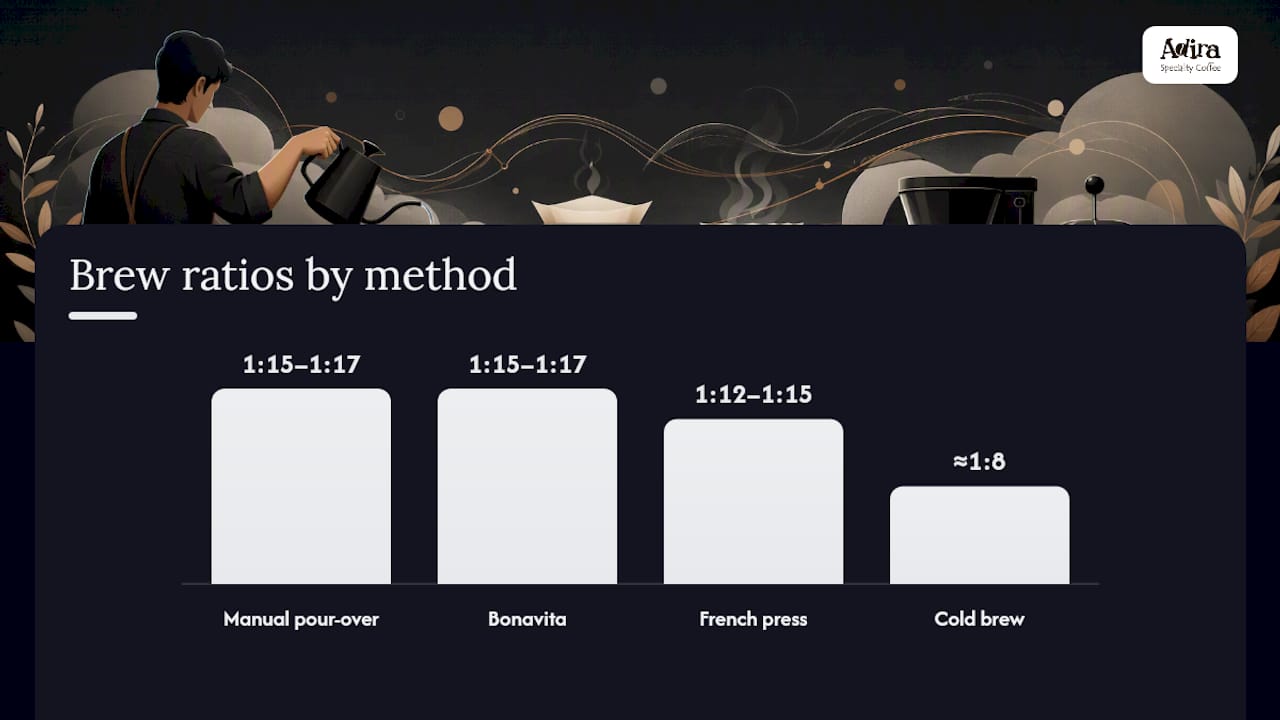
A Bonavita is essentially automated pour-over, and the ratios prove it. Manual V60 recipes typically run 1:15 to 1:17, nearly identical to what works in a Bonavita, because both methods rely on a paper filter and a similar contact time between water and grounds. The difference is consistency: a human hand pouring water introduces variation in flow rate and agitation that a Bonavita’s showerhead eliminates by design.
French press sits at a different ratio entirely, usually 1:12 to 1:15, because there’s no filter pulling out oils and fine particles. That makes French press coffee heavier-bodied but muddier, while a Bonavita produces a cleaner cup closer to what you’d get from a manual pour-over done well every single time.
Cold brew breaks the pattern completely, running around 1:8 for a concentrate meant to be diluted later, steeped for 12 to 24 hours instead of minutes. If you want that style without switching equipment entirely, Adira’s Cold Brew is roasted specifically for long, cold extraction rather than the fast, hot contact a Bonavita is built for.
The upshot: if you’ve already got pour-over dialed in by hand, a Bonavita will feel familiar almost immediately. The ratios transfer directly. What changes is how little effort it takes to hit that same result on a Tuesday morning.
What Actually Moves the Needle on a Bonavita
Most Bonavita advice online obsesses over exact gram counts to two decimal places while ignoring the one variable that actually separates a good cup from a forgettable one: bean freshness paired with Bloom timing. A perfectly weighed 1:16 ratio using beans roasted three months ago will underperform a rougher 1:15 eyeball pour using beans roasted three days ago, every time.
The conventional wisdom treats Bloom as an optional upgrade, something you turn on if you’re feeling fussy. That’s backwards. For fresh beans, skipping it isn’t a shortcut, it’s actively working against your machine’s design. The 5 second button hold takes less effort than measuring your water in the first place.
If you’re only going to nail one thing from everything above, make it this: buy beans with a roast date on the bag, use them within two to three weeks, and enable pre-infusion every time. Ratios and grind settings are tuning knobs. Freshness is the ceiling on how good the coffee can possibly taste.
— Stefan
Which Adira Beans Work Best in a Bonavita
If you want a Bonavita recipe that actually tastes like something, the beans matter more than the brewer. Adira roasts to order in small batches out of California and ships within days, so what lands in your kitchen still has the CO2 and aroma that make Bloom mode worth using in the first place.
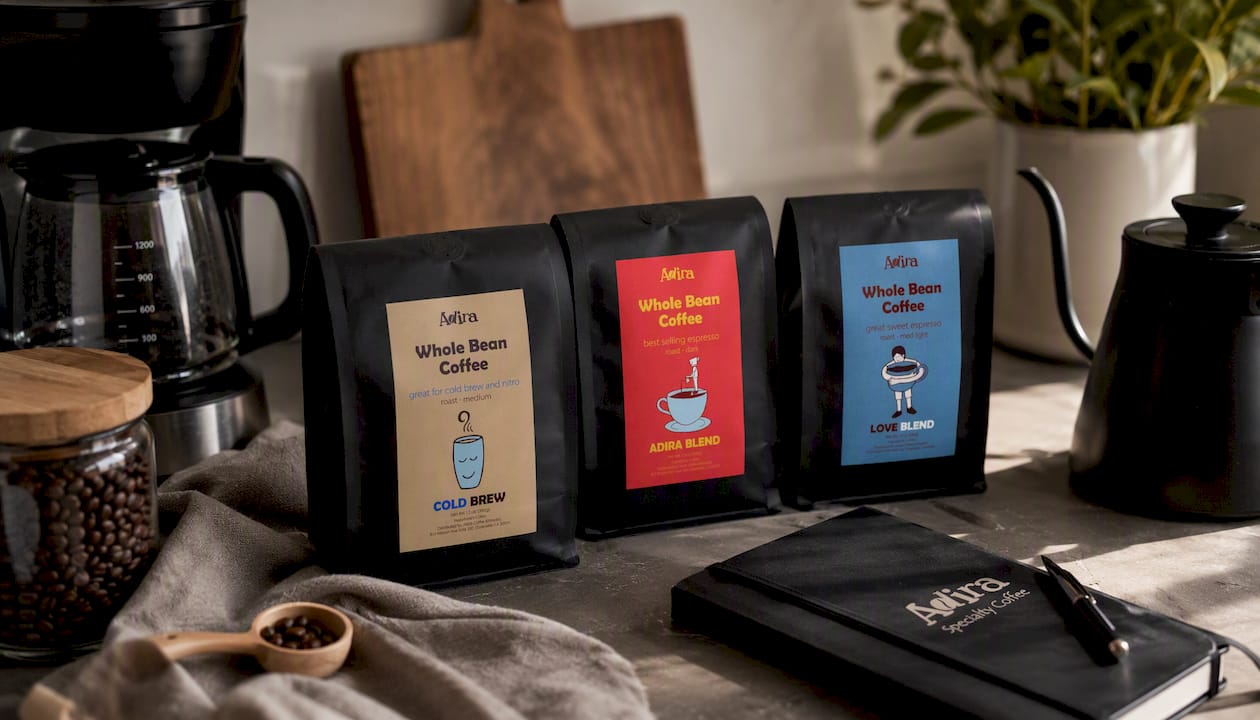
For filter-style brewing, start with our Colombia for a balanced, forgiving cup that holds up at a standard 1:16 ratio, or reach for Sumatra if you prefer something earthier and want to run a slightly bolder 1:15. Both are roasted specifically with drip and pour-over extraction in mind, not espresso, so the grind and roast curve are already suited to what your Bonavita needs. If you’re setting up a cold brew concentrate on the side, our Cold Brew is roasted for that long, cold steep instead of a fast hot pour.
Head to our coffee plan page to pick a roast and get your next bag roasting.